Yadav at CII: 86,043 Producers Now Under India's EPR Push
Synopsis
At the CII Circular Economy Conference in Delhi, Union Environment Minister Bhupender Yadav announced that over 86,043 producers and 4,880 recyclers are registered under India's EPR frameworks, with nearly 499.60 lakh metric tonnes of waste processed — marking a decisive shift from policy design to measurable industrial compliance.
Key Takeaways
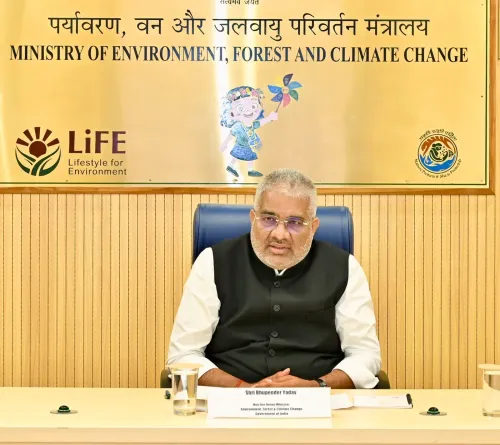
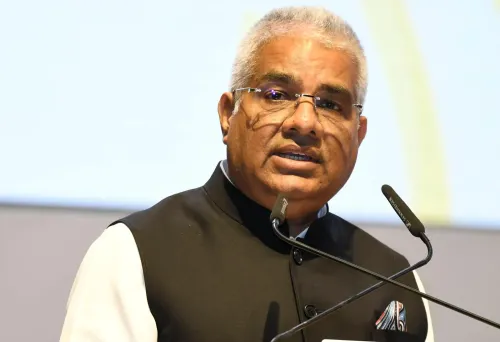
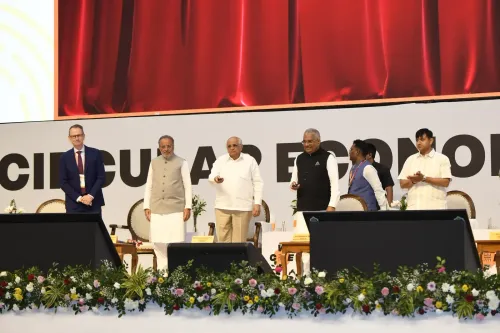
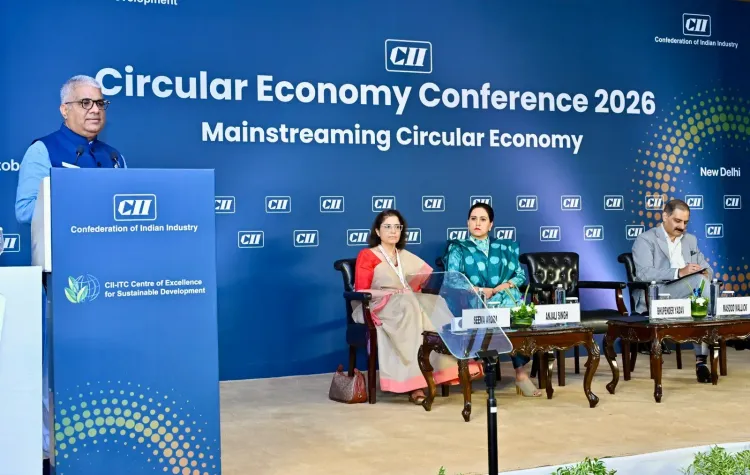
Union Environment Minister Bhupender Yadav addressed the CII Circular Economy Conference in Delhi on October 22, 2026 .
As of October 12, 2026 , more than 86,043 producers and 4,880 recyclers are registered under various EPR frameworks in India.
Nearly 499.60 lakh metric tonnes of waste had been processed across regulated waste streams.
Over 435.043 lakh metric tonnes were covered through formal EPR certificate generation.
The government cited the Solid Waste Management Rules 2026 and EPR frameworks as the policy spine driving this scale of compliance.
Yadav described the approach as a 'whole of government' model, with the focus now squarely on translating policy into measurable action.
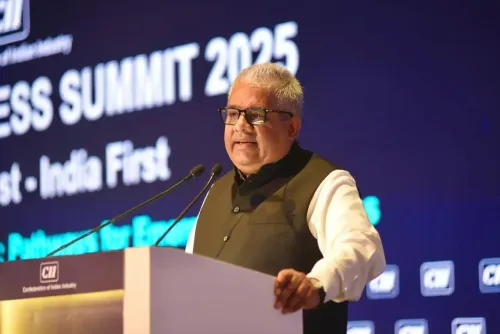
India's circular economy engine is no longer just policy on paper — it is a registered, certified, measurable machine. Union Environment Minister Bhupender Yadav told the Confederation of Indian Industry (CII) Circular Economy Conference in Delhi on Thursday, October 22, 2026, that more than 86,043 producers and 4,880 recyclers are now enrolled under India's Extended Producer Responsibility (EPR) frameworks, translating years of regulatory architecture into hard industrial reality.
From Rules to Registrations: What the Numbers Say
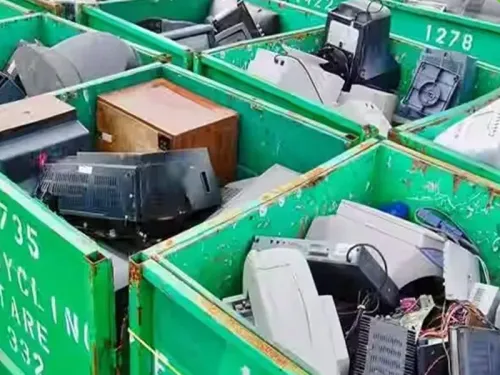
The headline figures Yadav cited are striking in their specificity. As of October 12, 2026, nearly 499.60 lakh metric tonnes of waste had been processed across regulated waste streams. Of that, over 435.043 lakh metric tonnes were covered through EPR certificate generation — the formal accounting instrument that forces producers to prove they have funded and verified the collection and recycling of their post-consumer footprint.
These are not aspirational targets. They are compliance tallies, and their scale signals that India's EPR architecture has moved well beyond pilot-stage participation into mass industrial adoption. The shift matters because EPR certificates tie commercial incentives directly to verified waste outcomes, making circular economy performance auditable in a way that earlier, declaration-based frameworks simply were not.
The Policy Spine Behind the Numbers
India's regulatory journey here is worth tracing. The Solid Waste Management Rules, first notified in 2016, laid the foundation for waste segregation and processing obligations. NITI Aayog followed in 2021 with sector-specific circular economy strategy papers covering electronics and plastics. EPR guidelines for plastic packaging were formalised in 2022, building on successive amendments to the Plastic Waste Management Rules. The Solid Waste Management Rules 2026 cited by Yadav represent the latest layer of that accumulating regulatory stack.
Yadav framed the government's approach as a 'whole of government' model — cross-ministry coordination where environment regulation is embedded within industrial policy rather than sitting apart from it. The framing mirrors the governance architecture deployed in Swachh Bharat and India's broader climate commitments: a single outcome, multiple ministries pulling in the same direction.
Why CII, and Why Now
Addressing a CII audience was a deliberate choice of venue. The Confederation of Indian Industry sits at the intersection of large manufacturers, supply-chain integrators, and the recycling sector — precisely the constituency that EPR frameworks depend on for compliance at scale. Yadav's message was directed as much at the boardroom as at the regulator: the enabling platform exists, the rules are clear, the numbers are being watched. What remains is execution.
'The focus now is on translating policy intent into meaningful action,' Yadav said, signalling that the government considers the framework-building phase largely complete and the accountability phase firmly open.
What Compliance at This Scale Actually Means
Over 86,000 producer registrations across a single regulatory mechanism is a figure that would have seemed implausible a decade ago, when India's waste economy was dominated by informal rag-pickers and unregistered aggregators. The formalisation of recyclers — now numbering 4,880 under EPR — is equally significant: it means the downstream end of the waste chain is being drawn into the formal compliance economy, creating traceable, auditable supply loops for the first time at meaningful scale.
The next test is whether certificate generation stays aligned with actual physical processing, and whether the informal sector's participation deepens or gets displaced. Those answers will emerge in the compliance reports that follow conferences like today's — and in the quarterly registration tallies that Yadav's ministry is now publishing with unusual precision.
Point of View
Not merely an environmental obligation. The precision of the registration and tonnage figures suggests the ministry is now in a performance-reporting mode, benchmarking itself against quantified outcomes ahead of what is likely a run-up to India's next round of climate and sustainability commitments. The 'whole of government' framing also pre-empts criticism about siloed environment regulation by positioning EPR as a cross-sectoral growth instrument. The real political test will come when enforcement against non-compliant producers is measured against the scale of these registration numbers.
NationPress
22 Oct 2026
Frequently Asked Questions
What is EPR and how does it work in India?
Extended Producer Responsibility (EPR) is a policy framework that makes manufacturers and importers financially and operationally responsible for the end-of-life management of their products. In India, EPR rules require producers to register with a central portal, fund collection and recycling of their post-consumer waste, and generate certificates proving that a verified volume of waste has been processed.
How many producers are registered under India's EPR framework?
As of October 12, 2026, more than 86,043 producers and 4,880 recyclers were registered under various EPR frameworks in India, according to Union Environment Minister Bhupender Yadav.
How much waste has been processed under India's EPR system?
Nearly 499.60 lakh metric tonnes of waste had been processed across regulated waste streams, with over 435.043 lakh metric tonnes covered through EPR certificate generation, as announced by Minister Yadav at the CII Circular Economy Conference.
What are the Solid Waste Management Rules 2026?
The Solid Waste Management Rules 2026 are the latest iteration of India's regulatory framework governing waste segregation, processing and disposal obligations. They build on the original 2016 rules and subsequent amendments, incorporating updated EPR and circular economy provisions.
What is India's 'whole of government' approach to circular economy?
The phrase refers to coordinated action across multiple ministries — environment, industry, urban development — toward shared circular economy outcomes. Rather than treating waste management as a standalone environment issue, the approach embeds it within industrial and urban policy, similar to how the Swachh Bharat mission was structured.