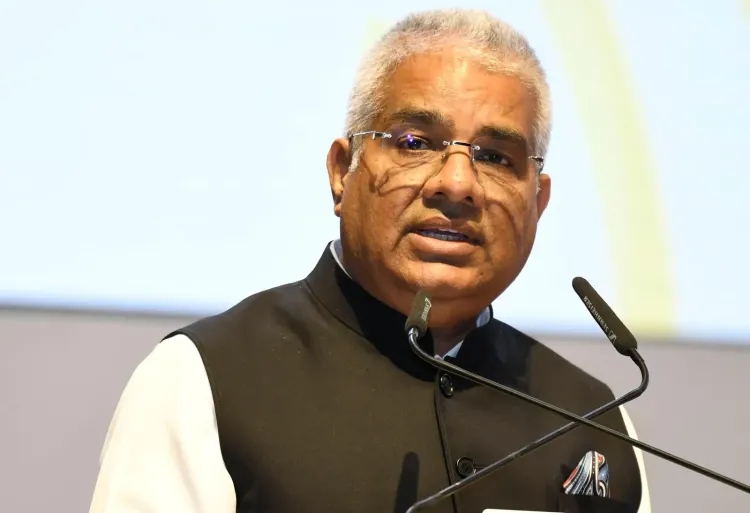
Bhupender Yadav at WCEF 2026: Circular economy must start with design, not recycling
Synopsis
At WCEF 2026 in Gandhinagar, Environment Minister Bhupender Yadav reframed India's circular economy not as a recycling exercise but as a civilisational shift — rooted in traditional Indian frugality and formalised through EPR frameworks covering 83,000 producers. His message: the real loop to close is the one between how Indians buy, use and discard things every day.
Key Takeaways
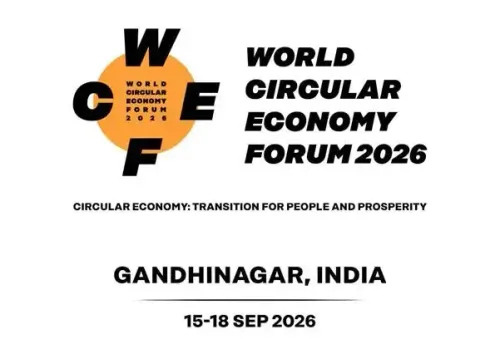
Union Environment Minister Bhupender Yadav addressed the World Circular Economy Forum (WCEF) 2026 in Gandhinagar on 15 September 2026 .
He called for circularity to begin at product design and consumption rather than at the recycling stage.
As of August 2026 , more than 83,000 producers and 4,802 recyclers are registered under India's EPR frameworks , with 482.24 lakh metric tonnes of waste processed.
Yadav linked the agenda to the Centre's Lifestyle for Environment (LiFE) initiative, emphasising responsible consumption.
India's circular economy push has featured in both its G20 Presidency coalition and its BRICS chairship priorities.
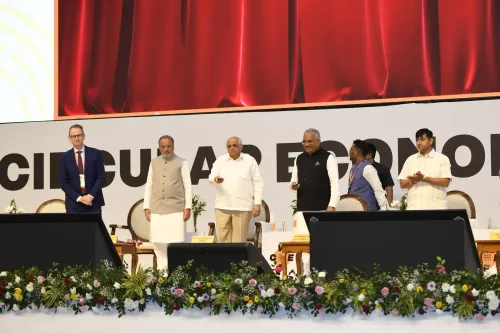
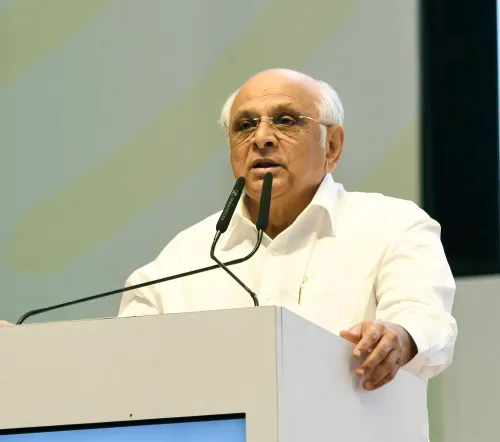
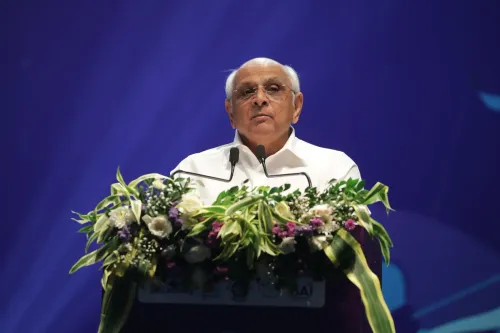
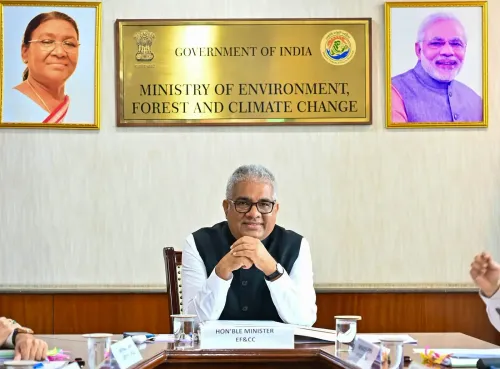
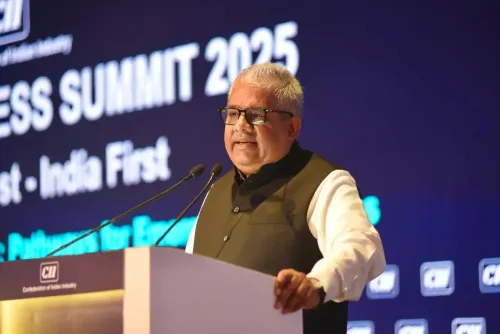
Union Environment Minister Bhupender Yadav on Tuesday, 15 September 2026, called for a fundamental reframing of India's circular economy approach, arguing that true circularity must begin at the product design and consumption stage — not at the recycling plant. Speaking at the World Circular Economy Forum (WCEF) 2026 in Gandhinagar, he urged citizens and policymakers alike to embrace a 'repair before replace' ethos as a national habit.
The Core Message: Circularity Starts at Home
Yadav drew a direct line between India's traditional frugality and modern sustainability policy. 'Repair before replace, reuse before discard, and recover before waste,' he said, framing circularity not as a foreign concept but as a formalisation of age-old Indian practice. 'For India, the circular economy is not a new destination; it is a new way of looking at an old wisdom,' the minister added.
He was emphatic that circular economy policy could not be reduced to waste disposal. It must cover the entire life cycle of resources — from product design and manufacturing through consumption, repair, reuse, remanufacturing, and eventual recovery.
EPR Frameworks and Digital Compliance Progress
The minister cited regulatory milestones to underline India's institutional progress. As of August 2026, more than 83,000 producers and 4,802 recyclers were registered under various Extended Producer Responsibility (EPR) frameworks, with nearly 482.24 lakh metric tonnes of waste processed across regulated waste streams. These mechanisms cover sectors including plastic, e-waste, and batteries.
Yadav credited digital compliance systems with making this scale possible, while noting that regulation alone could not complete the transition. 'A circular economy cannot be built only at the recycling plant,' he stressed, adding that circularity had to 'begin in the marketplace, continue in homes and eventually become a daily habit.'
LiFE Initiative and Redefining Waste
The minister linked the circular economy agenda to the Centre's Lifestyle for Environment (LiFE) initiative, arguing that responsible consumption was essential to easing pressure on natural resources. He also challenged the conventional perception of waste itself. 'Waste should no longer be seen as the end of a product's journey, but as the beginning of another resource cycle,' Yadav said.
He proposed a new benchmark for measuring circularity's success — one focused on value preservation rather than volume of recycling. 'The true measure of a circular economy will not be how much waste we recycle, but how little value we allow to be wasted,' he argued.
India's International Circular Economy Push
Yadav underscored that the transition to circularity required coordinated global action. He highlighted India's Resource Efficiency and Circular Economy Industry Coalition, launched during its G20 Presidency, and noted that circular economy priorities had also featured during India's BRICS chairship. 'Countries cannot close the loop independently,' he said, signalling that India intends to position itself as a leader in shaping global circular economy norms.
The WCEF 2026 gathering in Gandhinagar comes at a moment when India is deepening its regulatory infrastructure around sustainable resource use, and the minister's address signals that the government's ambition extends well beyond compliance metrics to behavioural and cultural change.
Point of View
Already embedded in Indian middle-class culture, into a sustainability asset rather than a hardship. But the gap between rhetorical ambition and ground reality is wide: EPR frameworks cover registered actors, not the vast informal recycling sector that actually processes the majority of India's waste. The 83,000-producer registration figure is a compliance milestone, not a circularity outcome. Until the government measures value preservation and not just waste tonnes processed, the circular economy risks becoming another well-branded policy that leaves the informal sector — its most effective practitioners — out of the picture entirely.
NationPress
15 Sept 2026
Frequently Asked Questions
What did Bhupender Yadav say at the World Circular Economy Forum 2026?
Environment Minister Bhupender Yadav said India's circular economy must begin with product design, responsible consumption and everyday repair habits — not solely at the recycling stage. He called for a cultural shift summed up in the phrase 'repair before replace, reuse before discard, and recover before waste.'
Where was the World Circular Economy Forum 2026 held?
The World Circular Economy Forum (WCEF) 2026 was held in Gandhinagar, Gujarat. The event brought together policymakers and industry leaders to discuss the global transition toward circular resource use.
How many producers and recyclers are registered under India's EPR frameworks?
As of August 2026, more than 83,000 producers and 4,802 recyclers are registered under India's various Extended Producer Responsibility (EPR) frameworks, with approximately 482.24 lakh metric tonnes of waste processed across regulated waste streams covering plastics, e-waste, and batteries.
What is the LiFE initiative and how does it connect to the circular economy?
The Lifestyle for Environment (LiFE) initiative is a Union government programme promoting responsible consumption patterns among citizens. Yadav linked it directly to the circular economy agenda, arguing that reducing pressure on natural resources requires behavioural change at the household level, not just industrial-scale recycling.
What is India's role in the global circular economy effort?
India launched the Resource Efficiency and Circular Economy Industry Coalition during its G20 Presidency and has included circular economy priorities in its BRICS chairship agenda. Yadav stressed that countries cannot achieve circularity independently, positioning India as an active shaper of global norms on resource efficiency.