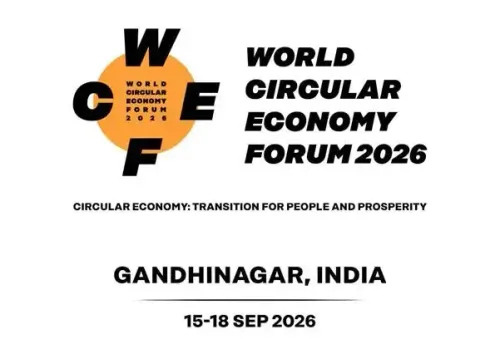
World Circular Economy Forum 2026 opens in Gandhinagar on Sep 15, a South Asia first
Synopsis
India hosts the World Circular Economy Forum for the first time — and it's a South Asia first. With 2,000-plus stakeholders from 65 countries descending on Gandhinagar from 15 September, the three-day event is India's biggest multilateral pitch yet for circular economy leadership, backed by Finland's Sitra and anchored by a joint government framework spanning AI, finance, and industrial innovation.
Key Takeaways
The World Circular Economy Forum (WCEF) 2026 opens in Gandhinagar, Gujarat on 15 September 2026 — the first time the forum is held in South Asia .
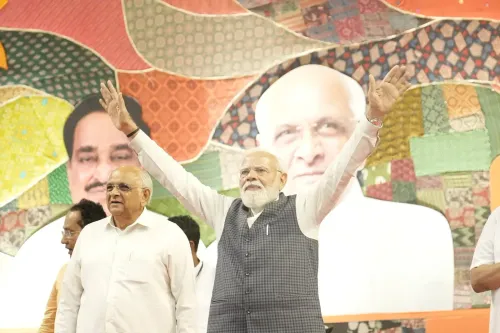
The event will be jointly inaugurated by Union Environment Minister Bhupender Yadav and Gujarat Chief Minister Bhupendra Patel .
More than 2,000 stakeholders from over 65 countries are expected to participate across the three-day forum.
The forum features 4 plenary sessions , 16 thematic sessions , and an expo with 125-plus national and international exhibitors.
India recently became Co-Chair of the 10 YFP Board on sustainable consumption; the board meets on the sidelines on 15 September .
80 accelerator sessions will be held online and in-person globally on 17–18 September .
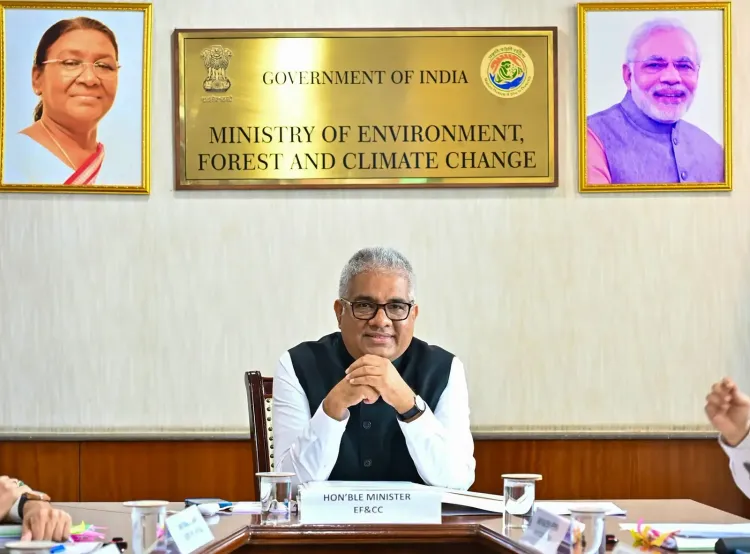
The World Circular Economy Forum (WCEF) 2026 is set to open in Gandhinagar, Gujarat on 15 September 2026, marking the first time the globally recognised sustainability forum will be hosted in South Asia. Union Environment Minister Bhupender Yadav has already begun preliminary discussions centred on reusing, refurbishing, and recycling existing materials ahead of the three-day event.
Key Details of the Forum
The forum will run under the theme 'Circular Economy: Transition for People and Prosperity' and will be jointly inaugurated by Union Environment Minister Bhupender Yadav and Gujarat Chief Minister Bhupendra Patel. Other dignitaries at the inaugural session include Gujarat Forest and Environment Minister Arjunbhai Modhwadia and Finland's Ambassador to India Mikko Kivikoski.
The event is jointly organised by the Central Pollution Control Board (CPCB), the Finnish Innovation Fund Sitra, the Government of Finland, India's Ministry of Environment, Forest and Climate Change, the Government of Gujarat, and the Gujarat Pollution Control Board (GPCB).
Scale and Participation
The WCEF 2026 is expected to draw more than 2,000 cross-sectoral stakeholders from over 65 countries, including business leaders, entrepreneurs, policymakers, researchers, and innovators. On 15 and 16 September, the programme will feature four plenary sessions and 16 parallel thematic sessions covering artificial intelligence, employment potential, energy production, circular finance, governance, sustainable products, industrial solutions, the start-up ecosystem, and youth leadership.
An expo featuring more than 125 national and international exhibitors will run alongside the forum, showcasing practical circular solutions developed by start-ups and investment-ready innovations.
India's Strategic Objectives
According to official statements, the primary objective of WCEF 2026 is to highlight India's circular economy initiatives and strengthen international cooperation. The forum aims to facilitate circular finance mobilisation, encourage policy dialogue and cross-sectoral partnerships, and advance digitalisation and technology solutions for circularity. Officials stressed that circularity — which focuses on looping materials and products back into the economy as valuable resources — is central to India's evolving environmental governance framework.
This comes amid India's recent assumption of the role of Co-Chair of the 10 Year Framework of Programmes on Sustainable Consumption and Production Patterns (10 YFP) Board, reflecting the country's stated commitment to sustainable production. The 10 YFP Board will hold an in-person meeting on the sidelines of WCEF on 15 September at Gandhinagar.
Extended Programming and Global Reach
The forum's reach extends beyond the three main days. On 17 and 18 September, global collaborators will independently organise 80 accelerator sessions — online, hybrid, and in-person — at Gandhinagar and other locations worldwide. This structure is designed to maximise engagement with the Global South and broaden the forum's impact beyond its primary venue.
With India hosting WCEF for the first time and positioning itself as a leader in the circular economy transition, all eyes will be on whether the forum translates policy dialogue into concrete investment commitments.
Point of View
However, will not be the headcount or the expo stalls, but whether the forum generates binding circular finance commitments rather than another round of declarations. India's record on translating multilateral environmental platforms into domestic regulatory follow-through has been uneven; the 10 YFP Co-Chair role offers leverage, but leverage only works when it is applied. Policymakers, industry, and civil society will need to watch whether the thematic sessions on AI, governance, and circular finance produce implementable frameworks — or merely well-attended conversations.
NationPress
13 Sept 2026
Frequently Asked Questions
What is the World Circular Economy Forum 2026 and where is it being held?
The World Circular Economy Forum (WCEF) 2026 is a global multilateral event focused on promoting circular economy principles — reusing, refurbishing, and recycling materials to loop them back into the economy. It will be held in Gandhinagar, Gujarat, from 15 to 17 September 2026, making India the first South Asian country to host the forum.
Who is inaugurating the WCEF 2026?
The forum will be jointly inaugurated by Union Environment Minister Bhupender Yadav and Gujarat Chief Minister Bhupendra Patel. Other dignitaries at the inaugural session include Gujarat's Forest and Environment Minister Arjunbhai Modhwadia and Finland's Ambassador Mikko Kivikoski.
Which organisations are organising WCEF 2026?
The event is jointly organised by India's Central Pollution Control Board (CPCB), the Finnish Innovation Fund Sitra, the Government of Finland, India's Ministry of Environment, Forest and Climate Change, the Government of Gujarat, and the Gujarat Pollution Control Board (GPCB).
How many countries and participants are expected at WCEF 2026?
More than 2,000 cross-sectoral stakeholders from over 65 countries are expected to participate, including business leaders, entrepreneurs, researchers, policymakers, academicians, and innovators.
What topics will be covered at WCEF 2026?
The forum's 16 parallel thematic sessions will cover AI applications, employment potential, energy production, circular finance, governance, sustainable products, industrial solutions, the start-up ecosystem, and youth leadership. An expo featuring 125-plus exhibitors will run alongside, and 80 accelerator sessions are planned globally on 17–18 September.