CM Sai Marks Janjatiya Gaurav Diwas, Cites PM JANMAN Gains
Synopsis
On Janjatiya Gaurav Diwas, Chhattisgarh CM Vishnu Deo Sai highlighted PM JANMAN and the Dharti Aaba Janjatiya Gram Utkarsh Abhiyan as vehicles for delivering housing, education, health, roads, and drinking water to tribal communities under PM Modi's leadership.
Key Takeaways
Chhattisgarh CM Vishnu Deo Sai marked Janjatiya Gaurav Diwas on 15 November 2026 by highlighting the central government's tribal welfare push.
PM JANMAN , launched in November 2023 , covers 705 districts to deliver housing, education, health, and connectivity to Particularly Vulnerable Tribal Groups.
The Dharti Aaba Janjatiya Gram Utkarsh Abhiyan , rolled out in 2024 , focuses on saturating tribal gram panchayats with basic services and livelihood support.
Chhattisgarh is a primary implementation state for both schemes owing to its large Scheduled Tribe population.
Janjatiya Gaurav Diwas commemorates the birth anniversary of Birsa Munda , institutionalised as a national observance by the central government in 2021 .
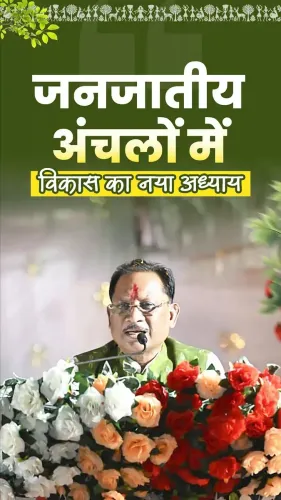
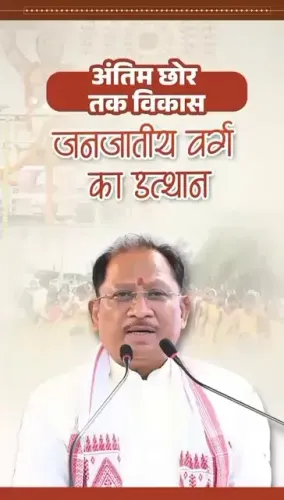
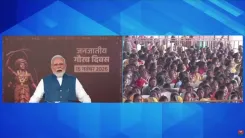
On Janjatiya Gaurav Diwas — 15 November 2026 — Chhattisgarh Chief Minister Vishnu Deo Sai invoked the memory of Birsa Munda to frame a pointed political argument: that tribal India is finally receiving the basic services it was long promised, and that two central missions are now making that happen on the ground.
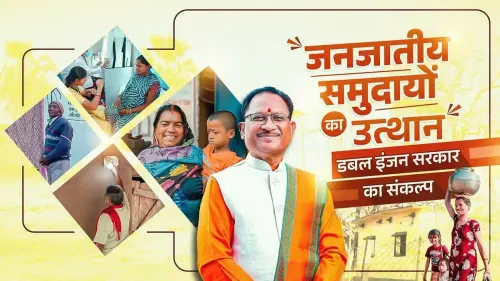
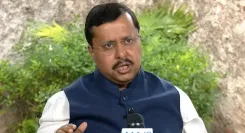
Posting in Hindi, CM Sai wrote: 'Aaj janjatiya samaj ke samagra vikas... ki disha mein abhutpurva kary ho rahe hain' — 'unprecedented work is being done today for the holistic development of tribal society.' He singled out two flagship schemes — PM Janjatiya Nyaya Maha Abhiyan (PM JANMAN) and the Dharti Aaba Janjatiya Gram Utkarsh Abhiyan — as the vehicles delivering housing, education, health, roads, and drinking water to tribal families across the country.
What PM JANMAN and Dharti Aaba Actually Promise
PM JANMAN, launched in November 2023, is a convergence mission covering 705 districts with a mandate to saturate Particularly Vulnerable Tribal Groups with basic amenities — from pucca housing to mobile medical units. The Dharti Aaba Janjatiya Gram Utkarsh Abhiyan, rolled out in 2024, widened the lens to tribal gram panchayats broadly, focusing on livelihood support alongside infrastructure. Together, the two schemes represent the central government's most structured attempt yet to close the services gap in India's tribal belt. Chhattisgarh is not a peripheral player in this story. The state is home to one of India's largest Scheduled Tribe populations, making it a primary implementation arena for both missions. For CM Sai — himself a member of the Scheduled Tribe community — invoking these schemes on Janjatiya Gaurav Diwas carries both a policy signal and a cultural weight.Birsa Munda's Day and the Politics of Recognition
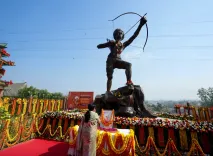
Janjatiya Gaurav Diwas is observed every 15 November to honour the birth anniversary of Birsa Munda, the 19th-century tribal leader who led the Ulgulan uprising against colonial rule and landlord exploitation in what is now Jharkhand. The BJP-led central government institutionalised the observance as a national day in 2021, framing it as a long-overdue act of historical recognition for tribal contributions to India's freedom struggle. The choice to anchor a welfare progress narrative to this day is deliberate. It places the government's development messaging inside a larger story of dignity and historical justice — not merely road-laying and housing targets, but a civilisational correction. With budget reviews for 2026-27 approaching, state-level progress on housing completions and road connectivity under both schemes will come under scrutiny. The ambition is clear; the delivery record is what watchers will be tracking next.Point of View
The government frames its infrastructure rollout not as routine governance but as historical justice. For Chhattisgarh — a state with a large tribal electorate and ongoing Maoist-related security challenges — progress on basic services in remote villages carries electoral as well as developmental stakes. The real test of the narrative will come from ground-level delivery data as 2026-27 budget reviews approach.
NationPress
15 Nov 2026
Frequently Asked Questions
What is Janjatiya Gaurav Diwas and why is it observed on 15 November?
Janjatiya Gaurav Diwas is a national observance held every 15 November to mark the birth anniversary of tribal leader Birsa Munda, honouring tribal communities' contributions to India's freedom struggle. The central government institutionalised it as a national day in 2021.
What is PM JANMAN and what does it cover?
PM Janjatiya Nyaya Maha Abhiyan (PM JANMAN), launched in November 2023, is a central mission covering 705 districts aimed at providing Particularly Vulnerable Tribal Groups with housing, healthcare, education, roads, and other basic amenities through a convergence approach.
What is the Dharti Aaba Janjatiya Gram Utkarsh Abhiyan?
Launched in 2024, the Dharti Aaba Janjatiya Gram Utkarsh Abhiyan is a central campaign targeting the saturation of basic services and livelihood support in tribal gram panchayats across India, complementing the PM JANMAN mission.
Why is Chhattisgarh important for tribal welfare schemes?
Chhattisgarh has one of India's largest Scheduled Tribe populations, making it a key implementation state for central tribal development programmes like PM JANMAN and the Dharti Aaba Abhiyan.
Who is Vishnu Deo Sai and what is his tribal background?
Vishnu Deo Sai is the Chief Minister of Chhattisgarh and a BJP leader. He is himself a member of the Scheduled Tribe community, which lends added significance to his advocacy for tribal welfare schemes.