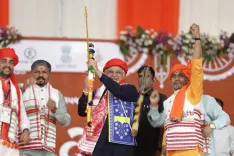
CM Rekha Gupta Marks Janjatiya Gaurav Diwas With Modi's Tribal Push
Synopsis
On Janjatiya Gaurav Diwas 2026, Delhi CM Rekha Gupta amplified PM Modi's announcement of 170-plus tribal development project inaugurations and 70-plus foundation stones laid across Indian states, marking Birsa Munda's birth anniversary with a large-scale central government infrastructure push for scheduled tribe communities.
Key Takeaways
Delhi CM Rekha Gupta shared PM Narendra Modi's statement on Janjatiya Gaurav Diwas, 15 November 2026 .
More than 170 tribal development projects were inaugurated across multiple Indian states on a single day.
Over 70 additional projects had their foundation stones laid, bringing the combined figure above 240 activations .
Janjatiya Gaurav Diwas was established in 2021 to mark the birth anniversary of tribal icon Birsa Munda on 15 November every year.
The rollout follows a recurring NDA government pattern of using the observance to demonstrate multi-state tribal welfare delivery.
Key beneficiary states include Jharkhand, Chhattisgarh, Odisha , and Madhya Pradesh .
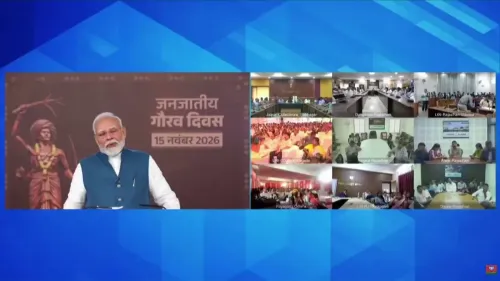
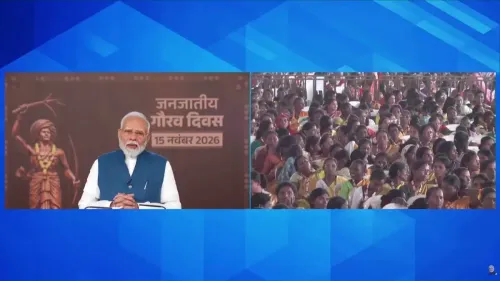
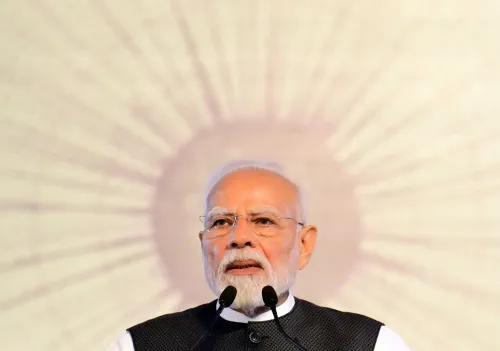
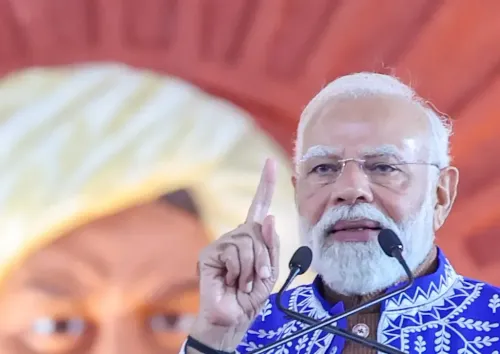
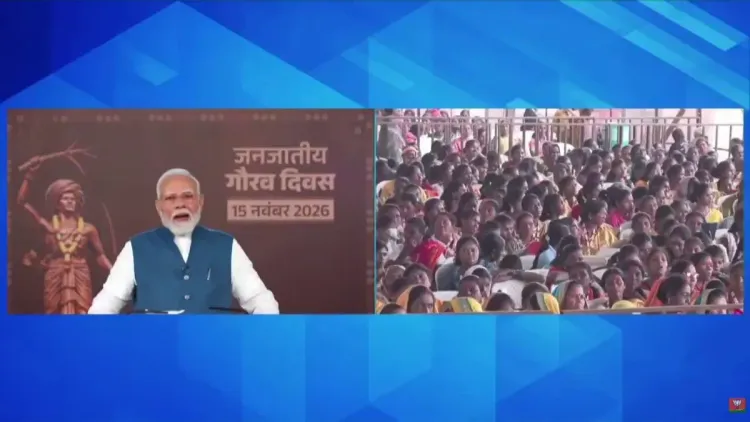
On the birth anniversary of tribal icon Birsa Munda, India's development machinery moved at scale — Delhi Chief Minister Rekha Gupta on Sunday, 15 November 2026 amplified a landmark announcement by Prime Minister Narendra Modi: more than 170 tribal development projects inaugurated and over 70 more laid with foundation stones, spanning states across the country, all in a single day.
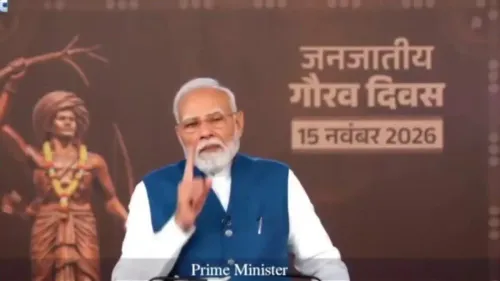
Sharing the Prime Minister's words directly, CM Gupta quoted him: 'Aaj Janjatiya Gaurav Diwas ke is avsar par desh ke alag alag raajyon mein janjatiya vikas se judi 170 se adhik pariyojanaon ka lokarpan aur 70 se adhik projects ka shilanyas kiya gaya hai' — 'On this occasion of Janjatiya Gaurav Diwas today, more than 170 projects related to tribal development have been inaugurated and more than 70 projects have been foundation-stoned across different states of the country.'
Birsa Munda's Anniversary as a Development Milestone
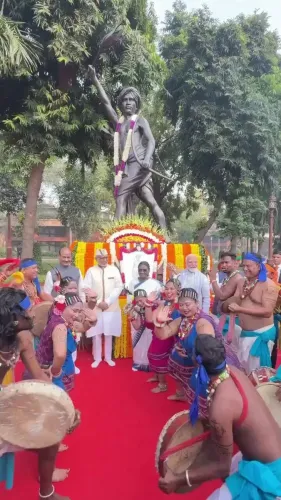
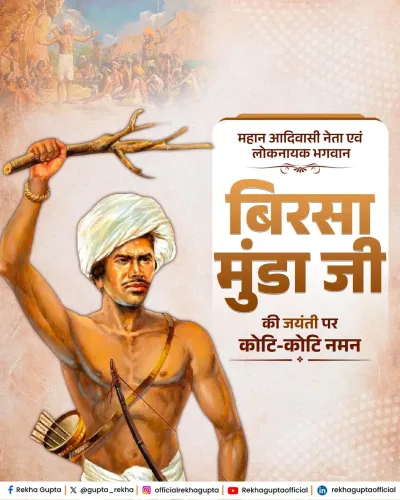
Janjatiya Gaurav Diwas was instituted by the Government of India in 2021 to be observed every 15 November — the birth anniversary of Birsa Munda, the 19th-century tribal leader from the Jharkhand region who became a symbol of Adivasi resistance against colonial rule. The day has since become a showcase event for the Ministry of Tribal Affairs, with annual rollouts of infrastructure, education, and connectivity schemes targeting scheduled tribe communities.
The scale of simultaneous inaugurations fits a pattern that NDA administrations have built into the event's identity: using the anniversary to demonstrate quantifiable progress across geographically dispersed tribal belts in states including Jharkhand, Chhattisgarh, Odisha, and Madhya Pradesh. A single-day launch of this breadth signals both political intent and logistical coordination across multiple state governments.
What 240-Plus Projects in One Day Actually Means
Combining inaugurations and foundation stones, the government activated or committed to more than 240 tribal-area projects on this day alone. For scheduled tribe communities — who have historically faced gaps in road access, school infrastructure, healthcare facilities, and digital connectivity — a rollout at this scale represents a concentrated injection of central resources into India's most underserved geographies.
The Ministry of Tribal Affairs has consistently positioned such multi-state events as evidence of a shift from incremental to mission-mode delivery for tribal welfare. Whether the physical and financial completion of these projects matches the pace of their announcements is the question that tribal-area residents, state governments, and parliamentary watchdogs will be tracking in the months ahead.
For CM Gupta, amplifying the Prime Minister's announcement from Delhi underscores the BJP's nationwide effort to make tribal outreach a visible, shared political priority — not just a central government headline, but a message carried by every rung of the party's leadership.
The projects are laid; the clock on delivery has started.
Point of View
The government signals mission-mode intent while generating tangible local narratives ahead of state elections in Jharkhand, Chhattisgarh, and Odisha. Delhi CM Rekha Gupta's amplification of the PM's words illustrates how BJP's central messaging is designed to cascade uniformly through the party's state leadership. The real test, however, lies in project-completion timelines — a gap between announcements and delivery has historically been the opposition's sharpest line of attack on tribal welfare claims.
NationPress
15 Nov 2026
Frequently Asked Questions
What is Janjatiya Gaurav Diwas and why is it celebrated on 15 November?
Janjatiya Gaurav Diwas is an annual national observance on 15 November marking the birth anniversary of Birsa Munda , the revered 19th-century tribal leader from the Jharkhand region. The Government of India formally instituted the observance in 2021 to celebrate tribal pride and showcase development work for scheduled tribe communities.
How many tribal projects were launched on Janjatiya Gaurav Diwas 2026?
According to PM Narendra Modi's statement shared by Delhi CM Rekha Gupta , more than 170 tribal development projects were inaugurated and over 70 projects had their foundation stones laid across different Indian states on 15 November 2026 .
Who was Birsa Munda?
Birsa Munda was a 19th-century tribal leader born on 15 November in the Jharkhand region who became a powerful symbol of Adivasi identity and resistance against colonial rule. He is widely revered across India's tribal communities.
Which states benefit from tribal development projects launched on Janjatiya Gaurav Diwas?
The projects span tribal belt states including Jharkhand, Chhattisgarh, Odisha , and Madhya Pradesh , among others. The Ministry of Tribal Affairs coordinates multi-state rollouts covering infrastructure, education, and connectivity for scheduled tribe populations.
Why did Delhi CM Rekha Gupta post about Janjatiya Gaurav Diwas?
Delhi CM Rekha Gupta , a BJP leader, shared PM Modi's statement on the occasion as part of the party's nationwide effort to amplify the government's tribal welfare messaging through state-level leadership on 15 November 2026 .