CM Rekha Gupta to offer Arghya at Hathi Ghat on Chhath Puja
Synopsis
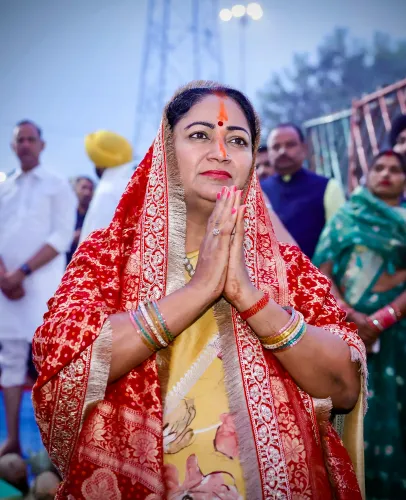
Delhi Chief Minister Rekha Gupta will join devotees at Hathi Ghat on the Yamuna to offer the sunrise Arghya on Chhath Puja, announcing that the BJP-led Delhi government has made grander festival arrangements than ever across the capital.
Key Takeaways
Delhi CM Rekha Gupta will personally offer the morning arghya to the Sun God at Hathi Ghat on Chhath Puja .
She announced that the Delhi government has made arrangements 'more beautiful and grand than before' at Chhath sites across the capital.
Gupta extended an open public invitation for all to join and receive Chhathi Maiya 's blessings together.
Chhath Puja involves a 36-hour fast and riverbank sunrise-sunset rituals, observed primarily by communities from Bihar and eastern Uttar Pradesh .
Hathi Ghat on the Yamuna is one of the principal sites for Chhath observances in Delhi .
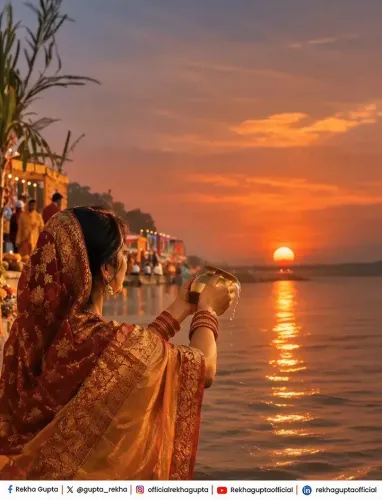
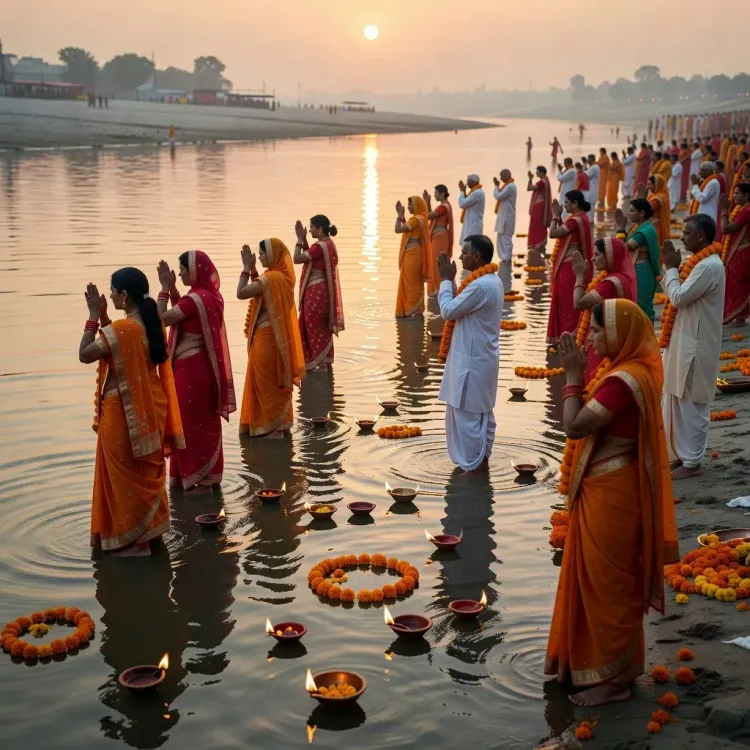
As the first light of the sun breaks over the Yamuna this Chhath, Delhi Chief Minister Rekha Gupta will stand alongside devotees at Hathi Ghat to offer the morning arghya — the sacred salutation to the rising Sun God — marking the most spiritually charged moment of the Chhath Mahaparvwa.
Posting on Sunday, 15 November 2026, Gupta announced that she would join her Chhatvrati sisters — fellow fasting devotees — at Hathi Ghat for the sunrise ritual, extending an open invitation to all: 'Aiye, milkar Chhathi Maiya ka aashirwaad lein' ('Come, let us together receive Chhathi Maiya's blessings'). The post carried the hashtag #दिल्ली_में_दिव्य_भव्य_छठ — 'Divine and Grand Chhath in Delhi'.
Grand arrangements across Delhi's ghats
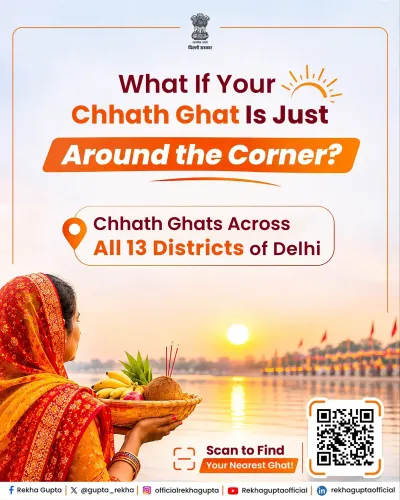
Gupta stated that the Delhi government has rolled out arrangements 'more beautiful and grand than ever before' across the capital's Chhath sites, so that every family can worship Chhathi Maiya with full devotion and joy. The scale of the festival's logistics — temporary lighting, crowd management, sanitation, and ghat preparation — has grown steadily in step with Delhi's large migrant community from Bihar and eastern Uttar Pradesh.
Successive Delhi administrations have framed their Chhath infrastructure as a commitment to safe and inclusive religious observance for this community. This year's arrangements, as described by the Chief Minister, are positioned as the most elaborate the city has seen.
Chhath's significance for Delhi's Bihari diaspora
Chhath Puja is one of the most demanding and spiritually rigorous Hindu festivals — devotees observe a 36-hour waterless fast and perform riverside rituals at both sunset and sunrise over two consecutive days. For millions of residents from Bihar and eastern Uttar Pradesh who now call Delhi home, the festival is a living thread to their home culture, observed with intense communal fervour at the city's Yamuna ghats every year.
Hathi Ghat, one of the designated Yamuna riverbank sites in the capital, draws large congregations for these rituals. The Chief Minister's personal participation alongside ordinary devotees — not from a stage, but as a co-worshipper — signals the political as much as the spiritual weight the festival carries in a city where the Bihari and Poorvanchali electorate is a decisive demographic force.
Point of View
Where voters from Bihar and eastern Uttar Pradesh can swing assembly constituencies. By framing government arrangements as 'grander than ever' and showing up as a co-devotee rather than a presiding official, the Chief Minister collapses the distance between governance and community in a culturally powerful way. The move fits a broader BJP pattern of using large religious festivals as platforms for demonstrating administrative competence and cultural solidarity simultaneously.
NationPress
15 Nov 2026
Frequently Asked Questions
Where will Rekha Gupta offer Arghya on Chhath Puja 2026?
Delhi Chief Minister Rekha Gupta will offer the sunrise Arghya at Hathi Ghat on the Yamuna riverbank in Delhi during Chhath Puja 2026 .
What is Chhath Puja and why is it celebrated?
Chhath Puja is a Hindu festival dedicated to the Sun God and Chhathi Maiya . Devotees observe a rigorous 36-hour waterless fast and perform riverside rituals at sunset and sunrise, primarily communities from Bihar and eastern Uttar Pradesh .
What arrangements has the Delhi government made for Chhath Puja 2026?
Chief Minister Rekha Gupta stated the Delhi government has made 'more beautiful and grand' arrangements than previous years across the capital's Chhath sites, covering lighting, sanitation, and crowd management at Yamuna ghats.
What is Hathi Ghat in Delhi?
Hathi Ghat is a Yamuna riverbank site in Delhi that serves as one of the designated locations for Chhath Puja observances, drawing large congregations of devotees every year.
Why is Chhath Puja politically important in Delhi?
Delhi has a large migrant population from Bihar and eastern Uttar Pradesh for whom Chhath Puja is a core cultural festival. This community forms a significant electoral bloc, making Chhath observances politically as well as spiritually significant for Delhi's leaders.