CM Rekha Gupta Promises Grander Chhath on Yamuna in 2026
Synopsis
Delhi CM Rekha Gupta has promised the grandest-ever Chhath celebrations on the Yamuna in 2026, crediting voter power for reversing years of court-mandated ghat access restrictions and anchoring the pledge to the Namo Yamuna River Safari initiative.
Key Takeaways
Delhi CM Rekha Gupta pledged that Chhath Puja 2026 on the Yamuna ghats will be grander than last year's celebrations.
She recalled that for years, devotees were legally barred from Yamuna ghats during festivals due to National Green Tribunal and Delhi High Court orders citing pollution.
The BJP government permitted large-scale Chhath access in its first year after winning the 2025 Delhi assembly elections .
The announcement was tagged #NamoYamunaRiverSafari , linking religious access to the government's riverfront tourism and infrastructure initiative.
Gupta directly credited voters, saying 'the power of your one vote' delivered the restored ghat access — a pointed consolidation message to Chhath devotees.
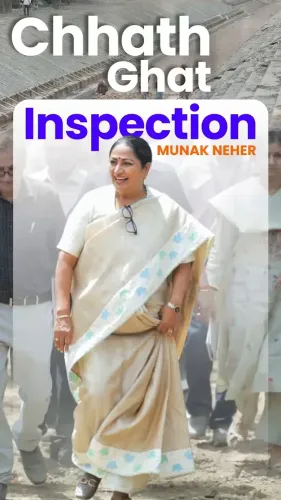
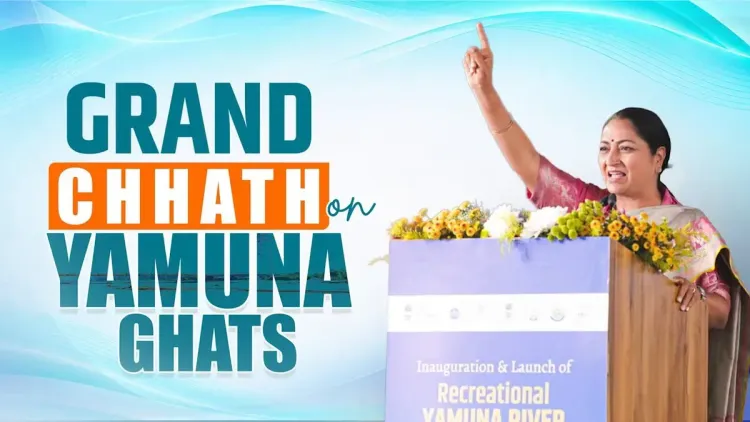
For years, Delhi's devotees could only watch the Yamuna from a distance — court orders barred them from the ghats, and those who tried to worship were met with legal notices. Delhi Chief Minister Rekha Gupta, speaking on Tuesday, 10 November 2026, invoked that memory not as a grievance but as a proof of democratic power — and then raised the stakes for this year's Chhath Puja.
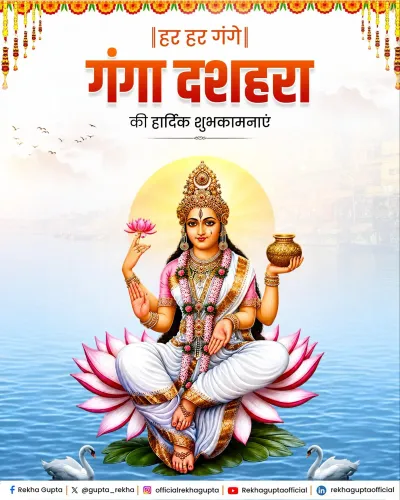
Addressing her audience in Hindi, CM Gupta said: 'यमुना जी पर जाने के लिए लोग तरस जाते थे' — 'People used to yearn just to get to the Yamuna. For years, Delhi's residents were deprived of worshipping on the Yamuna's banks. They were stopped from coming to the ghats. Cases were filed. They were dragged to court.' She then pivoted sharply: 'But the power of your one vote delivered a grand Chhath programme on the Yamuna in the very first year. And I assure you — this year we will together celebrate an even grander Chhath than the last time.' The post carried the hashtag #NamoYamunaRiverSafari, tying the pledge to the government's flagship riverfront initiative.
Years of ghat closures that preceded the BJP's return
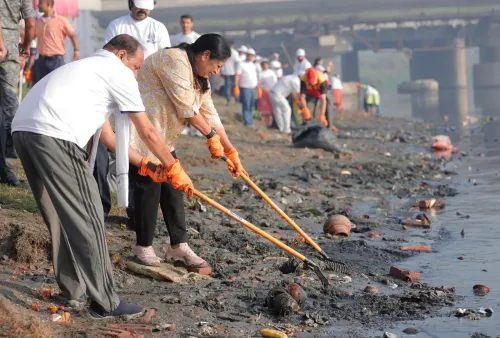
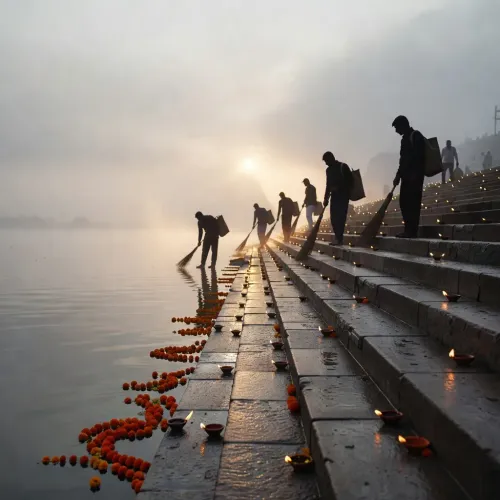
The access dispute stretches back more than a decade. From 2015 onward, the National Green Tribunal and the Delhi High Court issued successive orders restricting public gatherings on Yamuna ghats during festivals, citing dangerously high pollution levels in the river. For Chhath devotees — a community drawn heavily from migrants from Bihar and eastern Uttar Pradesh who form a substantial voter bloc in the capital — the restrictions felt like an erasure of a central religious tradition. The annual festival, which involves standing in flowing water at sunrise and sunset to offer prayers to the sun god, cannot simply be relocated indoors.
The cumulative effect was years of contested permissions, last-minute court hearings, and devotees left in uncertainty every October and November. That political wound, Gupta is now arguing, was healed in the BJP government's very first year in office after the 2025 Delhi assembly elections.
Namo Yamuna River Safari and the riverfront reclamation push
The Namo Yamuna River Safari scheme — the hashtag anchor of Gupta's post — represents the government's broader ambition to transform the Yamuna riverfront into an accessible, tourism-ready public space. By branding the Chhath permissions as part of this initiative, the administration is weaving together religious access, civic infrastructure, and electoral accountability into a single narrative. The move mirrors a pattern seen in other BJP-governed states, where riverfront projects and restored festival access have become signature first-term announcements.
What Gupta is signalling for Chhath 2026 is scale — 'even grander than last time' is a direct commitment to larger infrastructure, more ghats, and a bigger official footprint on the event. The logistics of that promise — how many ghats, what crowd management, what environmental clearances — will be the real test of the pledge.
The electoral arithmetic behind the Yamuna promise
Gupta's framing is deliberate and precise: she credits 'your one vote' — not government policy, not court rulings, but the act of voting — as the instrument that unlocked the ghats. It is a classic consolidation message, reminding a specific community that their franchise produced a tangible, visible, annual dividend. With Chhath 2026 approaching, that message lands at exactly the right moment to convert sentiment into attendance — and attendance into imagery that travels far beyond Delhi.
If this year's celebrations match or exceed the ambition she has set, the Yamuna ghats will once again serve as one of the most photographed political backdrops in the capital. If they fall short, the promise is on record.
Point of View
A bloc that proved decisive in the 2025 Delhi assembly results. By anchoring the message to the Namo Yamuna River Safari, the government is also framing riverfront religiosity as infrastructure policy, giving the initiative cultural weight beyond tourism metrics. The pattern — BJP governments restoring festival access to rivers and public spaces on early in their terms — has become a recognisable playbook across states, blending civic delivery with identity politics in a way that is difficult for opposition parties to counter without appearing anti-faith. The real policy watch now is whether the government secures the environmental and logistical clearances needed to match the ambition Gupta has publicly set.
NationPress
10 Nov 2026
Frequently Asked Questions
Why were people banned from Yamuna ghats during Chhath Puja?
From 2015 onward , the National Green Tribunal and the Delhi High Court issued orders restricting public gatherings on Yamuna ghats during festivals, citing severe river pollution levels that posed health risks to devotees standing in the water.
What is the Namo Yamuna River Safari scheme?
The Namo Yamuna River Safari is a Delhi government initiative launched after the 2025 assembly elections aimed at developing the Yamuna riverfront for public access and tourism, while also restoring cultural and religious use of the ghats.
When is Chhath Puja celebrated and what does it involve?
Chhath Puja is an annual Hindu festival observed primarily by communities from Bihar and eastern Uttar Pradesh . It involves standing in flowing river water at sunrise and sunset to offer prayers to the sun god, making ghat access essential.
What did Delhi CM Rekha Gupta say about Chhath 2026?
Delhi CM Rekha Gupta promised on 10 November 2026 that this year's Chhath celebrations on the Yamuna ghats will be even grander than those held in the previous year, calling it a result of voters' democratic choice in the 2025 elections .
Which community does Chhath Puja represent in Delhi's politics?
Chhath Puja is central to the identity of Purvanchali migrants — people from Bihar and eastern Uttar Pradesh — who form a large and electorally significant community in Delhi , making ghat access a politically consequential issue.