CM Rekha Gupta Marks Janjatiya Gaurav Diwas, Cites Modi
Synopsis
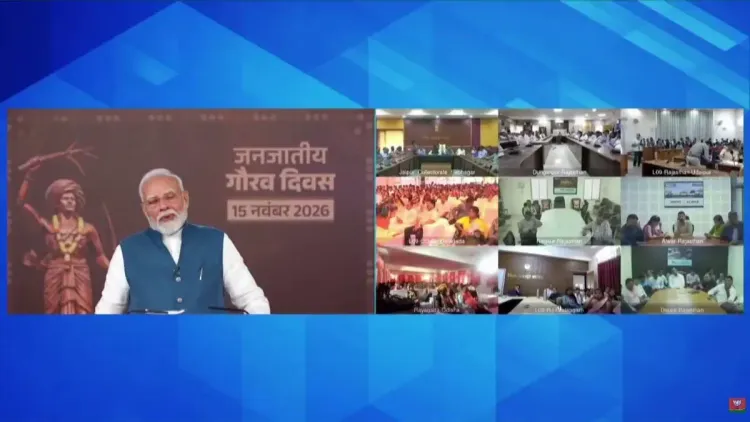
On Janjatiya Gaurav Diwas, 15 November 2026, Delhi CM Rekha Gupta quoted PM Modi noting that the observance — launched in 2021 to honour tribal icon Birsa Munda — has grown into a national celebration, with over 2 lakh programmes held during Munda's 150th birth anniversary year.
Key Takeaways
Janjatiya Gaurav Diwas was instituted by the Government of India on 15 November 2021 to mark the birth anniversary of tribal leader Birsa Munda .
Birsa Munda was born on 15 November 1875 in present-day Jharkhand and led the Munda rebellion against British colonial rule before dying in custody in 1900 .
PM Modi, as quoted by CM Gupta, stated that more than 2 lakh programmes were held nationwide during last year's 150th birth anniversary of Birsa Munda.
Delhi CM Rekha Gupta posted the tribute on 15 November 2026 , the sixth anniversary of the observance's founding.
The observance is part of a broader BJP effort since 2014 to incorporate tribal leaders and histories into India's official national commemorative calendar.
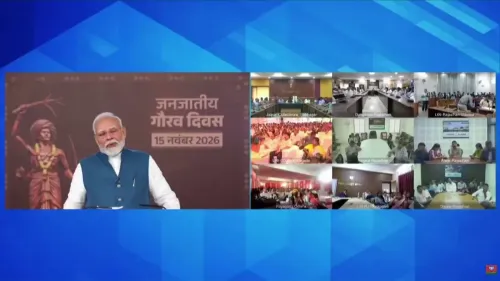
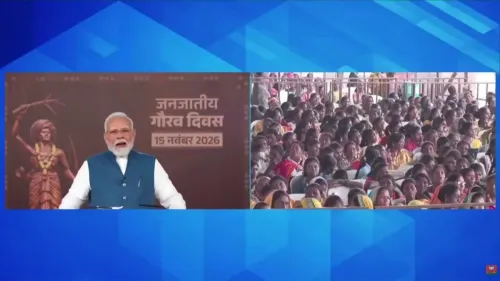
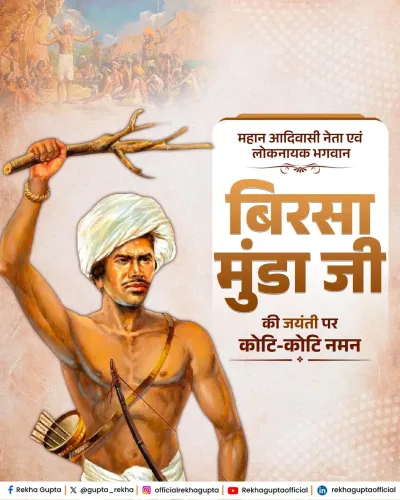
Five years after its founding, Janjatiya Gaurav Diwas has grown from a government calendar entry into what Delhi Chief Minister Rekha Gupta is calling a full-fledged national celebration — and on Sunday, 15 November 2026, she marked the occasion by citing Prime Minister Narendra Modi's own words on the observance's journey.
Quoting PM Modi directly, CM Gupta shared his reflection: '15 नवंबर 2021 से जनजातीय गौरव दिवस मनाने की जो शुरुआत हुई, आज वो एक राष्ट्रीय उत्सव बन चुका है' — ('What began as the observance of Janjatiya Gaurav Diwas on 15 November 2021 has today become a national celebration.')
From a government notification to a national moment
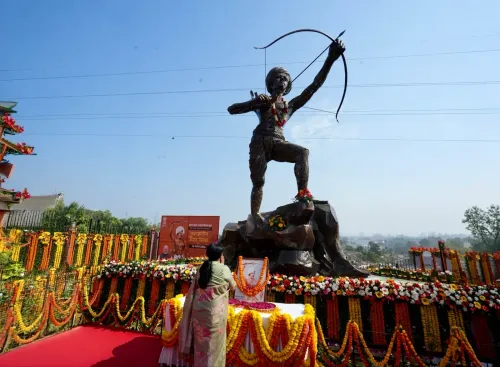
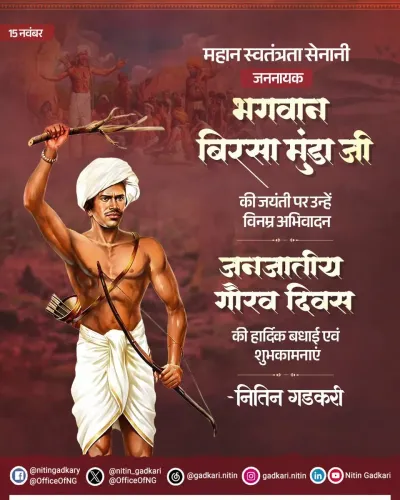
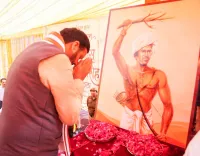
The Government of India instituted Janjatiya Gaurav Diwas on 15 November 2021, choosing the date to honour the birth anniversary of Birsa Munda — the 19th-century tribal leader born on 15 November 1875 in present-day Jharkhand who led the Munda rebellion against British colonial rule. The choice was deliberate: by anchoring the observance to Munda's birth, the government folded a figure long celebrated within tribal communities into the national commemorative calendar.
PM Modi's remarks, as quoted by CM Gupta, point to the scale the observance reportedly reached on its fourth edition: last year's 150th birth anniversary of Birsa Munda saw more than 2 lakh programmes held across the country, with crores of citizens participating. The sheer spread of those numbers — if borne out — would mark a significant amplification from the observance's quiet institutional beginnings.
Birsa Munda's place in India's national memory
Birsa Munda occupies a singular position in Indian history. Born into the Munda tribal community of the Chota Nagpur plateau, he organised resistance against both colonial land-acquisition policies and missionary influence, eventually leading the Ulgulan ('Great Tumult') uprising in 1899–1900. He died in British custody in 1900 at the age of 25 — cementing his status as a martyr well before the Indian state existed to officially recognise him.
His portrait now hangs in the Central Hall of Parliament, and the state of Jharkhand — carved out of Bihar in 2000 — was inaugurated on 15 November, the same date, in his honour. Janjatiya Gaurav Diwas layers a fresh national observance on top of this already-layered symbolism.
BJP's broader push to mainstream tribal history
The commemoration fits within a pattern that has been visible since 2014: the BJP-led central government has steadily moved to incorporate tribal leaders and histories into official national narrative — through museum projects, scheme namings, and now an annual day that draws in state governments and party leaders like CM Gupta to amplify the message.
For Delhi — a city with a comparatively small scheduled-tribe population relative to states like Jharkhand, Odisha, or Chhattisgarh — the Chief Minister's post is as much a signal of ideological solidarity with the BJP's national positioning as it is a local administrative statement. The day gives every BJP leader, regardless of their state's tribal demographics, a moment to visibly align with the party's tribal-outreach narrative.
As the observance moves into its sixth year, the question is whether the symbolic momentum translates into measurable outcomes for tribal welfare — in land rights, education access, and health infrastructure. That is the benchmark by which Janjatiya Gaurav Diwas will ultimately be judged beyond the stage and the hashtag.
Point of View
CM Rekha Gupta reinforces the top-down messaging discipline that characterises BJP's commemorative politics. The choice to amplify the observance from Delhi — a city with minimal scheduled-tribe demographics — underlines that this is as much a national ideological statement as a local governance priority. The real test, as the observance enters its sixth year, is whether the celebratory scale translates into policy momentum on tribal land rights, forest rights, and welfare delivery.
NationPress
15 Nov 2026
Frequently Asked Questions
What is Janjatiya Gaurav Diwas and when is it celebrated?
Janjatiya Gaurav Diwas is a national observance held every year on 15 November to honour India's tribal communities and their contributions to the freedom struggle. It was instituted by the Government of India in 2021 to coincide with the birth anniversary of tribal leader Birsa Munda .
Who was Birsa Munda and why is he important?
Birsa Munda was a tribal leader born on 15 November 1875 in present-day Jharkhand who organised the Munda community's resistance against British colonial land policies and led the Ulgulan uprising of 1899–1900. He died in British custody in 1900 and is revered as a martyr; his portrait hangs in the Central Hall of Parliament .
What did Delhi CM Rekha Gupta post on Janjatiya Gaurav Diwas 2026?
Delhi CM Rekha Gupta posted a quote from PM Narendra Modi on 15 November 2026 , noting that Janjatiya Gaurav Diwas has grown from its 2021 founding into a national celebration, with over 2 lakh programmes held during Birsa Munda's 150th birth anniversary year.
Why was 15 November chosen for Janjatiya Gaurav Diwas?
15 November was chosen because it is the birth anniversary of Birsa Munda , born on that date in 1875 . The state of Jharkhand was also inaugurated on 15 November 2000, making the date doubly significant for India's tribal communities.
How many events were held on Janjatiya Gaurav Diwas last year?
According to PM Modi 's remarks quoted by CM Gupta, more than 2 lakh programmes were held across the country during Birsa Munda's 150th birth anniversary observance, with crores of citizens participating.