CM Rekha Gupta rolls out QR ghat finder for Chhath 2026
Synopsis
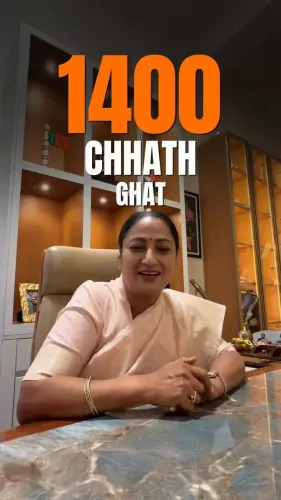
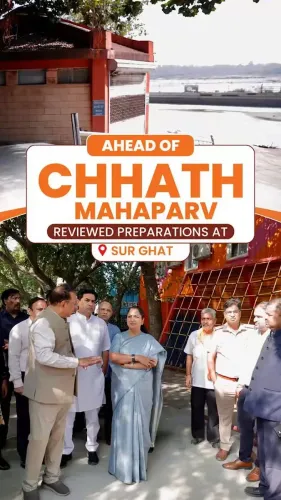
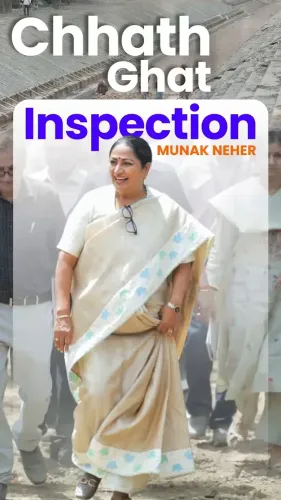
Delhi Chief Minister Rekha Gupta announced nearly 1,400 clean and equipped Chhath Ghats spanning all 13 districts of the capital, alongside a QR code system to help devotees locate their nearest ghat for Chhath Puja 2026.
Key Takeaways
Delhi CM Rekha Gupta announced Chhath Puja ghat arrangements on 15 November 2026 via a post on X.
Nearly 1,400 ghats have been designated as clean, safe, and well-equipped across the city.
The ghats span all 13 districts of the National Capital Territory.
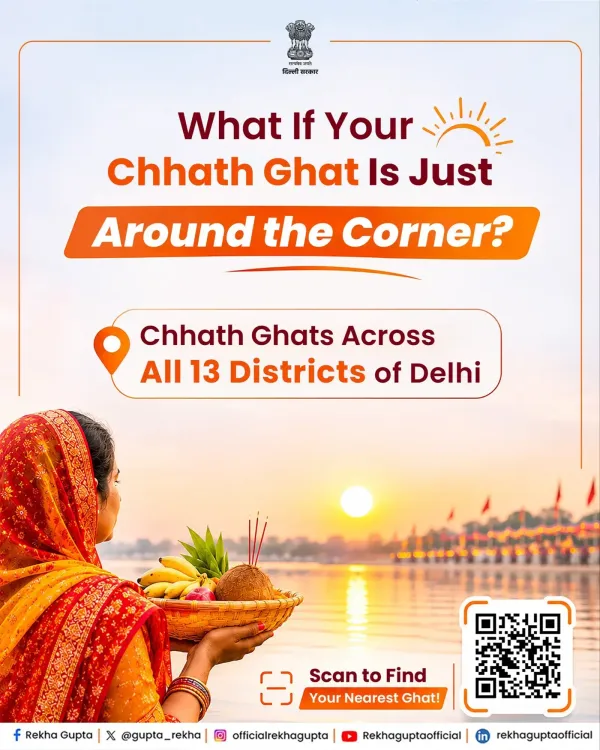
A QR code system has been introduced to help devotees find their nearest ghat — a first-of-its-kind digital layer for the festival in Delhi.
Chhath Puja is observed primarily by communities from Bihar and eastern Uttar Pradesh, constituting a large share of Delhi's migrant population.
Successive Delhi administrations have managed ghat infrastructure for the festival annually; this year's approach adds a digital navigation component.
A QR code, nearly 1,400 ghats, and one festival that turns Delhi into a river of devotion — Delhi Chief Minister Rekha Gupta on Sunday, 15 November 2026, announced a city-wide digital and infrastructure push for Chhath Puja, urging devotees to scan a QR code to locate their nearest designated ghat across all 13 districts of the capital.
A QR code meets an ancient ritual
The standout feature of this year's arrangements is a QR code system designed to point devotees directly to the nearest clean and equipped ghat — a modern navigation layer placed over one of Hinduism's most demanding outdoor festivals. Chhath Puja requires devotees, known as Chhath Vratis, to stand for extended periods in open water at sunrise and sunset, making ghat quality and safety a matter of real consequence, not ceremony.
Gupta framed the scale of preparation in devotional terms, posting on X: 'Yeh Chhath, Delhi ek bade parivaar ki tarah mana rahi hai' — 'This Chhath, Delhi is celebrating like one big family' — with every arrangement reflecting 'deep respect and shraddha towards Chhath Vratis.' The hashtag #दिल्ली_में_दिव्य_भव्य_छठ (Divine, Grand Chhath in Delhi) anchored the post.
1,400 ghats across 13 districts
Chhath Puja is observed primarily by communities from Bihar and eastern Uttar Pradesh, and Delhi's large migrant population from these states has made the festival one of the city's largest annual gatherings. Successive Delhi administrations have designated and maintained river ghats — along the Yamuna and other water bodies — ahead of the festival each year, addressing devotional need alongside urban logistics: crowd management, sanitation, and safety at the water's edge.
This year's figure of nearly 1,400 ghats spread across all 13 districts signals an intent to distribute access city-wide rather than concentrate it along the Yamuna alone — reducing pressure on a single corridor and bringing Chhath infrastructure closer to residential pockets across the capital.
Governance as gesture, gesture as governance
The digital QR layer is a small but pointed signal. Festival logistics in Indian cities have historically relied on word of mouth and community networks; a scannable locator shifts that dynamic, particularly for first-time migrants or elderly Vratis unfamiliar with new ghat sites. Whether the rollout functions smoothly at scale is the real test — post-festival assessments by municipal bodies will determine whether the system becomes a template or a footnote.
For Gupta's administration, the visible ownership of Chhath preparations carries weight beyond logistics. Chhath Puja commands deep emotional allegiance among communities that constitute a significant share of Delhi's electorate, and the government's posture — family, shraddha, collective celebration — is calibrated to meet that sentiment exactly where it lives.
Fourteen hundred ghats, one QR code, and a city invited to celebrate as one. The festival will show whether the infrastructure matches the promise.
Point of View
Suggesting an attempt to reach younger and newly-arrived devotees. If the infrastructure delivers at scale, it strengthens the BJP administration's claim to responsive urban governance; if ghats fall short on cleanliness or safety, that same visibility becomes a liability. The post's warm, familial register — 'one big family', 'shraddha' — is a deliberate tonal choice, designed to meet the deep emotional weight the festival carries for its observers.
NationPress
15 Nov 2026
Frequently Asked Questions
How many Chhath Ghats has Delhi prepared for 2026?
Delhi has prepared nearly 1,400 Chhath Ghats spread across all 13 districts of the National Capital Territory, according to Chief Minister Rekha Gupta's announcement on 15 November 2026.
How can I find the nearest Chhath Ghat in Delhi?
CM Rekha Gupta announced a QR code system that devotees can scan to locate the nearest designated Chhath Ghat in their district. The QR code was shared in her official post on X.
Who is Rekha Gupta and what is her role in Chhath Puja 2026?
Rekha Gupta is the Chief Minister of Delhi and a BJP leader. She has overseen and publicly announced the city's preparations — including ghat infrastructure and the digital QR locator — for Chhath Puja 2026.
Which communities celebrate Chhath Puja in Delhi?
Chhath Puja is primarily observed by communities from Bihar and eastern Uttar Pradesh. Delhi's large migrant population from these states makes it one of the city's largest annual festivals.
What is Chhath Puja and why are ghats important?
Chhath Puja is an annual Hindu festival dedicated to the Sun God. Devotees called Chhath Vratis perform rituals standing in open water at sunrise and sunset, making clean, safe, and well-equipped ghats essential for safe observance.