CM Vishnu Deo Sai highlights tribal welfare push in Chhattisgarh
Synopsis
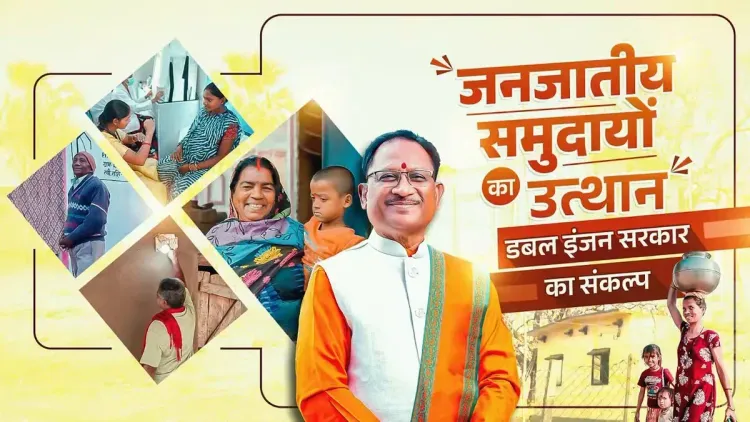
Chhattisgarh Chief Minister Vishnu Deo Sai on 27 May 2026 spotlighted the PM JANMAN Abhiyan and Dharti Aaba Janjati Gram Utkarsh Abhiyan as the twin engines of tribal development in the state, invoking PM Modi's 'Sabka Saath, Sabka Vikas' mandate to frame the 'double engine' government's welfare resolve.
Key Takeaways
CM Vishnu Deo Sai on 27 May 2026 highlighted tribal welfare progress under the 'double engine' government in Chhattisgarh .
The PM JANMAN Abhiyan , launched 15 November 2023 , targets 705 PVTG habitations across 18 states with housing, power, water, health, and roads.
The Dharti Aaba Janjati Gram Utkarsh Abhiyan focuses on education, health, employment, and infrastructure in Adivasi villages.
Chhattisgarh has approximately 30 per cent Scheduled Tribe population, making tribal welfare a central political and policy priority.
CM Sai invoked PM Modi's 'Sabka Saath, Sabka Vikas, Sabka Vishwas aur Sabka Prayas' motto to frame the state's development resolve.
Progress data from the 2026-27 budget cycle and a mid-term review by the Ministry of Tribal Affairs will be key to assessing on-ground delivery.
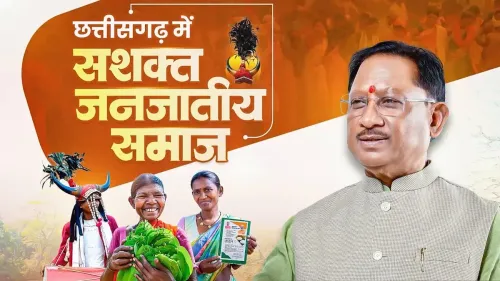
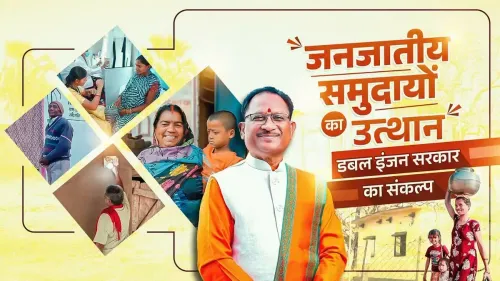
Chhattisgarh Chief Minister Vishnu Deo Sai on Wednesday, 27 May 2026, highlighted the state's ongoing tribal welfare drive, asserting that a new chapter of indigenous development is being written in Chhattisgarh through the combined efforts of the state and central governments under what he called the 'double engine' administration.
Context
Posting in Hindi, CM Sai stated: 'डबल इंजन सरकार की जनकल्याणकारी नीतियों और संवेदनशील सुशासन के संकल्प से छत्तीसगढ़ में जनजातीय विकास का नया अध्याय लिखा जा रहा है' ('A new chapter of tribal development is being written in Chhattisgarh through the welfare policies and the resolve of sensitive governance of the double engine government'). He invoked Prime Minister Narendra Modi's governing motto — 'Sabka Saath, Sabka Vikas, Sabka Vishwas aur Sabka Prayas' ('Together with all, development for all, trust of all, and effort of all') — framing it as the guiding principle for reaching the last person in the development chain.
The post specifically named two central schemes — the PM JANMAN Abhiyan and the Dharti Aaba Janjati Gram Utkarsh Abhiyan — as the primary vehicles of this outreach. The message was accompanied by a video, underscoring the state government's intent to amplify the tribal welfare narrative ahead of the 2026-27 budget cycle.
Policy Backdrop
The PM Pradhan Mantri Janjati Adivasi Nyaya Maha Abhiyan (PM JANMAN), launched on 15 November 2023, targets 705 habitations of Particularly Vulnerable Tribal Groups (PVTGs) across 18 states, aiming to saturate them with pucca housing, electricity, clean drinking water, health facilities, and roads. Chhattisgarh, with roughly 30 per cent of its population belonging to Scheduled Tribes, is among the most significant states in this programme's implementation.
The Dharti Aaba Janjati Gram Utkarsh Abhiyan complements PM JANMAN by focusing on holistic development of tribal villages — covering education, health, employment, and foundational infrastructure. Both schemes are centrally sponsored and implemented in coordination with BJP-governed states. CM Sai, who took charge in December 2023 after the BJP defeated the incumbent Congress in assembly elections, has consistently positioned these schemes as cornerstones of his administration's outreach to Adivasi communities.
Stakeholders and Impact
The primary beneficiaries are PVTG families and residents of Adivasi villages spread across Chhattisgarh's Scheduled Areas, which include districts in the Bastar and Surguja divisions — among the most remote and historically underserved regions of the state. The dual-scheme framework is designed to address both immediate basic-amenity gaps and longer-term livelihood and education deficits in these communities.
Tribal votes have been electorally significant in Chhattisgarh, and the 'double engine' messaging — signalling alignment between the state government in Raipur and the Union government in New Delhi — is intended to demonstrate tangible delivery on pre-election commitments. The approach mirrors similar welfare-saturation drives undertaken in tribal-heavy states such as Jharkhand, Odisha, and Madhya Pradesh.
What's Next
Attention will now turn to physical and financial progress reports on PM JANMAN and Dharti Aaba habitation coverage in Chhattisgarh during the 2026-27 budget cycle. The Ministry of Tribal Affairs is expected to undertake mid-term evaluations of both schemes, which will test whether on-ground delivery matches the political messaging. CM Sai's continued public emphasis on these programmes signals that tribal welfare will remain a defining political and administrative priority for his government in the months ahead.
Point of View
The messaging positions the BJP administration as the sole credible vehicle for tribal uplift in a state where Scheduled Tribe voters constitute nearly a third of the electorate. The invocation of 'Sabka Saath, Sabka Vikas' also ties Chhattisgarh's tribal narrative tightly to the Prime Minister's national identity, reinforcing the ideological coherence the party has cultivated since 2014. Whether this narrative holds will depend heavily on the progress data that emerges from the 2026-27 budget cycle reviews.
NationPress
10 Oct 2026
Frequently Asked Questions
What is the PM JANMAN Abhiyan and how does it benefit tribal communities in Chhattisgarh?
PM JANMAN Abhiyan, launched on 15 November 2023, is a central government scheme targeting 705 habitations of Particularly Vulnerable Tribal Groups across 18 states, providing pucca housing, electricity, clean drinking water, health facilities, and roads. Chhattisgarh, with about 30 per cent of its population from Scheduled Tribes, is one of the key implementation states.
What is the Dharti Aaba Janjati Gram Utkarsh Abhiyan?
The Dharti Aaba Janjati Gram Utkarsh Abhiyan is a central initiative for holistic development of tribal villages, focusing on education, health, employment, and foundational infrastructure. It complements PM JANMAN by addressing longer-term development gaps in Adivasi communities.
What does 'double engine government' mean in the context of Chhattisgarh?
'Double engine government' refers to the BJP being in power both at the state level in Chhattisgarh and at the Union government level in New Delhi, which the party argues enables faster and more coordinated implementation of central welfare schemes.
Who is Vishnu Deo Sai and when did he become Chief Minister of Chhattisgarh?
Vishnu Deo Sai is a BJP leader who became Chief Minister of Chhattisgarh in December 2023 after the BJP won the state assembly elections, defeating the incumbent Congress government.
What is 'Sabka Saath, Sabka Vikas, Sabka Vishwas aur Sabka Prayas'?
It is Prime Minister Narendra Modi's governing motto, translating to 'Together with all, development for all, trust of all, and effort of all.' It frames the BJP's inclusive development narrative and is frequently cited by state BJP leaders to align their messaging with the Union government.