CM Sai backs Modi's welfare push for Viksit Bharat
Synopsis
Chhattisgarh Chief Minister Vishnu Deo Sai on 11 June 2026 reaffirmed the BJP's 'Sabka Saath, Sabka Vikas, Sabka Vishwas' doctrine, crediting the double engine government for delivering welfare to the poor, farmers, and women under PM Modi's Viksit Bharat vision.
Key Takeaways
CM Vishnu Deo Sai posted on 11 June 2026 invoking the 'Sabka Saath, Sabka Vikas, Sabka Vishwas' framework as the foundation of a developed India.
He credited the double engine government — aligned BJP rule at Centre and state — for bringing hope and opportunity to poor families, farmers, and women .
The post draws on the Antyodaya philosophy, the BJP's ideological commitment to uplifting the most marginalised citizens.
Chhattisgarh has been under BJP rule since December 2023 , with the state actively aligning with centrally sponsored welfare programmes.
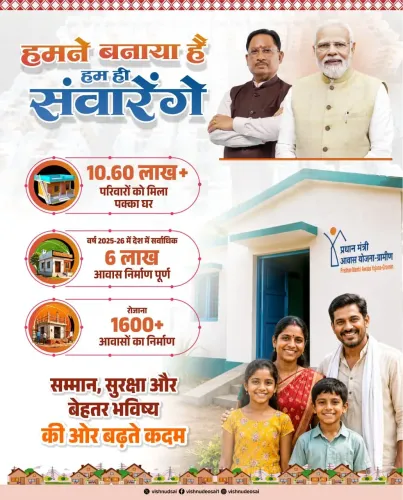
Key schemes such as PM Awas Yojana and Pradhan Mantri Garib Kalyan Anna Yojana form the operational backbone of this welfare push in the state.
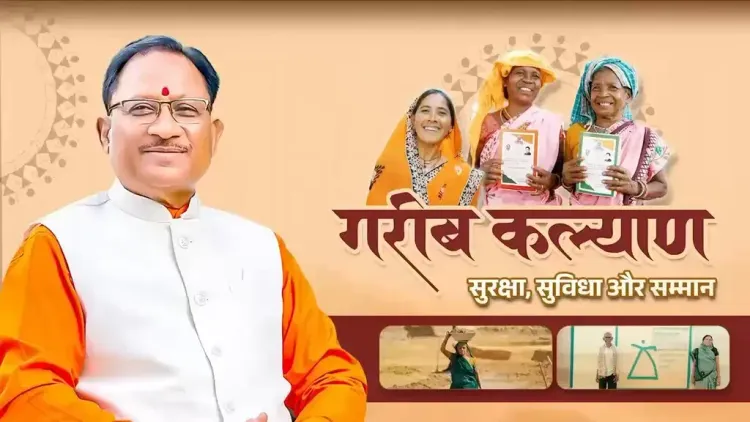
Chhattisgarh Chief Minister Vishnu Deo Sai on Thursday, 11 June 2026, reaffirmed his government's commitment to Prime Minister Narendra Modi's welfare framework, invoking the 'Sabka Saath, Sabka Vikas, Sabka Vishwas' doctrine as the foundational pillar of a developed India. The Chief Minister credited the double engine government — the alignment of the BJP-led state administration with the Centre — for channelling new hope and opportunity to the poor, farmers, women, and marginalised families across Chhattisgarh.
Context
Sai's post, written in Hindi, states: 'Sabka saath, sabka vikas aur sabka vishwas — yahi Viksit Bharat ka mazboot aadhar hai' ['Collective support, collective development, and collective trust — this is the strong foundation of a developed India']. He described the double engine government as actively infusing hope, trust, and fresh opportunity into the lives of the poor, the deprived, farmers, women, and families in need. The message was directed at Prime Minister Narendra Modi with a direct tag.
The post also invokes the Antyodaya spirit — the BJP's ideological commitment to uplifting the last person in the queue — framing ongoing welfare delivery as a journey toward national renaissance, or 'Rashtrodyaya'.
Policy Backdrop
The 'Sabka Saath, Sabka Vikas' slogan has been central to the BJP's governance narrative since the 2014 general elections, later expanded to include 'Sabka Vishwas' ahead of the 2019 polls. The framework underpins a range of central welfare schemes targeting food security, housing, clean cooking fuel, and financial inclusion for the poorest households.
Chhattisgarh came under BJP rule in December 2023 after the party's decisive state election victory, with Sai installed as Chief Minister. Since then, the state administration has aligned itself closely with centrally sponsored programmes, including PM Awas Yojana and Pradhan Mantri Garib Kalyan Anna Yojana, the latter launched in 2020 to provide free foodgrains to vulnerable populations. The Antyodaya philosophy — focusing resources on the most marginalised — has informed multiple anti-poverty initiatives across this period.
Stakeholders and Impact
The primary beneficiaries referenced in Sai's message are poor families, farmers, women, and deprived communities in Chhattisgarh. The state, with significant tribal and rural populations, has historically been a key target for last-mile welfare delivery. Effective implementation of central schemes in such states is seen as a critical test of the double engine model's real-world impact.
By publicly amplifying the Viksit Bharat (Developed India) vision, Sai also reinforces BJP's political messaging ahead of continued governance cycles, signalling that state-level delivery is being framed as part of a larger, unified national mission rather than standalone state initiatives.
What's Next
Attention will now turn to the on-ground rollout and beneficiary coverage of flagship schemes such as PM Awas Yojana and Ujjwala Yojana in Chhattisgarh over the coming fiscal year. The degree to which the state can demonstrate measurable gains in housing, food security, and women's welfare will determine how credibly the double engine narrative translates from political messaging into verifiable public outcomes.
Point of View
Where state-level chief ministers publicly reinforce central government messaging to project unified governance. By invoking Antyodaya alongside Viksit Bharat, Sai is stitching together the party's ideological legacy with its current developmental branding. The timing and tone suggest this is as much about consolidating political narrative in a state the BJP won in 2023 as it is about welfare delivery itself. The real test of this alignment will come from measurable outcomes in housing, food security, and rural income data in Chhattisgarh over the next fiscal cycle.
NationPress
26 Oct 2026
Frequently Asked Questions
What is the 'double engine government' that CM Sai refers to?
The 'double engine government' refers to the BJP's concept of coordinated governance where both the central government and a BJP-ruled state government work in alignment to accelerate delivery of welfare schemes and development projects, eliminating friction between state and Centre.
What is the Antyodaya philosophy mentioned in CM Sai's post?
Antyodaya is a BJP ideological principle focused on prioritising the welfare of the poorest and most marginalised citizens first. It has informed multiple national anti-poverty and food security schemes since 2014.
What does 'Sabka Saath, Sabka Vikas, Sabka Vishwas' mean?
It is a Hindi slogan translating to 'Collective support, collective development, collective trust.' It has been the BJP government's core governance and welfare-delivery motto since 2014, expanded to include 'Vishwas' (trust) ahead of the 2019 elections.
When did the BJP come to power in Chhattisgarh?
The BJP won the Chhattisgarh state assembly elections and assumed power in December 2023 , with Vishnu Deo Sai sworn in as Chief Minister.
What is Viksit Bharat and how does it relate to Chhattisgarh's welfare schemes?
Viksit Bharat, meaning 'Developed India,' is the BJP-led central government's long-term vision for India's development. State governments like Chhattisgarh are framing their welfare delivery — through schemes such as PM Awas Yojana and Garib Kalyan Anna Yojana — as direct contributions to this national goal.