Naxalism eradication a mark of honour for tribals, says BJP chief Nabin
Synopsis
On Birsa Munda's 151st birth anniversary, BJP chief Nitin Nabin called the eradication of Naxalism a 'mark of honour' for India's tribal community — while PM Modi, addressing Janjatiya Gaurav Diwas from once-Naxal-hit Gadchiroli, declared that tribal mothers are now blessing the government for a peace that previous regimes failed to deliver.
Key Takeaways
BJP National President Nitin Nabin described Naxalism eradication as a 'mark of honour' for India's tribal community on 15 November 2026 .
The day marks the 151st birth anniversary of freedom fighter Birsa Munda and is observed as Janjatiya Gaurav Diwas .
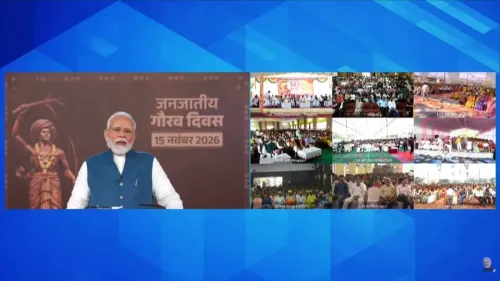
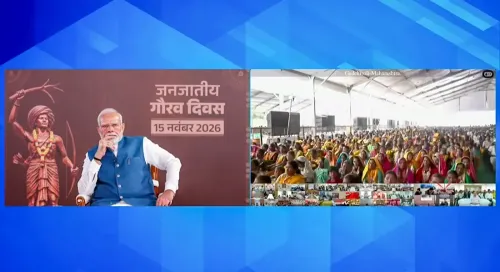
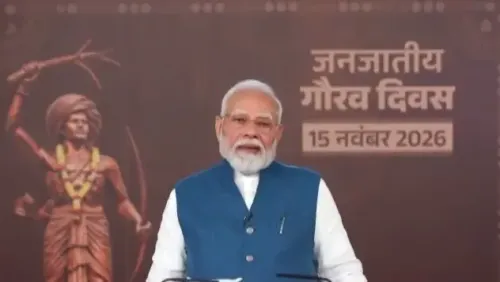
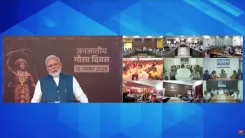
PM Narendra Modi virtually addressed the Janjatiya Gaurav Diwas programme in Maharashtra's Gadchiroli , citing elimination of Naxalism-Maoism as a historic achievement.
Nabin credited PM Modi's visit to celebrate Diwali with soldiers in Bastar, Jharkhand as a symbolic marker of Naxalism's end.
President Droupadi Murmu was cited as a symbol of tribal community empowerment at the national level.
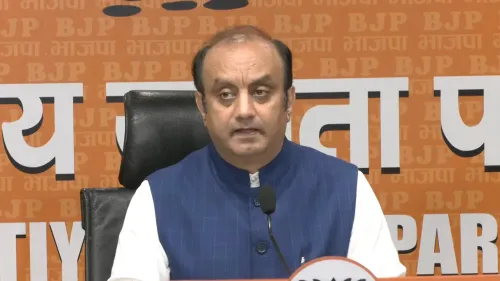
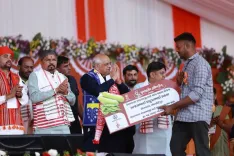
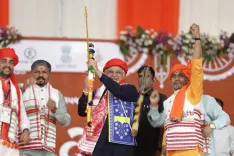
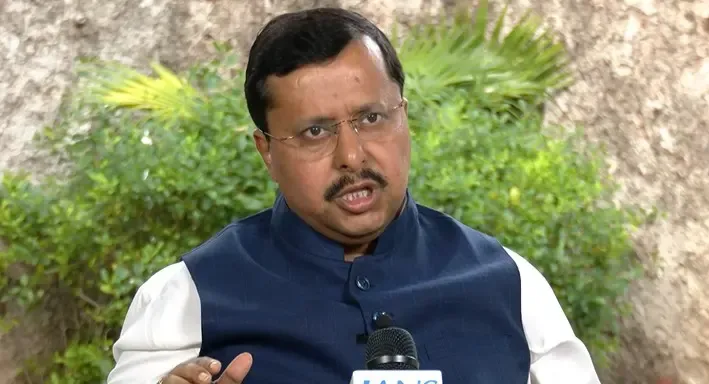
Bharatiya Janata Party (BJP) National President Nitin Nabin on Sunday, 15 November 2026, paid tribute on the 151st birth anniversary of freedom fighter Birsa Munda, declaring that the eradication of Naxalism from India is a 'mark of honour' for the tribal community. Speaking to reporters in Patna, Nabin's remarks came on Janjatiya Gaurav Diwas, a day observed nationally to honour the contributions of tribal communities.
What Nabin Said
Addressing reporters, the BJP chief said: 'On the occasion of the birth anniversary of Bhagwan Birsa Munda, I extend my heartiest congratulations to all countrymen, especially the Tribal community.' He emphasised that the tribal community's development is inseparable from India's larger vision of progress under Prime Minister Narendra Modi.
Nabin further stated, 'Completely eradicating Naxalism from its roots in 2026 is something I view as a mark of honour for the tribal community.' He credited the Prime Minister for taking a firm oath to eliminate Naxalism from affected regions including parts of Chhattisgarh, Odisha, Telangana, and Jharkhand.
Bastar as a Symbol of Transformation
Highlighting the turnaround in Bastar, Nabin noted that when PM Modi travelled to the region to celebrate Diwali with soldiers this year, it signalled that Naxalism had been completely eradicated. 'Earlier, guns were raised in Bastar, but today the place is discussed for its contribution to sports,' he said — a pointed contrast intended to underscore the region's changed reality.
Nabin also highlighted the symbolic significance of President Droupadi Murmu, who hails from the tribal community, saying that tribal leaders today are heading states as well as the country itself.
PM Modi's Address at Gadchiroli
Earlier in the day, Prime Minister Modi virtually addressed the Janjatiya Gaurav Diwas programme organised in Maharashtra's Gadchiroli, where he reflected on the scale of Maoist violence that once gripped tribal regions. 'There used to be hundreds of violent incidents every year. Thousands of innocent people, a large number of them were tribals, lost their lives,' he said.
Contrasting that period with the present, the Prime Minister added: 'Children were taken away from their mothers by these Naxals; our daughters were taken away, and no one was able to do anything. However, today, when Naxalism-Maoism has been eliminated, mothers and sisters in the tribal community are giving us their blessings.' He also said that tribal communities previously affected by Naxalism had been 'abandoned by the then governments.'
Broader Context and Significance
The occasion of Janjatiya Gaurav Diwas — observed on 15 November, the birth anniversary of Birsa Munda — has in recent years become a platform for the ruling Bharatiya Janata Party to underscore its tribal outreach agenda. This year's edition carries added weight given the government's claim of near-total elimination of Left Wing Extremism, a goal that successive governments had pursued for over two decades.
Notably, Gadchiroli in Maharashtra was itself once one of the most Naxal-affected districts in the country, making the choice of venue for the event a deliberate statement. With assembly-level elections in several tribal-heavy states on the horizon, the government's messaging around Naxal eradication and tribal welfare is expected to remain at the forefront of political discourse in the months ahead.
Point of View
Independent assessments of livelihood recovery, forest rights implementation, and social reintegration in former Naxal strongholds remain sparse. The choice of Gadchiroli — once among India's most violence-prone districts — as the venue for Janjatiya Gaurav Diwas is symbolically sharp, but the gap between ceremony and ground-level welfare deserves equal scrutiny.
NationPress
15 Nov 2026
Frequently Asked Questions
What is Janjatiya Gaurav Diwas and why is it observed on 15 November?
Janjatiya Gaurav Diwas is a national day observed on 15 November to honour the contributions of India's tribal communities. The date marks the birth anniversary of freedom fighter Birsa Munda, who is revered as 'Bhagwan' by tribal communities across Jharkhand, Chhattisgarh, and Odisha.
What did BJP chief Nitin Nabin say about Naxalism on Janjatiya Gaurav Diwas 2026?
BJP National President Nitin Nabin said that completely eradicating Naxalism from its roots in 2026 is a 'mark of honour' for the tribal community. He stated that PM Modi had sworn to eliminate Naxalism from affected regions including Chhattisgarh, Odisha, Telangana, and Jharkhand, and that this commitment has now been fulfilled.
Where did PM Modi address the Janjatiya Gaurav Diwas event in 2026?
PM Modi virtually addressed the Janjatiya Gaurav Diwas programme organised in Gadchiroli, Maharashtra — a district historically among the most affected by Naxal violence in the country.
What was the significance of PM Modi's Diwali visit to Bastar?
BJP chief Nitin Nabin said PM Modi's decision to celebrate Diwali with soldiers in Bastar, Jharkhand, served as a symbolic message that Naxalism had been completely eradicated from the region. Bastar was previously one of the most conflict-hit areas in India.
How has the tribal community's representation at national level been highlighted at this event?
BJP chief Nabin pointed to President Droupadi Murmu, who hails from the tribal community, as a symbol of the community's rising representation. He noted that tribal leaders today head several Indian states as well as the country itself.