PM Modi on Janjatiya Gaurav Diwas: Tribal families blessing us for ending Naxalism
Synopsis
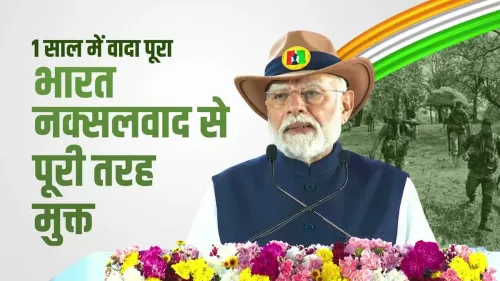
On Janjatiya Gaurav Diwas, PM Modi declared the elimination of Naxalism one of India's greatest post-Independence achievements — alongside lifting 50 crore people out of poverty — and said tribal mothers and sisters are now blessing the government. The speech, delivered virtually to Gadchiroli, frames both milestones as wins rooted in tribal welfare and sets the tone for continued political outreach to India's tribal belt.
Key Takeaways
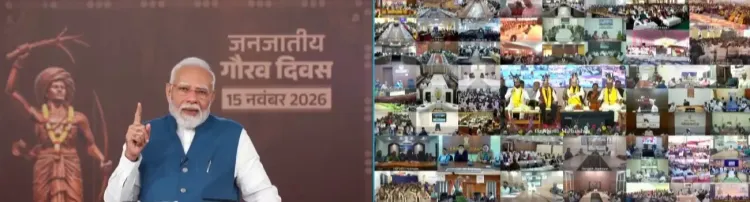
PM Modi addressed the Janjatiya Gaurav Diwas programme in Gadchiroli, Maharashtra on 15 November 2026 .
He called the end of Naxalism and lifting 50 crore people out of poverty India's two greatest recent achievements.
As of 2014 , around 125 districts were affected by Maoism with hundreds of violent incidents annually, Modi said.
A World Bank report cited by Modi stated that nearly 50 crore Indians escaped extreme poverty over the past 12-13 years .
Modi highlighted the PM-JANMAN scheme and development campaigns across 100+ Aspirational Districts and 500+ Aspirational Blocks for tribal welfare.
President Droupadi Murmu was cited as a proud symbol of tribal representation at the highest level of the Indian state.
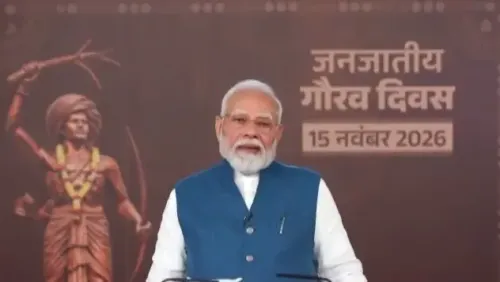
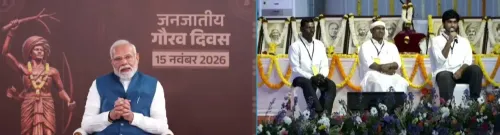
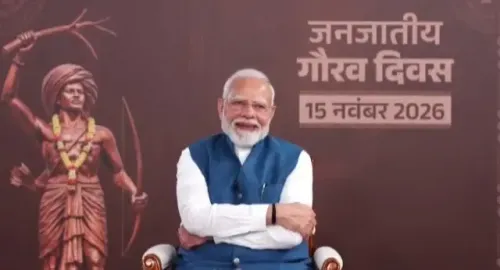
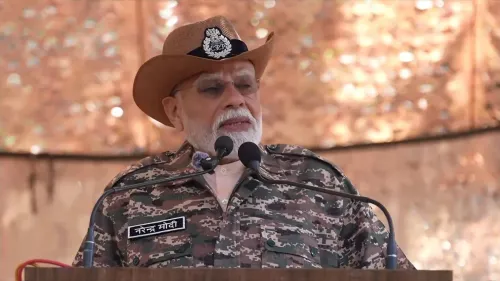
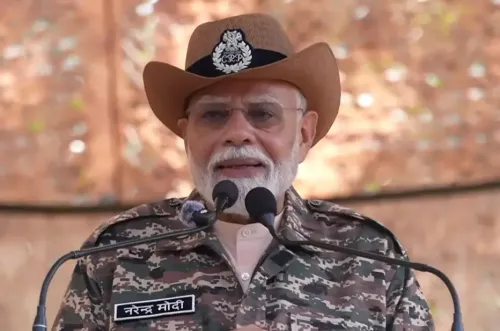
Prime Minister Narendra Modi on Sunday, 15 November 2026, declared that the elimination of Naxalism stands as one of independent India's greatest achievements, saying that mothers and sisters from tribal communities are now blessing the government for this transformation. He made the remarks while virtually addressing the Janjatiya Gaurav Diwas programme organised in Gadchiroli, Maharashtra.
Two Landmark Achievements
Modi underscored that the occasion coincided with two historic milestones for the country. 'The first is that nearly 50 crore people in the country have overcome extreme poverty and come out of poverty. The second is the end of Naxalism and freedom from Maoist terrorism,' he said. He emphasised that both achievements are 'deeply connected to the lives of our tribal brothers and sisters.'
Citing a recent World Bank report, the Prime Minister noted that nearly 50 crore Indians had escaped extreme poverty over the past 12-13 years, describing it as 'one of the country's greatest achievements since Independence.'
The Scale of Maoist Violence Before 2014
Modi painted a stark picture of conditions prior to his government's tenure. He stated that around 125 districts across the country were affected by Maoism as recently as 2014, with hundreds of violent incidents occurring every year. 'Thousands of innocent people, a large number of them were tribals, lost their lives,' he said, adding that those affected were 'abandoned by the then governments' whose rights were 'snatched away.'
He further alleged that tribal community members were denied even the right to vote while previous administrations remained, in his words, 'mute spectators.' 'Children were taken away from their mothers by these Naxals; our daughters were taken away, and no one was able to do anything,' he said, contrasting that period with the present.
Tribal Empowerment and Aspirational Districts
The Prime Minister highlighted several government initiatives aimed at tribal welfare. He pointed to the PM-JANMAN scheme as a vehicle for transforming tribal lives and noted that a focused development campaign had been launched across more than 100 Aspirational Districts and over 500 Aspirational Blocks, many of which have sizeable tribal populations.
Modi also expressed pride in President Droupadi Murmu, calling her a 'daughter of the tribal community' who is now leading the nation — a symbol, he suggested, of how far tribal representation has come.
Birsa Munda's Legacy and the Viksit Bharat Vision
Invoking the legacy of freedom fighter and tribal icon Bhagwan Birsa Munda — whose birth anniversary is observed as Janjatiya Gaurav Diwas — Modi urged citizens to draw inspiration from his resolve. 'This is the time to dedicate all our energy to realising the dream of a Viksit Bharat,' he said, paying his respects to Munda and extending greetings to tribal communities across the country.
As the Centre deepens its anti-Naxal operations and welfare outreach in Left Wing Extremism-affected belts, the government's framing of these twin achievements — poverty reduction and Maoist elimination — as a tribal-centric success story is set to shape political messaging in the months ahead.
Point of View
The conflation of a World Bank poverty-reduction figure with government policy credit deserves scrutiny; the report covers a 12-13 year arc that spans multiple administrations. The Prime Minister's framing of Naxal elimination as a tribal liberation, rather than a security operation, is a deliberate political repositioning — one that shifts ownership of the outcome from the security apparatus to the tribal vote bank. With assembly cycles in tribal-heavy states on the horizon, this narrative is unlikely to remain ceremonial.
NationPress
15 Nov 2026
Frequently Asked Questions
What is Janjatiya Gaurav Diwas and why is it observed on 15 November?
Janjatiya Gaurav Diwas is observed on 15 November each year to mark the birth anniversary of tribal freedom fighter Bhagwan Birsa Munda, who fought against British colonial rule. The day honours the contributions of tribal communities to India's history and development.
What did PM Modi say about the elimination of Naxalism?
PM Modi declared that Naxalism and Maoist terrorism have been eliminated, calling it one of India's greatest post-Independence achievements. He said that in 2014 around 125 districts were affected by Maoism with hundreds of violent incidents annually, and that tribal communities — the worst affected — are now blessing the government for ending that violence.
What is the World Bank poverty figure Modi cited?
Modi cited a recent World Bank report stating that nearly 50 crore people in India have come out of extreme poverty over the past 12-13 years, describing it as a 'huge number' and one of the country's greatest achievements since Independence.
What government schemes did Modi highlight for tribal welfare?
Modi highlighted the PM-JANMAN scheme as a key vehicle for transforming tribal lives. He also referenced development campaigns across more than 100 Aspirational Districts and over 500 Aspirational Blocks, many of which have large tribal populations.
Why did Modi mention President Droupadi Murmu at the event?
Modi cited President Droupadi Murmu as a 'daughter of the tribal community' who is now leading the nation, holding her up as a symbol of the strides tribal representation has made in India's public life.