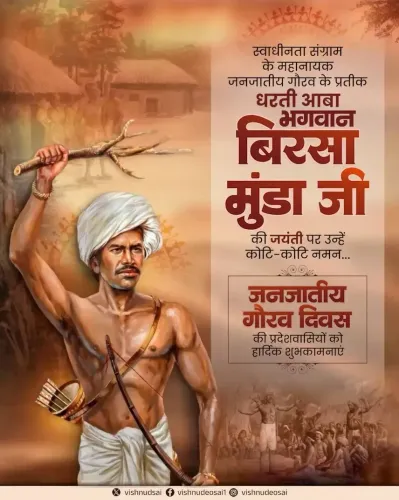
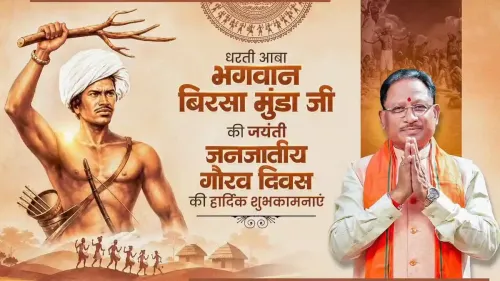
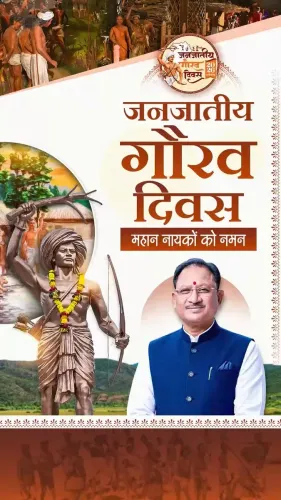
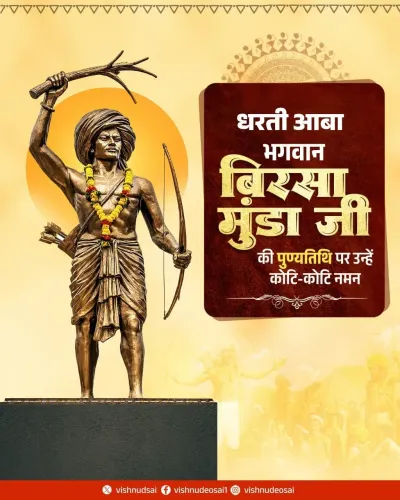
CM Sai marks Janjatiya Gaurav Diwas, cites national tribal pride shift
Synopsis
On the fifth Janjatiya Gaurav Diwas, Chhattisgarh CM Vishnu Deo Sai quoted PM Modi to mark the day's growth from a 2021 declaration into a national celebration honouring Bhagwan Birsa Munda and India's tribal freedom fighters.
Key Takeaways
Janjatiya Gaurav Diwas was first declared on 15 November 2021 to mark the birth anniversary of tribal leader Bhagwan Birsa Munda .
Birsa Munda was born in 1875 and led the Munda rebellion against British colonial rule in the Chotanagpur plateau .
During Birsa Munda's 150th birth anniversary , over 2 lakh programmes were reportedly held across India, according to the post.
CM Vishnu Deo Sai framed the occasion as evidence of a shift away from 'foreign-lens' commemoration toward indigenous historical self-respect.
Chhattisgarh has one of India's largest Scheduled Tribe populations, giving the state a central role in this observance.
The post is part of a broader post- 2014 pattern of elevating Adivasi leaders in India's national commemorative calendar.
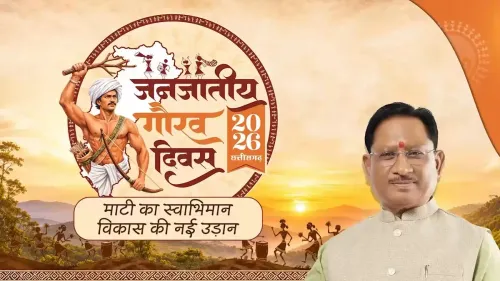
Five years after its founding declaration, Janjatiya Gaurav Diwas has grown from a single government notification into what Chhattisgarh Chief Minister Vishnu Deo Sai describes as a full national celebration — one that now anchors India's public reckoning with its tribal freedom fighters. On Sunday, 15 November 2026, Sai marked the occasion by sharing words from Prime Minister Narendra Modi, framing the day's five-year journey as evidence of a deeper shift in how the country remembers itself.
From a gazette notification to a national ritual
The central government declared 15 November as Janjatiya Gaurav Diwas in 2021, choosing the date to coincide with the birth anniversary of Bhagwan Birsa Munda, the tribal leader from the Chotanagpur plateau who led the Munda rebellion against British colonial rule and was born in 1875. The intent was explicit: place Adivasi freedom fighters at the centre of national memory, not at its margins.
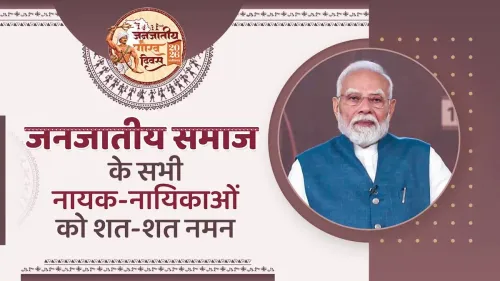
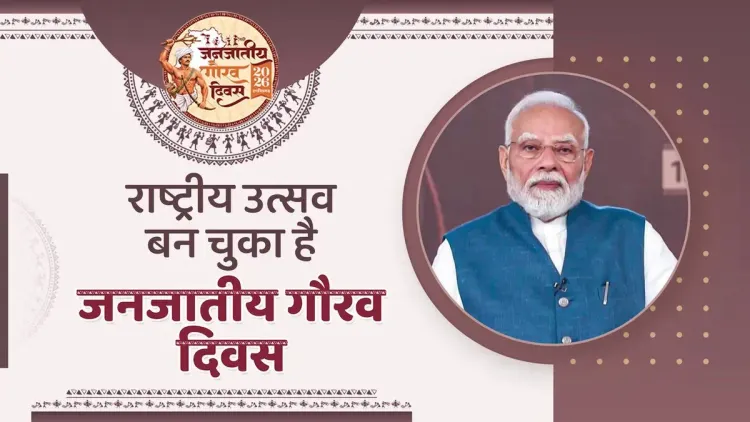
Quoting PM Modi, Sai wrote: '15 November 2021 se Janjatiya Gaurav Diwas manane ki jo shuruaat hui, aaj woh ek rashtriya utsav ban chuka hai' — ('What began as the observance of Janjatiya Gaurav Diwas on 15 November 2021 has today become a national celebration.'). The post highlighted that during Birsa Munda's 150th birth anniversary last year, over 2 lakh programmes were held across the country, with crores of citizens participating.
Rejecting the 'foreign lens' in India's commemorative calendar
The sharpest line in Sai's post was not about numbers but about narrative. The quoted passage acknowledged that for a long time, India's festivals and commemorations were shaped by what it called a 'videshi drishtikon' — a foreign perspective. The argument: colonial and post-colonial calendars elevated certain histories and elided others, leaving tribal leaders like Birsa Munda in secondary roles despite their central place in the independence struggle.
Now, the post argues, India is honouring its heritage, its history, and its heroes with indigenous self-respect — 'swadeshi swabhiman ke saath gaurav poorvak'. CM Sai called this a symbol of a 'major transformation in our national consciousness.' The hashtag #JanjatiyaGauravDiwas anchored the post, alongside #जोहार_नितिन_जी — 'Johar' being the traditional Adivasi salutation.
Chhattisgarh's particular stake in the occasion
Chhattisgarh, with one of India's largest Scheduled Tribe populations, sits at the geographic and cultural heart of this observance. As Chief Minister, Sai — himself from a tribal community — has used the occasion to signal the state government's alignment with the Centre's broader push to integrate Adivasi history into mainstream national narratives, alongside welfare schemes targeting tribal regions.
The post forms part of a consistent pattern since 2014: elevating indigenous historical figures, revisiting which stories get told on national platforms, and building a commemorative architecture that explicitly positions tribal contributions as foundational — not supplementary — to India's freedom struggle.
Five years in, Janjatiya Gaurav Diwas is no longer an experiment. The question now is whether the cultural recognition it generates will translate into measurable ground-level change for the communities it honours.
Point of View
Particularly significant given Chhattisgarh's large tribal electorate. The 'foreign lens' framing is a deliberate rhetorical move: it positions the current government as the restorer of an authentic Indian civilisational consciousness. Whether the commemorative momentum translates into structural gains — land rights, educational equity, forest access — for tribal communities remains the sharper, unanswered question.
NationPress
15 Nov 2026
Frequently Asked Questions
What is Janjatiya Gaurav Diwas and why is it celebrated on 15 November?
Janjatiya Gaurav Diwas is a national day observed on 15 November every year to honour India's tribal heritage and freedom fighters. The date was chosen because it marks the birth anniversary of Bhagwan Birsa Munda , the tribal leader from the Chotanagpur plateau who led the Munda rebellion against British rule. It was first declared by the central government in 2021 .
Who was Bhagwan Birsa Munda?
Bhagwan Birsa Munda was a tribal freedom fighter born in 1875 who led the Munda rebellion — also called the 'Ulgulan' — against British colonial exploitation in the Chotanagpur plateau region of present-day Jharkhand. He is revered as a folk hero and spiritual leader among Adivasi communities across India.
What did CM Vishnu Deo Sai say on Janjatiya Gaurav Diwas 2026?
Chhattisgarh CM Vishnu Deo Sai marked the occasion on 15 November 2026 by sharing PM Modi's remarks stating that the day has grown from its 2021 founding into a national celebration. He highlighted that over 2 lakh programmes were held during Birsa Munda's 150th birth anniversary, and called the day a symbol of a 'major transformation in national consciousness.'
How many events were held for Birsa Munda's 150th birth anniversary?
According to the post shared by CM Vishnu Deo Sai quoting PM Modi , over 2 lakh programmes were organised across India during Bhagwan Birsa Munda's 150th birth anniversary , with crores of citizens participating. These figures were cited in the post and have not been independently confirmed.
Why does Chhattisgarh play a central role in Janjatiya Gaurav Diwas?
Chhattisgarh has one of India's largest Scheduled Tribe populations , making it a focal point for tribal heritage observances. Chief Minister Vishnu Deo Sai himself belongs to a tribal community, and the state government has consistently aligned with the Centre's efforts to place Adivasi history at the core of national narratives.