CM Vishnu Deo Sai: Bastar Enters New Era of Peace and Development
Synopsis
On Janjatiya Gaurav Diwas, Chhattisgarh CM Vishnu Deo Sai declared that Bastar — long gripped by Naxal insurgency and underdevelopment — is now seeing roads, schools, health centres, and drinking water reach remote tribal villages under the BJP's 'Double Engine Government.'
Key Takeaways
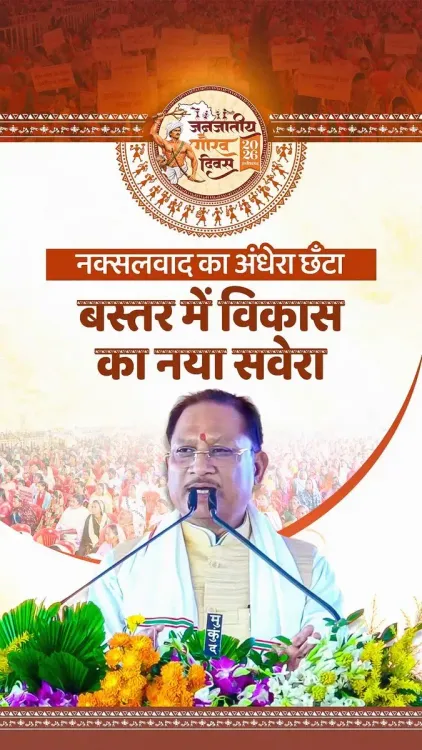
Chhattisgarh CM Vishnu Deo Sai posted on 15 November 2026 — Janjatiya Gaurav Diwas — asserting that Bastar is entering a new phase of peace and development.
Bastar , in southern Chhattisgarh, suffered decades of Naxal insurgency that blocked roads, schools, healthcare, and drinking water from reaching remote villages.
The 'Double Engine Government' framework links BJP-run Raipur and New Delhi to deliver welfare schemes and infrastructure in tandem in LWE-affected areas.
Janjatiya Gaurav Diwas is observed on 15 November — the birth anniversary of tribal icon Birsa Munda — and was nationally instituted in 2021 .
Actual delivery of announced roads, health centres, and schools in deep-forest Bastar blocks remains the key ground-level measure of these claims.
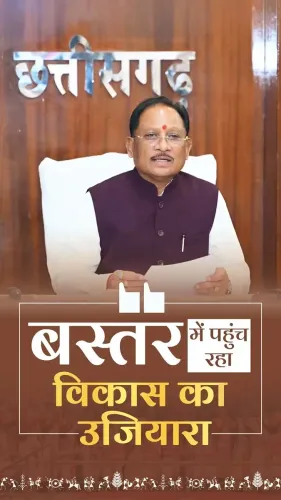
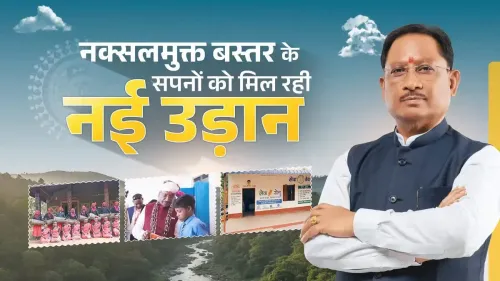
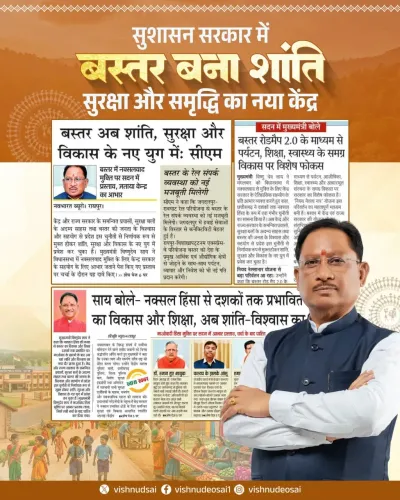
Roads reaching villages that insurgency once kept in darkness, schools where none stood before, health centres in hamlets that maps barely showed — on Janjatiya Gaurav Diwas, Sunday, 15 November 2026, Chhattisgarh Chief Minister Vishnu Deo Sai declared that Bastar is finally turning a corner, moving from decades of deprivation into what he calls a new era of peace, trust, and development.
Posting on X, CM Sai wrote in Hindi: 'नक्सलवाद से मुक्ति के बाद दशकों तक विकास से वंचित रहे बस्तर में अब विकास की नई बयार बह रही है' — 'After liberation from Naxalism, Bastar, which was deprived of development for decades, is now seeing a fresh wind of progress.' He pointed to roads, education, health, drinking water, and other basic amenities now reaching remote villages through the welfare schemes of what he termed the 'Double Engine Government' — the aligned BJP administrations in Raipur and New Delhi.
Why Bastar Matters — and Why It Has Waited So Long
Bastar, a sprawling forested region in southern Chhattisgarh, became synonymous with Left-Wing Extremism (LWE) that choked infrastructure investment for a generation. Security forces, development agencies, and elected officials operated under constant threat; roads were resisted, schools burned, and health workers turned away. The result was a compounding deficit — not just absent services, but absent trust between the state and its citizens.
The post-security phase — as Naxal violence declined sharply in several Bastar districts — opened a narrow window. The 'Double Engine' framing reflects a deliberate political and administrative strategy: central funding through flagship schemes and state-level last-mile delivery, moving in tandem. Similar messaging has emerged from other central Indian states where LWE activity has waned, but Bastar's sheer scale of historic deprivation gives the claims particular weight — and particular scrutiny.
Janjatiya Gaurav Diwas: The Day Chosen to Send the Message
The timing of CM Sai's post is not incidental. Janjatiya Gaurav Diwas — observed nationally on 15 November — marks the birth anniversary of tribal icon Birsa Munda and was instituted in 2021 to spotlight tribal welfare and heritage. For a region as heavily tribal as Bastar, anchoring a development declaration to this day carries pointed symbolic weight: it frames infrastructure delivery not as a government favour but as the fulfilment of a long-overdue promise to Adivasi communities.
CM Sai's hashtag #JanjatiyaGauravDiwas alongside #जोहार_नितिन_जी — Johar being a traditional tribal greeting — signals both the occasion and an address, likely to a visiting dignitary or colleague named Nitin, though the post does not specify further.
What the Ground Reality Still Needs to Show
Declarations of transformation in conflict-affected zones are only as credible as the specifics behind them. The rollout status of announced roads in deep-forest Bastar blocks, the operational status of new health sub-centres, and any formal reclassification of previously LWE-affected areas are the metrics that will determine whether this 'new wind' is felt in the villages CM Sai describes — or remains a headline.
Bastar's tribal communities have heard promises before. The difference this time, the BJP argues, is security conditions that now allow delivery machinery to actually move. Whether that machinery is moving fast enough — and equitably enough — is the question the next budget cycle and ground-level audits will have to answer.
Bastar has waited a generation for this moment. The region's tribes are watching to see if the wind CM Sai describes is a breeze — or the real thing.
Point of View
Reinforcing the BJP's dual claim of restoring order and fulfilling tribal rights simultaneously. Anchoring the message to Birsa Munda's birth anniversary elevates it beyond routine governance communication into an identity-politics register that resonates deeply with Adivasi voters across central India. The 'Double Engine Government' framing also pre-empts Opposition critiques by crediting both state and central administrations, making accountability harder to pin on either alone. The harder test arrives when specific infrastructure deliverables in named Bastar blocks can be independently assessed against the promises being made today.
NationPress
15 Nov 2026
Frequently Asked Questions
What is Janjatiya Gaurav Diwas and why is it celebrated on 15 November?
Janjatiya Gaurav Diwas is an annual national observance on 15 November , the birth anniversary of tribal freedom fighter Birsa Munda . It was instituted in 2021 to honour tribal heritage and highlight welfare and development initiatives for Adivasi communities across India.
Why has Bastar been underdeveloped for so long?
Bastar in southern Chhattisgarh was a stronghold of Left-Wing Extremism for decades. Naxal violence made it unsafe for contractors, teachers, doctors, and officials to operate, resulting in severe deficits in roads, schools, healthcare, and drinking water infrastructure.
What does 'Double Engine Government' mean in the context of Bastar development?
The 'Double Engine Government' refers to aligned BJP administrations in both the state capital Raipur and New Delhi working in tandem — the Centre funds flagship welfare schemes while the state government handles last-mile delivery to remote villages.
What development work is happening in Bastar right now?
CM Sai's post states that roads, schools, healthcare facilities, drinking water, and other basic amenities are being extended to remote Bastar villages. Specific project completion data for individual blocks remains subject to official government updates.
Who is Vishnu Deo Sai and what is his connection to tribal communities?
Vishnu Deo Sai is the Chief Minister of Chhattisgarh and a senior BJP leader. He himself comes from a tribal background, making his statements on tribal welfare and Janjatiya Gaurav Diwas carry particular political and symbolic resonance in the state.