CM Sai Pays Tribute to Birsa Munda on Death Anniversary
Synopsis
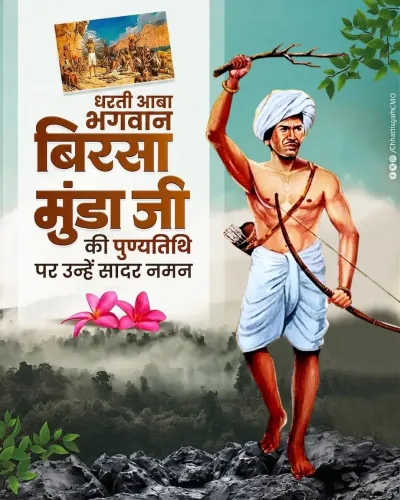
Chhattisgarh Chief Minister Vishnu Deo Sai on 9 June 2026 honoured Bhagwan Birsa Munda, the Munda tribal leader known as 'Dharti Aaba', on his death anniversary, calling his struggle against British rule a glorious chapter of India's independence movement.
Key Takeaways
Vishnu Deo Sai , Chief Minister of Chhattisgarh , paid tribute to Bhagwan Birsa Munda on his death anniversary, 9 June 2026 .
Birsa Munda, known as Dharti Aaba , died on 9 June 1900 in Ranchi jail at age 25 after leading the Ulgulan rebellion against British land policies.
CM Sai described Birsa Munda's struggle against injustice and exploitation as 'a glorious chapter of the Indian independence movement.' The Government of India instituted Janjatiya Gaurav Diwas in 2021 , observed on 15 November , to honour tribal freedom fighters including Birsa Munda.
Chhattisgarh has a Scheduled Tribe population of over 30 per cent , making tribal heritage central to state governance and political messaging.
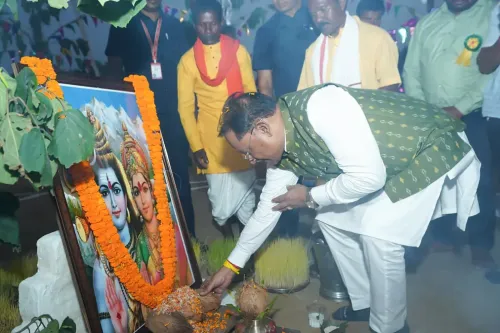
Chhattisgarh Chief Minister Vishnu Deo Sai on Tuesday, 9 June 2026 paid tribute to tribal freedom fighter Bhagwan Birsa Munda on his death anniversary, honouring him as a symbol of indigenous resistance and patriotism.
Context
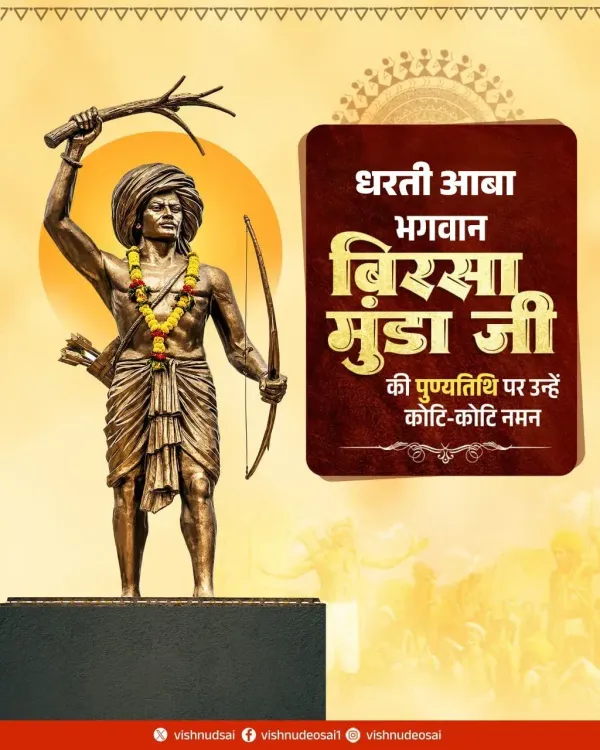
Birsa Munda, revered as 'Dharti Aaba' (Father of the Earth), died on 9 June 1900 in Ranchi jail at the age of 25. Chief Minister Sai, in his post, offered 'koti-koti naman' (countless salutations) to the leader, describing how Birsa Munda 'spread the consciousness of self-respect and freedom in tribal society against British rule through his indomitable courage, sacrifice, and firm resolve.'
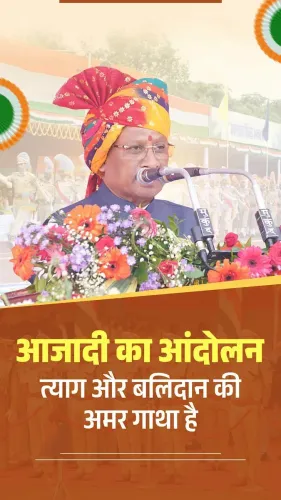
Sai further noted that Birsa Munda's 'struggle against injustice, exploitation, and social evils is a glorious chapter of the Indian independence movement' — framing the 19th-century tribal rebellion squarely within the mainstream national freedom narrative.
Policy Backdrop
The tribute comes against the backdrop of Janjatiya Gaurav Diwas, instituted by the Government of India in 2021 and observed every 15 November — Birsa Munda's birth anniversary — to honour tribal contributions to India's independence movement. The central government's initiative formalised the elevation of tribal freedom fighters as national icons, a policy direction that has since been reflected in state-level commemorations across BJP-ruled governments.
Chhattisgarh, carved out of Madhya Pradesh in 2000, has a Scheduled Tribe population exceeding 30 per cent. Tribal welfare and cultural identity are consequently central to both governance and political messaging in the state.
Stakeholders and Impact
Birsa Munda led the Ulgulan (Great Tumult) rebellion from the Chotanagpur plateau in present-day Jharkhand, organising Munda tribal communities against British land-alienation policies and the activities of missionaries. His legacy resonates across the tribal belts of central and eastern India, including the Adivasi constituencies of Chhattisgarh.
CM Sai's post reflects a sustained pattern in BJP-governed states of publicly elevating 19th-century tribal rebels as symbols of indigenous pride and national patriotism, aligning state-level messaging with central programmes focused on Scheduled Tribe welfare. Sai's post stated that Birsa Munda's 'dedication to tribal pride, cultural identity, and patriotism continues to inspire us all to work for the benefit of society and the nation.'
What's Next
Observers will watch for state-level tribal welfare events, scheme announcements, or cultural programmes around June tribal anniversaries in Chhattisgarh, as the government has historically used such commemorations to reinforce outreach to Adivasi constituencies. The framing of Birsa Munda's legacy as a source of ongoing inspiration for governance signals continued emphasis on tribal identity in the state's political and policy calendar.
Point of View
Reinforcing the party's outreach to tribal voters across central India. By invoking Birsa Munda's values of 'tribal pride, cultural identity, and patriotism,' Sai links a 19th-century rebellion to present-day governance priorities in a state where over 30 per cent of the population belongs to Scheduled Tribes. This follows the central government's institutionalisation of Janjatiya Gaurav Diwas in 2021, which gave BJP-governed states a formal framework for such commemorations. The pattern suggests that tribal cultural messaging will remain a consistent feature of Chhattisgarh's political calendar ahead of future electoral cycles.
NationPress
26 Oct 2026
Frequently Asked Questions
Who was Bhagwan Birsa Munda and why is he called Dharti Aaba?
Bhagwan Birsa Munda (1875-1900) was a Munda tribal leader from the Chotanagpur plateau who led the Ulgulan rebellion against British land-alienation policies and is revered as 'Dharti Aaba' (Father of the Earth) for his role in defending tribal land rights and cultural identity.
When did Birsa Munda die and what is his death anniversary date?
Birsa Munda died on 9 June 1900 in Ranchi jail at the age of 25, and his death anniversary is observed on 9 June each year.
What is Janjatiya Gaurav Diwas and when is it celebrated?
Janjatiya Gaurav Diwas is a national day instituted by the Government of India in 2021 and observed every 15 November — Birsa Munda's birth anniversary — to honour tribal contributions to India's independence movement.
Why does Chhattisgarh CM Vishnu Deo Sai frequently pay tribute to tribal icons?
Chhattisgarh has a Scheduled Tribe population exceeding 30 per cent, making tribal welfare and cultural identity central to governance and political messaging; CM Sai regularly highlights indigenous icons as part of this outreach.
What was the Ulgulan rebellion led by Birsa Munda?
The Ulgulan, meaning 'Great Tumult,' was a tribal uprising led by Birsa Munda in the late 1890s on the Chotanagpur plateau, mobilising Munda communities against British land policies and missionary influence to assert tribal autonomy and self-rule.