CM Sai Launches Tribal Village Akhara Scheme on Janjatiya Gaurav Diwas
Synopsis
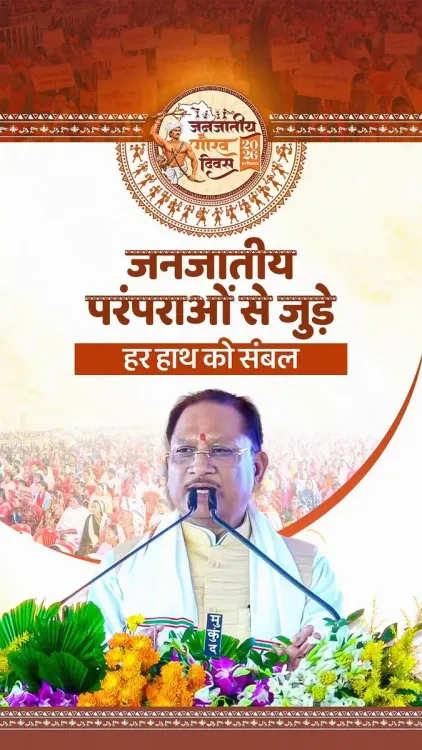
On Janjatiya Gaurav Diwas 2026, Chhattisgarh CM Vishnu Deo Sai announced the Janjatiya Gram Akhara Vikas Yojana to preserve tribal cultural spaces and raised the honorarium for Manjhi-Chalki customary leaders in Bastar, linking heritage recognition with local governance reform.
Key Takeaways
Janjatiya Gram Akhara Vikas Yojana launched to develop and preserve traditional tribal community courtyard spaces across Chhattisgarh villages.
Honorarium for Manjhi-Chalki representatives in Bastar increased, strengthening the customary governance layer in a historically sensitive district.
Announcements made on Janjatiya Gaurav Diwas, 15 November 2026 , the birth anniversary of tribal leader Birsa Munda .
CM Vishnu Deo Sai , himself from a tribal community, is Chhattisgarh's first tribal Chief Minister under the BJP government that took office in December 2023 .
Tribal communities constitute roughly 32 percent of Chhattisgarh's population, making these measures politically and administratively significant.
Specific funding details and the exact honorarium figure remain to be confirmed in the next state budget session .
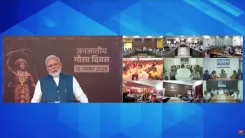
On Janjatiya Gaurav Diwas, 15 November 2026 — the birth anniversary of tribal icon Birsa Munda — Chhattisgarh Chief Minister Vishnu Deo Sai announced two concrete steps to protect tribal culture and strengthen grassroots governance in the state's tribal heartland.
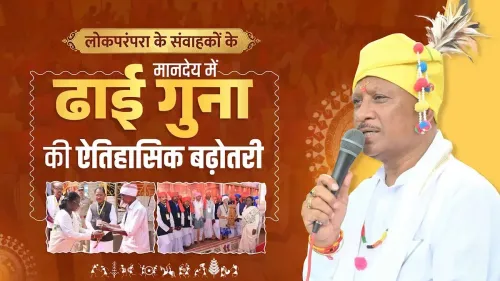
Posting in Hindi, CM Sai wrote: 'हमारी सरकार जनजातीय समाज की समृद्ध संस्कृति, परंपराओं और सामाजिक आयोजनों को प्रोत्साहित एवं संरक्षित करने के लिए निरंतर कार्य कर रही है।' ('Our government is continuously working to encourage and preserve the rich culture, traditions and social events of the tribal community.') Two specific measures followed: the launch of the Janjatiya Gram Akhara Vikas Yojana (Tribal Village Akhara Development Scheme), and a hike in the honorarium paid to Manjhi-Chalki representatives in Bastar.
What the Akhara Scheme and Manjhi-Chalki Honorarium Mean for Bastar
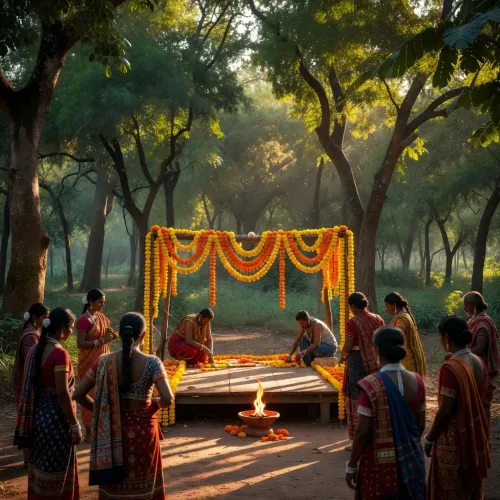
The Janjatiya Gram Akhara Vikas Yojana targets the 'akhara' — the traditional open courtyard in tribal villages that serves as a community gathering space for rituals, dances, and collective decision-making. By channelling state resources toward these spaces, the scheme attempts to institutionalise cultural preservation at the village level rather than leaving it to festival grants alone.
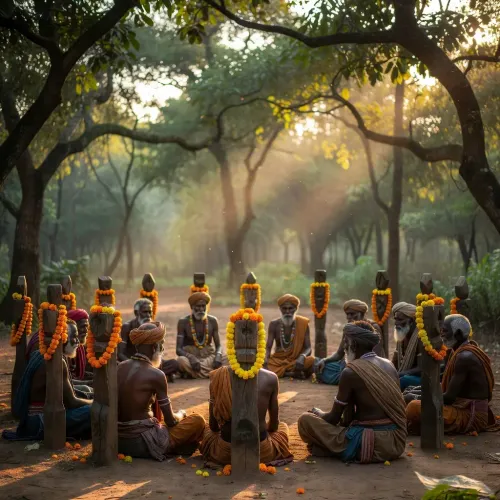
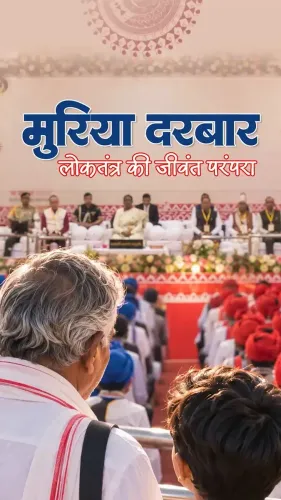
The Manjhi-Chalki system is a customary governance structure embedded in tribal villages of Bastar, southern Chhattisgarh's predominantly tribal district. Manjhis function as village headmen; Chalkis assist in dispute resolution and community coordination. Raising their honorarium — the state-paid stipend for this traditional role — is a direct recognition of their administrative value in a region where the formal state apparatus has historically had limited reach.
Janjatiya Gaurav Diwas: The National Frame
The Government of India formally instituted Janjatiya Gaurav Diwas in 2021, anchoring it to 15 November, the birth anniversary of Birsa Munda, the 19th-century Jharkhand-born freedom fighter and tribal rights leader revered across India's tribal belt. The observance was designed to bring tribal contributions to the independence movement into the national mainstream — and state governments with large Scheduled Tribe populations have since used the date as a policy milestone.
Chhattisgarh, where tribal communities constitute roughly 32 percent of the population, is among the states where this calendar moment carries the heaviest political and administrative weight. CM Sai himself represents a tribal constituency and is the state's first tribal Chief Minister under the current BJP government, which returned to power in December 2023.
BJP's Dual Track: Cultural Recognition and Local Governance
The two announcements fit a broader pattern visible across BJP-governed states with significant tribal populations: pairing heritage-recognition gestures with tangible local-governance upgrades. Cultural schemes build identity linkage; honorarium hikes for traditional functionaries integrate customary leadership into the formal welfare architecture. In Bastar — a district with a long history of left-wing extremism — strengthening traditional governance networks also carries a quiet security dimension, reinforcing state presence through trusted local intermediaries.
The specific funding envelope and rollout timeline for the Janjatiya Gram Akhara Vikas Yojana, and the exact revised honorarium figure for Manjhi-Chalki representatives, will be a key test when the next Chhattisgarh state budget session takes up these commitments.
Tribal culture preserved on the ground, not just on a government calendar — that is the benchmark Chhattisgarh's tribal villages will hold CM Sai to.
Point of View
Particularly in tribal-majority constituencies. Elevating Manjhi-Chalki honorariums in Bastar signals an attempt to co-opt traditional governance structures as state partners — a tactic with both welfare and security rationales in a region with a history of left-wing extremism. The Akhara Vikas Yojana adds a cultural-heritage layer to what are otherwise administrative and electoral calculations. The real test will be whether budgetary allocations match the announcement's ambition, or whether these remain aspirational markers tied to the annual tribal observance cycle.
NationPress
15 Nov 2026
Frequently Asked Questions
What is the Janjatiya Gram Akhara Vikas Yojana?
The Janjatiya Gram Akhara Vikas Yojana is a Chhattisgarh government scheme announced by CM Vishnu Deo Sai on 15 November 2026 to develop and preserve 'akharas' — traditional open community courtyards in tribal villages used for rituals, dances, and collective gatherings.
Who are the Manjhi-Chalki representatives in Bastar?
Manjhis are customary village headmen in Bastar's tribal communities, while Chalkis assist in dispute resolution and community coordination. They form part of a traditional governance structure that the Chhattisgarh government recognises through a state-paid honorarium.
What is Janjatiya Gaurav Diwas and why is it observed on 15 November?
Janjatiya Gaurav Diwas is an annual national observance instituted by the Government of India in 2021 to celebrate tribal heritage and contributions to India's freedom struggle. It falls on 15 November, the birth anniversary of Birsa Munda, the revered 19th-century tribal freedom fighter.
Is CM Vishnu Deo Sai from a tribal community?
Yes. Vishnu Deo Sai, who became Chhattisgarh Chief Minister in December 2023, represents a tribal constituency and is the state's first tribal Chief Minister under the current BJP government.
What is the significance of Bastar in Chhattisgarh's tribal context?
Bastar is a district in southern Chhattisgarh with a predominantly tribal population and distinct cultural traditions. It has historically faced left-wing extremism, making efforts to strengthen traditional governance structures there particularly significant for both welfare and security.