CM Sai Echoes Modi on Naxalism's End, Tribal Freedom
Synopsis
On Janjatiya Gaurav Diwas, Chhattisgarh CM Vishnu Deo Sai shared PM Modi's words linking the near-elimination of Naxalism — down from 125 affected districts in 2014 — to restored safety and opportunity for India's tribal communities.
Key Takeaways
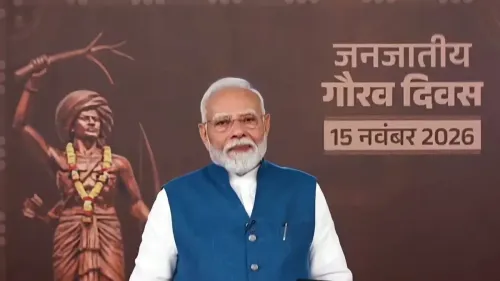
CM Vishnu Deo Sai posted PM Modi's address on Janjatiya Gaurav Diwas, 15 November 2026 , marking the day with a security-meets-tribal-dignity message.
In 2014 , approximately 125 districts across India were classified as Left Wing Extremism-affected, with hundreds of violent incidents each year.
PM Modi's quoted remarks state that thousands of innocent lives — many of them tribal — were lost to Naxal violence over that period.
The post highlights that tribal women now feel safe and dispossessed youth are accessing education and employment as Naxalism recedes.
Janjatiya Gaurav Diwas is held on 15 November , the birth anniversary of tribal freedom fighter Birsa Munda .
Chhattisgarh, historically the worst-affected Naxal state, is at the centre of the government's claimed security turnaround.
On Janjatiya Gaurav Diwas, 15 November 2026, Chhattisgarh Chief Minister Vishnu Deo Sai shared a pointed message from Prime Minister Narendra Modi — one that reframes the near-decade-long anti-Naxal campaign not as a security achievement alone, but as the liberation of a people. The post arrives on the one day of the year dedicated to honouring India's tribal legacy, and its timing is deliberate.
From 125 Districts to a Shrinking Map of Fear
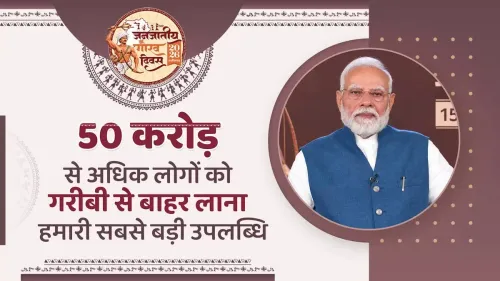
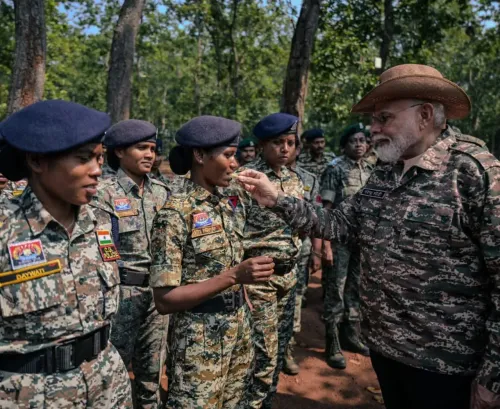
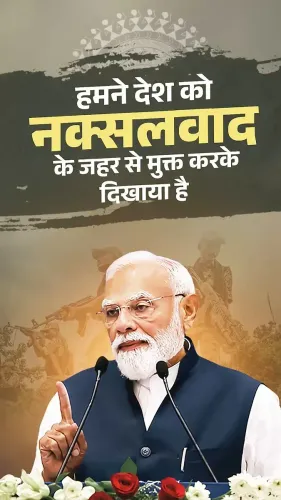
The numbers in PM Modi's quoted remarks cut straight to the bone. In 2014, roughly 125 districts across India were classified as affected by Left Wing Extremism — a sprawling geography of violence that consumed central and eastern India year after year. Hundreds of incidents annually. Thousands of innocent lives lost. And, as the message underlines, the heaviest toll fell on janjatiya samaj — the tribal communities whose forests, villages, and futures were caught in the crossfire between the state and Maoist cadres.
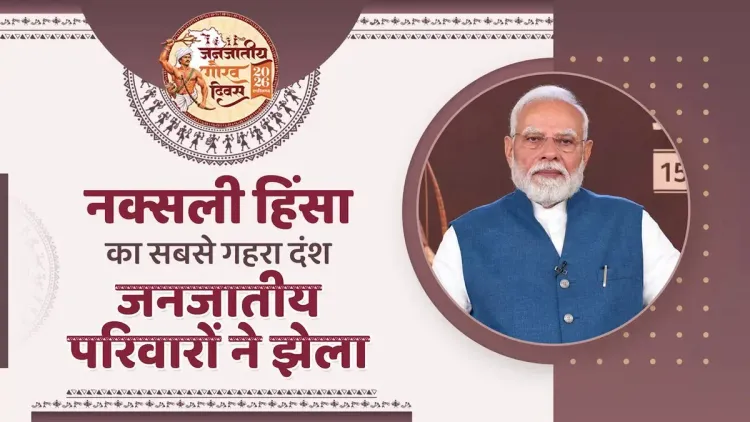
The post, shared in CM Sai's own words drawing on the Prime Minister's address, states plainly: 'Naxali hinsa ne sabse zyada nuksan hamare janjatiya samaj ko hi pahuncha' — 'Naxal violence caused the greatest harm to our tribal society.' That framing matters. It shifts the narrative from counter-insurgency statistics to human consequence.
Tribal Women and Youth at the Centre of the Reckoning
What gives the message its emotional force is its specificity. PM Modi's words, as shared by CM Sai, speak of tribal mothers and sisters now offering blessings — women who 'today feel safe.' He speaks of a generation whose childhoods were stolen, now growing into youth who are joining mainstream opportunity: education, employment, a future. These are not abstractions. In Chhattisgarh — historically the most volatile Naxal heartland — these words carry lived weight.
CM Vishnu Deo Sai, himself from a tribal community in Chhattisgarh's Jashpur district, has consistently placed the welfare of adivasi communities at the centre of his governance pitch. His amplification of this message on Janjatiya Gaurav Diwas — which commemorates tribal icons and was established to celebrate indigenous contributions to India's freedom struggle — connects security gains directly to the larger project of tribal dignity.
Janjatiya Gaurav Diwas and the Politics of Reclamation
Janjatiya Gaurav Diwas is observed every year on 15 November, the birth anniversary of freedom fighter Birsa Munda. The BJP government institutionalised the day as a national observance, and it has since become a key platform for signalling tribal-first policy commitments. The hashtag #JanjatiyaGauravDiwas in CM Sai's post places the anti-Naxal narrative squarely within that celebratory frame — freedom from colonial-era neglect and freedom from internal armed terror, presented as two chapters of the same story.
The post also carries the hashtag #JoharNitinJi — johar being a traditional tribal greeting of respect — likely a tribute to a leader named Nitin, though the specific context of that reference sits within the broader gathering of the day.
What the Security Shift Means on the Ground
Official government data has tracked a progressive reduction in LWE-related incidents since 2014, with security operations and development investment running in parallel — roads, mobile connectivity, banking, schools — into previously unreachable forested districts. The combined approach has been described by the Home Ministry as a 'whole-of-government' model. The districts once marked red on LWE maps have steadily shrunk. How many remain and the precise current incident count will be detailed in the next Home Ministry annual report — a document that will now carry the weight of the political claims made on days like this one.
For Chhattisgarh, the state that bore more Naxal violence than any other, the arc from 2014 to 2026 is the story CM Sai is determined to tell — not just as governance, but as the return of normalcy to communities that had lived without it for a generation.
Point of View
The BJP is pursuing a deliberate political realignment — connecting hard security outcomes to the cultural and social recognition that Janjatiya Gaurav Diwas symbolises. For CM Vishnu Deo Sai, a tribal leader governing India's most historically Naxal-affected state, this narrative serves a dual purpose: validating central government policy and anchoring his own political identity in the tangible improvement of adivasi lives. The 125-district baseline from 2014 functions as a recurring reference point the BJP deploys to contrast the pre-2014 and post-2014 security landscape. Whether the final push to what the government calls near-elimination holds — and whether tribal development indicators keep pace — will determine whether this narrative sustains beyond the electoral cycle.
NationPress
15 Nov 2026
Frequently Asked Questions
What is Janjatiya Gaurav Diwas and why is it celebrated on 15 November?
Janjatiya Gaurav Diwas is observed on 15 November every year, the birth anniversary of tribal freedom fighter Birsa Munda . It was instituted as a national day to honour the contributions of India's tribal communities to the country's history and freedom struggle.
How many districts were affected by Naxalism in India in 2014?
Government data from 2014 recorded approximately 125 districts across India classified as affected by Left Wing Extremism, with hundreds of violent incidents occurring annually.
Who is Vishnu Deo Sai and what is his connection to tribal communities?
Vishnu Deo Sai is the Chief Minister of Chhattisgarh and a BJP leader. He hails from the tribal community of Jashpur district in Chhattisgarh and has consistently focused on tribal welfare and internal security as governance priorities.
What has the Indian government done to reduce Naxalism since 2014?
Since 2014 , official reports document a progressive reduction in LWE incidents through a combined approach of security operations and development investment — including roads, schools, banking access, and mobile connectivity — into previously isolated tribal districts.
What does 'Johar' mean in the context of the Janjatiya Gaurav Diwas post?
Johar is a traditional greeting of respect and solidarity used among tribal communities, particularly in Jharkhand and Chhattisgarh. Its use in the hashtag #JoharNitinJi in CM Sai's post signals a tribute of honour in keeping with the day's tribal cultural spirit.