CM Sai Marks 12 Years of Modi Govt, Cites Chhattisgarh Gains
Synopsis
Chhattisgarh Chief Minister Vishnu Deo Sai marked 12 years of PM Modi's government on 26 May 2026, highlighting new trust in Naxal-affected forest regions, tribal uplift, and the Antyodaya resolve as pillars of Chhattisgarh's development under the Viksit Bharat vision.
Key Takeaways
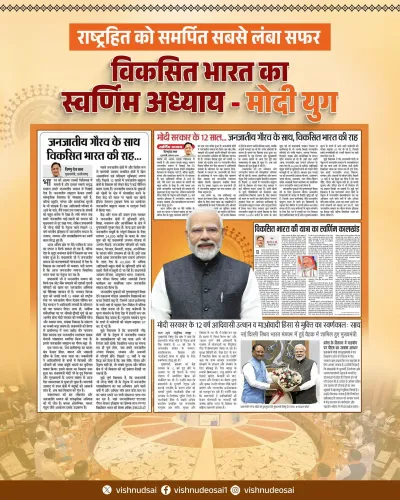
CM Vishnu Deo Sai posted on X on 26 May 2026 to mark 12 years of the Narendra Modi -led central government.
The post highlighted progress in Naxal-affected forest areas of Chhattisgarh and the uplift of tribal communities.
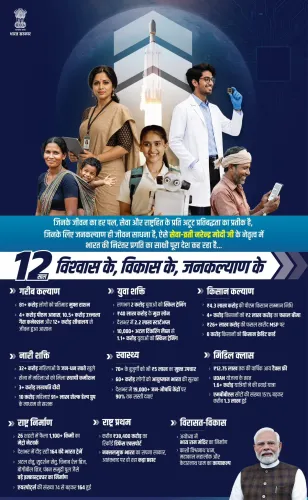
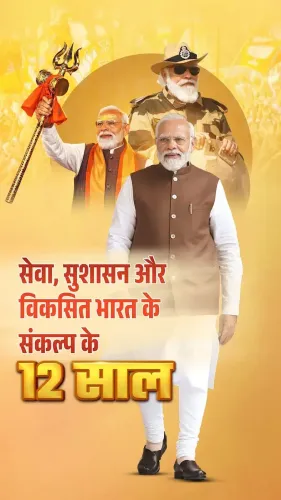
The messaging is tied to the national #12YearsOfSeva and #ViksitBharat campaigns targeting a developed India by 2047 .
The Antyodaya principle — reaching the poorest households first — was cited as a core governing resolve.
Bastar and Surguja divisions remain focal points for both security and welfare delivery in the state.
The Aspirational Districts Programme (launched January 2018 ) covered several Chhattisgarh districts as part of the broader development push.
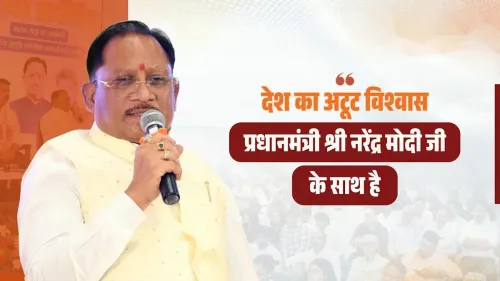
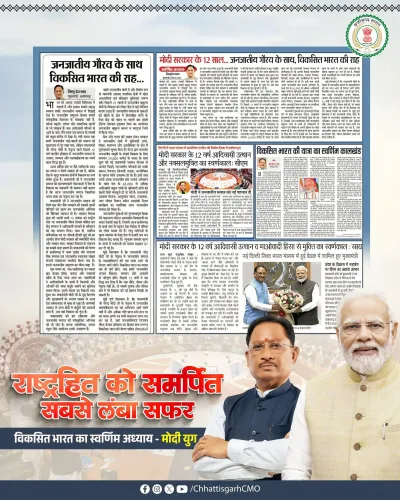
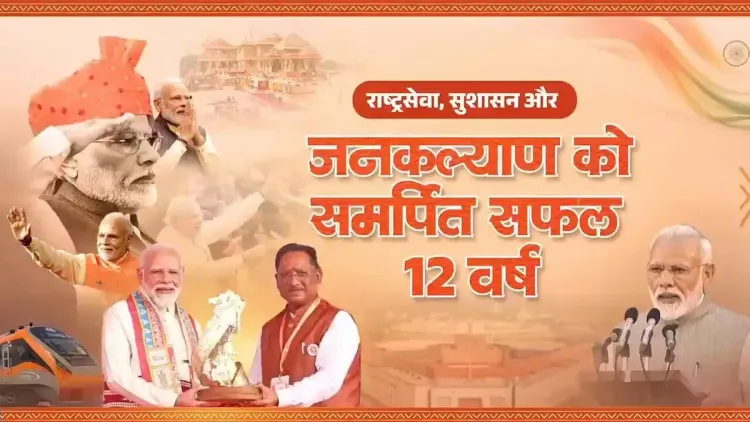
Chhattisgarh Chief Minister Vishnu Deo Sai on Tuesday, 26 May 2026, took to X to mark 12 years of the Narendra Modi-led central government, framing the period as one of service, security, and development — with particular emphasis on progress in the state's Naxal-affected forest regions and the uplift of tribal communities.
In his post, CM Sai wrote: '12 वर्षों की सेवा… सुशासन का संकल्प.. और विकास से आत्मविश्वास की ओर बढ़ता भारत' ('12 years of service… a resolve for good governance… and an India moving from development towards self-confidence'). He added that a new light of trust has emerged in Naxal-affected forest areas, and that this journey — dedicated to the uplift of tribal society and the Antyodaya resolve — is now giving Chhattisgarh a new direction.
Context
Prime Minister Narendra Modi first assumed office on 26 May 2014, making this post part of a coordinated #12YearsOfSeva campaign marking the anniversary across BJP-governed states. CM Sai, who took charge of Chhattisgarh after the BJP's victory in the December 2023 assembly elections, used the occasion to align state governance priorities with the central government's national #ViksitBharat vision — a campaign targeting a developed India by 2047.
The post's reference to the Antyodaya principle — a policy commitment to reaching the poorest households first — echoes a governing philosophy that the Modi government has reiterated in central policy documents since 2014. For Chhattisgarh, this has translated into targeted welfare delivery in districts historically marginalised by decades of left-wing extremism.
Policy Backdrop
Several of Chhattisgarh's districts were among the 115 backward districts covered under the Aspirational Districts Programme, launched in January 2018, which sought to accelerate development in areas lagging on health, education, and infrastructure indicators. The programme has been cited by both state and central governments as a model for closing development gaps in tribal and conflict-affected zones.
The BJP's 2023 state election manifesto and subsequent governance agenda placed ending Naxal influence and expanding welfare in forest areas at the centre of the administration's stated priorities. Bastar and Surguja divisions — long at the heart of left-wing extremism in central India — have been focal points for both security operations and infrastructure investment under the current dispensation.
Stakeholders and Impact
The communities most directly referenced in CM Sai's post are Chhattisgarh's tribal populations and residents of Naxal-affected vananchal (forest) areas. These groups have historically faced restricted access to government services due to both geographic remoteness and security conditions on the ground.
Welfare schemes covering housing, road connectivity, and livelihood support have been progressively extended into previously inaccessible districts. Rehabilitation and surrender programmes for those formerly associated with left-wing extremist outfits have also formed a part of the broader state strategy, though the pace and scale of implementation continue to be closely watched by civil society and policymakers alike.
What's Next
Observers will track the rollout of new road and welfare projects in Bastar and Surguja divisions as a concrete measure of the governance promises invoked in the anniversary messaging. Any official updates on Naxal-related rehabilitation programmes or fresh infrastructure milestones in tribal districts will serve as indicators of how the state translates the #12YearsOfSeva narrative into on-ground outcomes. The convergence of the state's agenda with the Viksit Bharat framework also signals that Chhattisgarh's development trajectory will remain closely tied to central government priorities in the years ahead.
Point of View
The messaging consciously links grassroots welfare to a grand national vision, reinforcing the party's claim to continuity of purpose across state and centre. The emphasis on 'new light of trust' in Naxal-affected areas reflects a deliberate shift in official framing — from conflict management to development confidence — that has become a signature of BJP governance in Chhattisgarh since 2023. How this narrative holds up against measurable outcomes in Bastar and Surguja will determine its political durability ahead of future electoral cycles.
NationPress
21 Sept 2026
Frequently Asked Questions
Why is CM Vishnu Deo Sai posting about 12 years of Modi government?
26 May 2026 marks 12 years since PM Narendra Modi first took office in 2014 . CM Sai joined a BJP-wide #12YearsOfSeva campaign to highlight governance achievements at both the central and state level.
What is the Viksit Bharat campaign mentioned in CM Sai's post?
Viksit Bharat is a national campaign launched under the Modi government with the goal of making India a fully developed nation by 2047 , the centenary of independence, through sustained governance, infrastructure, and welfare efforts.
What is the Antyodaya resolve referred to by CM Sai?
Antyodaya is a governing philosophy focused on prioritising the welfare of the poorest and most marginalised households. The Modi government has cited it as a guiding principle in central policy documents since 2014 , and it has been applied in welfare delivery in tribal and forest areas of Chhattisgarh .
Which areas of Chhattisgarh are considered Naxal-affected?
Districts in the Bastar and Surguja divisions of Chhattisgarh have historically been the most affected by left-wing extremism. These regions have large tribal populations and have been the focus of both security operations and development programmes under successive governments.
When did Vishnu Deo Sai become Chief Minister of Chhattisgarh?
Vishnu Deo Sai became Chief Minister of Chhattisgarh after the BJP won the state assembly elections in December 2023 , with a stated agenda of ending Naxal influence and expanding welfare in forest and tribal areas.