CM Sai Shares PM Modi's Janjatiya Gaurav Diwas Address
Synopsis
On Janjatiya Gaurav Diwas 2026, CM Vishnu Deo Sai shared PM Modi's address claiming nearly 50 crore Indians have escaped extreme poverty and that Naxalism has been eliminated — both achievements framed as directly tied to India's tribal communities.
Key Takeaways
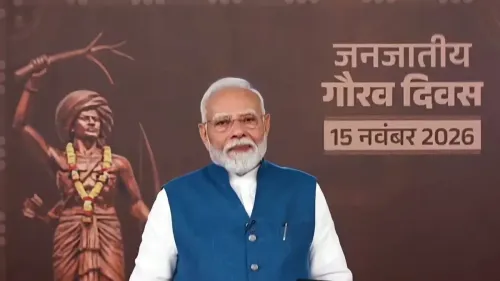
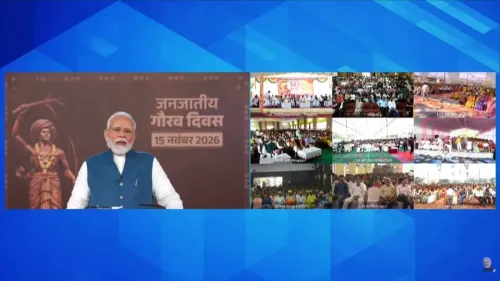
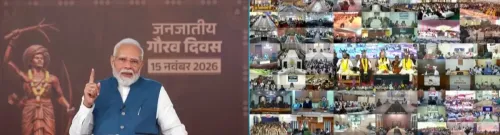
Chhattisgarh CM Vishnu Deo Sai shared PM Modi's remarks on Janjatiya Gaurav Diwas, 15 November 2026 .
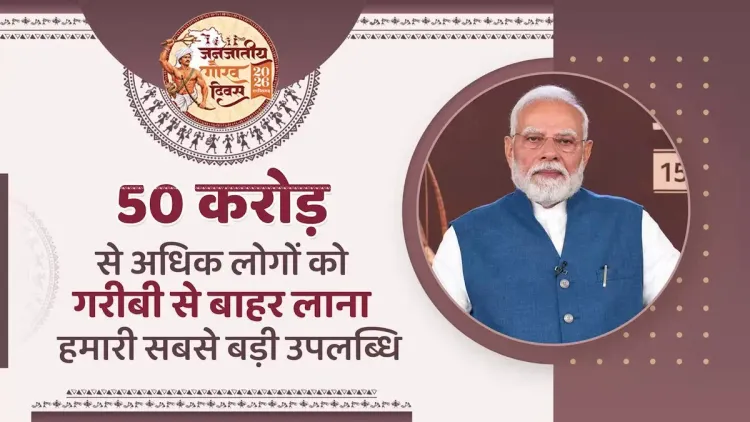
PM Modi claimed nearly 50 crore Indians have escaped extreme poverty as a landmark national achievement.
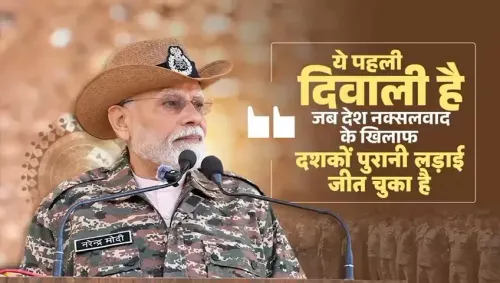
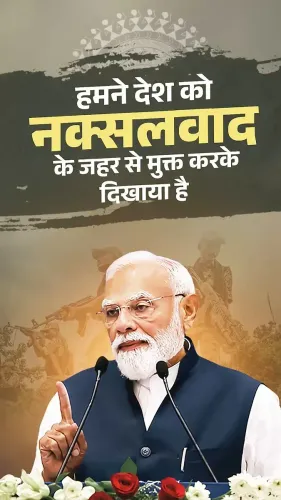
The Prime Minister also declared the elimination of Naxalism and Maoist terror from India as a second major milestone.
Both achievements were explicitly framed as being deeply connected to tribal communities .
Janjatiya Gaurav Diwas marks the birth anniversary of Birsa Munda and has been observed nationally since 2021 .
Chhattisgarh , with its large tribal population and history of Naxal conflict, remains central to both narratives.
On Janjatiya Gaurav Diwas, 15 November 2026, the words came from the highest office in the land — and they landed with unmistakable weight. Chhattisgarh Chief Minister Vishnu Deo Sai shared remarks by Prime Minister Narendra Modi that placed two landmark national achievements at the centre of this year's tribal pride observance: the claim that nearly 50 crore Indians have escaped extreme poverty, and that Naxalism and Maoist terror have been eliminated from the country.
Modi's Two Milestones, Framed Around Tribal Lives
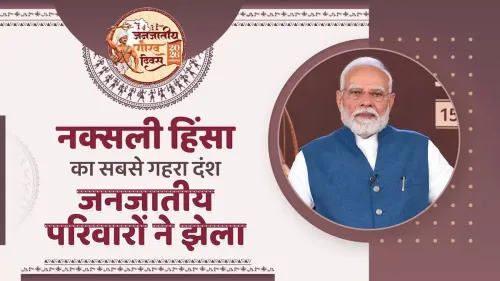
Quoting the Prime Minister directly, CM Sai wrote: 'पहली उपलब्धि है - देश के करीब 50 करोड़ लोगों का भीषण गरीबी को परास्त कर उससे बाहर निकलना और दूसरी उपलब्धि है - देश से नक्सलवाद एवं माओवादी आतंक का खात्मा होना।' — 'The first achievement is that nearly 50 crore people have defeated and emerged from extreme poverty. The second is the elimination of Naxalism and Maoist terror from the country.'
Crucially, PM Modi tied both claims directly to India's tribal communities, stating that the two achievements are 'deeply connected to the lives of our tribal brothers and sisters.' The framing was deliberate: welfare gains and security gains presented as a single, unified dividend for India's adivasi population.
Janjatiya Gaurav Diwas and the Significance of Birsa Munda's Birth Anniversary
Janjatiya Gaurav Diwas is observed every year on 15 November — the birth anniversary of tribal icon and freedom fighter Birsa Munda. The Centre first declared the observance in 2021 to institutionalise recognition of tribal heritage and development. This year's event carries extra political resonance, with the government presenting it as a moment of stocktaking on promises made to adivasi India.
Chhattisgarh sits at the symbolic heart of both narratives. The state holds one of India's largest tribal populations and was for decades the most heavily Naxal-affected theatre in the country, with Bastar and surrounding districts bearing the brunt of left-wing extremist violence. Security operations and welfare expansion have run in parallel here — and official messaging has consistently presented the two as inseparable strategies.
Poverty Figures and the Naxal Claim: What the Data Trail Says
NITI Aayog's multidimensional poverty index reports, published since 2021, have documented significant reductions in extreme poverty across Indian states, with tribal-majority districts showing some of the steepest declines. The government's welfare architecture — housing, cooking gas, food security, banking — has been central to those numbers. The specific figure of 50 crore escaping extreme poverty represents the government's headline claim; independent verification of that precise figure and the declaration of complete Maoist elimination remains ongoing.
The post also carried the hashtag #JanjatiyaGauravDiwas alongside #जोहार_नितिन_जी — a greeting in the tribal tradition directed at a person named Nitin, suggesting the event was attended by or dedicated to a figure by that name, though no further detail was included in the post.
Two numbers. Two claims. And an entire generation of tribal citizens whose lived experience will ultimately be the verdict.
Point of View
Indivisible success story for tribal India. By anchoring both on Janjatiya Gaurav Diwas, the BJP is using an institutional observance it created in 2021 to consolidate adivasi political identity around its governance record. Chhattisgarh, as both the most tribal-intensive and historically the most Naxal-affected state, is the logical centrepiece of that argument. The outstanding question — whether NITI Aayog's next MPI update and ground-level security assessments in Bastar will bear out the headline figures — will determine whether the narrative holds beyond the ceremony.
NationPress
15 Nov 2026
Frequently Asked Questions
What is Janjatiya Gaurav Diwas and why is it celebrated on 15 November?
Janjatiya Gaurav Diwas is an annual national observance on 15 November , the birth anniversary of tribal freedom fighter Birsa Munda . It was first declared by the Central government in 2021 to honour tribal heritage, culture, and contributions to India's freedom struggle.
What did PM Modi say about poverty reduction at Janjatiya Gaurav Diwas 2026?
Prime Minister Narendra Modi claimed that nearly 50 crore Indians have escaped extreme poverty, describing it as one of two landmark national achievements, alongside the claimed elimination of Naxalism and Maoist terror. He said both achievements are deeply connected to the lives of tribal communities.
Has Naxalism really been eliminated from India?
The Prime Minister declared the elimination of Naxalism and Maoist terror as a national achievement at the 2026 Janjatiya Gaurav Diwas event. Independent verification of a complete elimination, particularly in regions like Bastar in Chhattisgarh , is ongoing, and official security assessments continue to be watched.
Why is Chhattisgarh central to the Naxalism and tribal welfare debate?
Chhattisgarh has one of India's largest tribal populations and was for decades the most severely Naxal-affected state, with districts like Bastar at the epicentre of left-wing extremist violence. The state is therefore the most direct test case for government claims linking welfare expansion and security operations.
What is NITI Aayog's multidimensional poverty index and what does it show for tribal areas?
NITI Aayog's Multidimensional Poverty Index (MPI), published since 2021 , tracks deprivation across health, education, and living standards. Reports have shown significant poverty reduction across Indian states, with tribal-majority districts recording some of the steepest improvements linked to central welfare schemes.