CM Fadnavis Chairs Sixth State Finance Commission Review
Synopsis
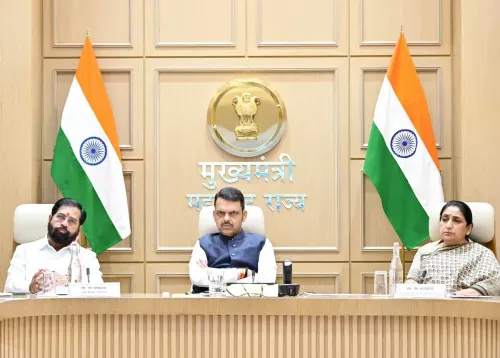
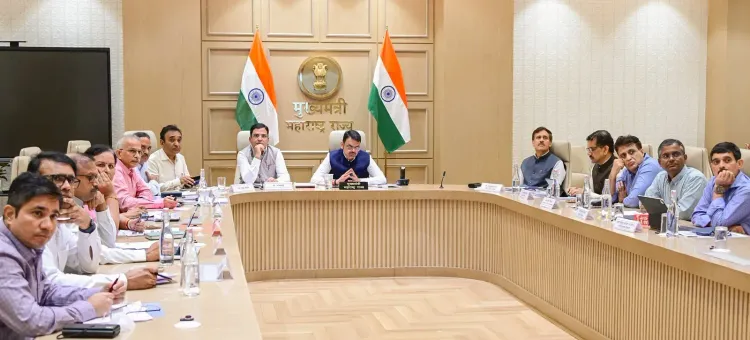
Chief Minister Devendra Fadnavis chaired a review meeting on the Sixth State Finance Commission at Varsha Bungalow, Mumbai, on 17 June 2026, with MoS Adv. Ashish Jaiswal and senior officials present. The commission shapes fiscal devolution to Maharashtra's local bodies for the next five-year cycle.
Key Takeaways
CM Devendra Fadnavis chaired a review meeting on the Sixth State Finance Commission on 17 June 2026 at 5 pm .
The meeting was held at Varsha Bungalow , the Chief Minister's official residence in Mumbai .
Ashish Jaiswal and senior government officials attended the review.
State Finance Commissions are mandated every five years under the 73rd and 74th Constitutional Amendments (1992) to recommend fiscal devolution to local bodies.
The Sixth SFC's recommendations will determine revenue-sharing between the Maharashtra state government and panchayati raj institutions and urban local bodies for the next five-year cycle.
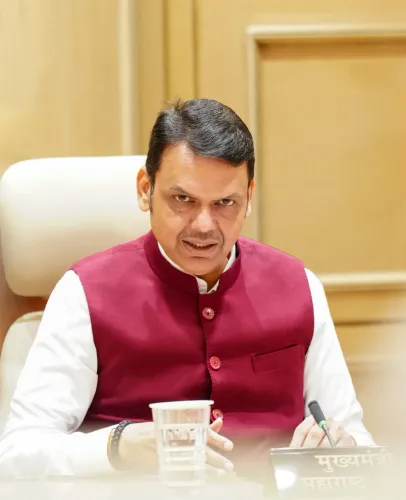
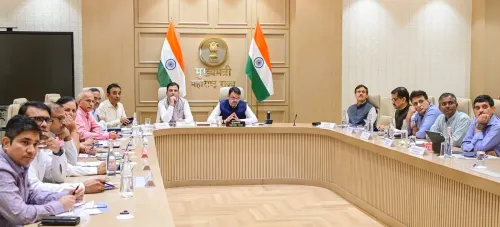
The Chief Minister's Office of Maharashtra announced on Wednesday, 17 June 2026 that Chief Minister Devendra Fadnavis chaired a review meeting concerning the Sixth State Finance Commission at Varsha Bungalow, Mumbai, at 5 pm. Minister of State Adv. Ashish Jaiswal and senior government officials were present at the meeting.
Context
The post, shared in English, Marathi, and Hindi, confirms that the meeting took place at Varsha Bungalow — the official residence of the Chief Minister in Mumbai — on the evening of 17 June 2026. The trilingual communication underscores the state government's effort to reach Maharashtra's diverse linguistic constituencies. The Chief Minister's Office stated: 'मुख्यमंत्री देवेंद्र फडणवीस यांच्या अध्यक्षतेखाली सहाव्या राज्य वित्त आयोगासंदर्भात बैठक' ['A meeting regarding the Sixth State Finance Commission was held under the chairmanship of Chief Minister Devendra Fadnavis'].
Policy Backdrop
State Finance Commissions are statutory bodies constituted under the 73rd and 74th Constitutional Amendments of 1992, which mandated every state to set up an SFC every five years to review and recommend the devolution of state revenues to local bodies — including panchayati raj institutions and urban local bodies. The Sixth SFC in Maharashtra is the latest in a succession of such commissions tasked with determining how state resources are shared with rural and urban governments across the state.
Successive Maharashtra SFCs have historically addressed issues such as own-source revenue enhancement for local bodies, performance-based grants, and integrated financial planning for both rural and urban tiers of government. The work of the commission directly shapes fiscal federalism at the grassroots level, influencing the financial capacity of thousands of gram panchayats and municipal bodies across Maharashtra.
Stakeholders and Impact
The recommendations of the Sixth State Finance Commission will have a direct bearing on panchayati raj institutions and urban local bodies across Maharashtra, determining the quantum of funds they receive from the state government for the next five-year cycle. Local governments depend heavily on SFC-recommended devolution to fund basic services such as water supply, sanitation, roads, and public health infrastructure.
MoS Adv. Ashish Jaiswal's presence at the review alongside senior officials signals that the state government is actively engaged in monitoring the commission's progress at a ministerial level. The involvement of top bureaucracy further suggests the review is substantive rather than ceremonial.
What's Next
The immediate focus will be on the release of the Sixth SFC's interim or final report, and the state government's subsequent decision on accepting and implementing its recommendations for the next devolution cycle. Once recommendations are accepted, the state will need to issue Government Resolutions translating the commission's findings into binding fiscal transfers to local bodies. Maharashtra's approach to the Sixth SFC's recommendations will be closely watched as a signal of the state's commitment to deepening fiscal decentralisation as envisioned by the Constitution.
Point of View
Not a routine administrative exercise. With local body elections a recurring pressure point in Maharashtra, the pace and generosity of SFC recommendations can significantly shape the ruling dispensation's relationship with grassroots governance structures. The trilingual communication in English, Marathi, and Hindi also reflects a deliberate outreach strategy across the state's diverse electorate. The meeting fits a broader national pattern of states revisiting fiscal federalism frameworks as constitutional mandates on local body finance face renewed scrutiny.
NationPress
16 Sept 2026
Frequently Asked Questions
What is the Sixth State Finance Commission of Maharashtra?
The Sixth State Finance Commission of Maharashtra is a statutory body constituted under the 73rd and 74th Constitutional Amendments to recommend how state revenues should be shared with rural and urban local bodies for a five-year period.
Why did CM Devendra Fadnavis chair a meeting on the State Finance Commission?
CM Devendra Fadnavis chaired a review meeting on 17 June 2026 to assess the progress of the Sixth State Finance Commission, which is responsible for recommending fiscal devolution to panchayats and municipalities across Maharashtra.
Who attended the Sixth State Finance Commission review meeting?
Minister of State Adv. Ashish Jaiswal and senior government officials attended the review meeting chaired by CM Devendra Fadnavis at Varsha Bungalow, Mumbai.
What does the State Finance Commission do for local bodies in Maharashtra?
The State Finance Commission recommends the distribution of state revenues, grants-in-aid, and taxation powers to panchayati raj institutions and urban local bodies, directly influencing their capacity to fund local services like roads, water supply, and sanitation.
Where was the Sixth State Finance Commission review meeting held?
The meeting was held at Varsha Bungalow in Mumbai, the official residence of the Chief Minister of Maharashtra, on 17 June 2026 at 5 pm.