CM Fadnavis Chairs Sixth SFC Review, Orders State CSR Cell
Synopsis
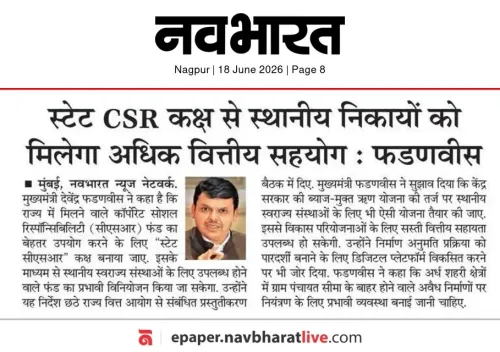
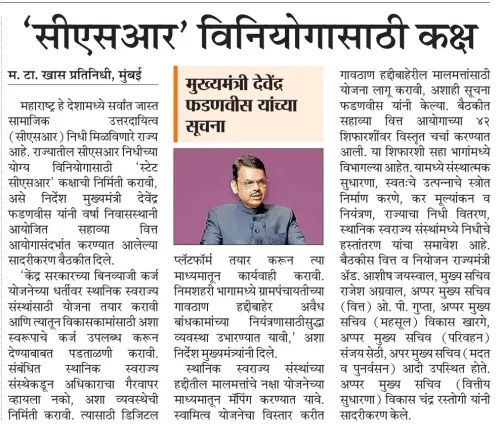
Maharashtra CM Devendra Fadnavis chaired a Sixth State Finance Commission review at Varsha Bungalow on June 17, directing a new State CSR Cell to channel corporate funds to local bodies and an interest-free loan scheme modelled on the Centre's framework, covering 42 commission recommendations.
Key Takeaways
CM Devendra Fadnavis chaired the Sixth State Finance Commission review at Varsha Bungalow, Mumbai on June 17, 2026 .
A new State CSR Cell will be created to direct corporate social responsibility funds toward local self-governments in Maharashtra .
An interest-free loan scheme for local bodies, modelled on a Central Government framework, was instructed to support grassroots development works.
The meeting covered 42 recommendations of the Sixth SFC on institutional reforms, revenue generation, taxation, and fund distribution.
Minister of State Adv.
Ashish Jaiswal and senior officials attended the review meeting.
The moves align with the constitutional mandate under Article 243-I to strengthen panchayats and municipalities through dedicated fiscal mechanisms.
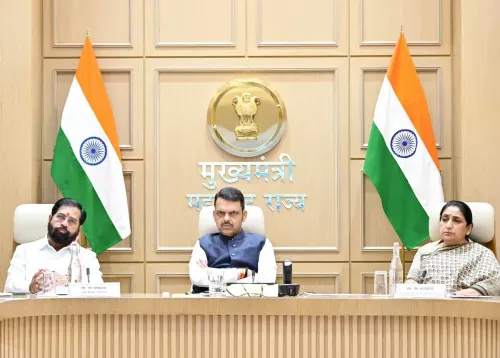
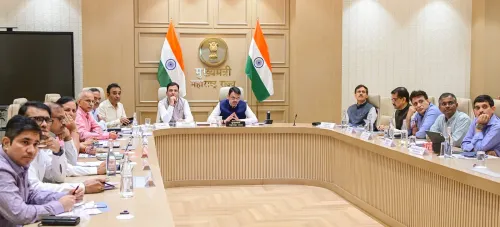
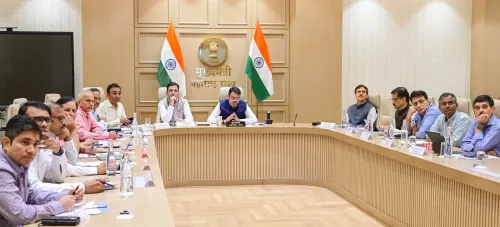
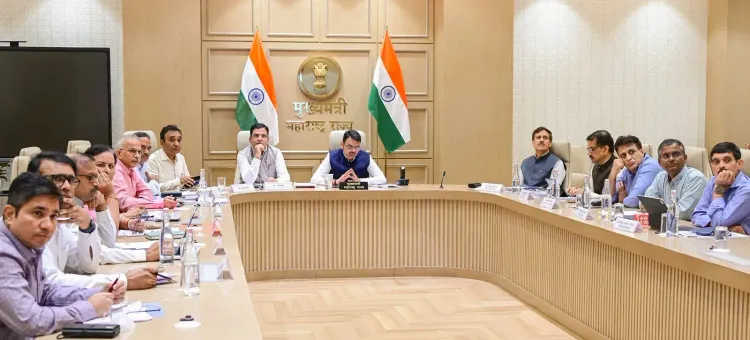
Maharashtra Chief Minister Devendra Fadnavis on Wednesday, June 17, 2026, chaired a review meeting of the Sixth State Finance Commission at Varsha Bungalow, Mumbai, directing the creation of a dedicated State CSR Cell and an interest-free loan scheme to strengthen local self-governments across the state.
Context
Fadnavis announced two key institutional interventions following the meeting. First, a State CSR Cell will be established to ensure corporate social responsibility funds flowing into Maharashtra are effectively channelled toward local bodies such as gram panchayats and municipal corporations. Second, he instructed officials to design an interest-free loan scheme for local bodies, modelled on a Central Government framework, to support development works at the grassroots level.
The meeting also covered the 42 recommendations of the Sixth State Finance Commission, spanning institutional reforms, revenue generation, taxation, fund distribution, and the overall strengthening of the Finance Commission architecture. Minister of State Adv. Ashish Jaiswal and senior officials were present at the deliberations.
Policy Backdrop
State Finance Commissions are constitutional bodies mandated under Article 243-I of the Constitution, introduced through the 73rd and 74th Constitutional Amendments of 1992-93, to recommend devolution of funds, taxation powers, and grants to panchayats and municipalities. Maharashtra's Fifth State Finance Commission had, in 2018-19, focused on property tax reforms and performance grants to municipal bodies.
The move to create a dedicated CSR cell reflects a broader national trend in which state governments supplement Finance Commission transfers with corporate funding and state-backed loan windows to accelerate local infrastructure delivery. This approach aligns with the post-14th Finance Commission push for greater fiscal decentralisation, while states retain oversight through dedicated institutional mechanisms.
Stakeholders and Impact
Urban local bodies, gram panchayats, and municipal corporations across Maharashtra stand to be the primary beneficiaries of both the proposed CSR Cell and the interest-free loan scheme. CSR funds, which currently flow through varied channels, could be more systematically directed toward local infrastructure, sanitation, and public service gaps if a single coordinating cell is operational.
The interest-free loan scheme, borrowing from the Central Government's model, is intended to ease the fiscal burden on local bodies that often struggle with thin revenue bases and delayed transfers. Together, these measures could meaningfully expand the financial toolkit available to the roughly 27,000 gram panchayats and dozens of municipal bodies in Maharashtra.
What's Next
The immediate watch points are the notification and operational guidelines for the State CSR Cell and the formal structure of the interest-free loan scheme. The Sixth State Finance Commission's full report, along with an action-taken memorandum on its recommendations, will eventually need to be tabled in the Maharashtra state legislature.
If implemented effectively, the twin measures could set a replicable template for other states seeking to bridge the gap between constitutional devolution mandates and on-the-ground fiscal capacity of local governments — a challenge that has persisted across India since the 1993 amendments.
Point of View
A model that has gained traction in several larger states. The move is politically significant because empowering local bodies with additional fiscal instruments strengthens the BJP's administrative record ahead of any future civic elections in Maharashtra. However, the real test will be in execution: CSR cells at the state level have historically struggled with coordination between industry, district administration, and local bodies. The breadth of the 42 SFC recommendations suggests the government is treating this as a structural reform moment, not a one-off announcement.
NationPress
16 Sept 2026
Frequently Asked Questions
What is the Sixth State Finance Commission of Maharashtra?
The Sixth State Finance Commission is a constitutional body set up by the Maharashtra government under Article 243-I to recommend how funds, taxation powers, and grants should be devolved to panchayats and municipalities in the state.
What is the State CSR Cell that CM Fadnavis announced?
The State CSR Cell is a proposed institutional mechanism that will coordinate and channel corporate social responsibility funds received in Maharashtra toward projects of local self-governments such as gram panchayats and municipal corporations.
What is the interest-free loan scheme for local bodies in Maharashtra?
CM Fadnavis directed officials to design an interest-free loan scheme for local bodies modelled on a Central Government framework, aimed at providing affordable financing for development and infrastructure works at the grassroots level.
How many recommendations did the Sixth State Finance Commission make?
The Sixth State Finance Commission made 42 recommendations covering institutional reforms, revenue generation, taxation, fund distribution, and strengthening of the Finance Commission itself, all of which were discussed at the June 17, 2026 review meeting.
Who attended the Sixth State Finance Commission review meeting in Mumbai?
Maharashtra Minister of State Adv. Ashish Jaiswal and senior state officials attended the review meeting chaired by CM Devendra Fadnavis at Varsha Bungalow, Mumbai on June 17, 2026.