Bombay HC grants CBI custody of 3 CGST bribery accused, quashes bail
Synopsis
A Special CBI Court had declared the arrests illegal and granted bail — but the Bombay High Court disagreed. On 16 September, it quashed that order, remanded three CGST bribery accused to CBI custody, and found that arrest procedures had been followed correctly. One accused, a senior IRS officer, remains at large.
Key Takeaways
The Bombay High Court on 16 September 2026 ordered two days of CBI custody for three accused in a CGST bribery case .
CGST Superintendent Rakesh Kumar Sinha allegedly demanded ₹1.5 crore , later reduced to ₹40 lakh , from a firm under CGST proceedings.
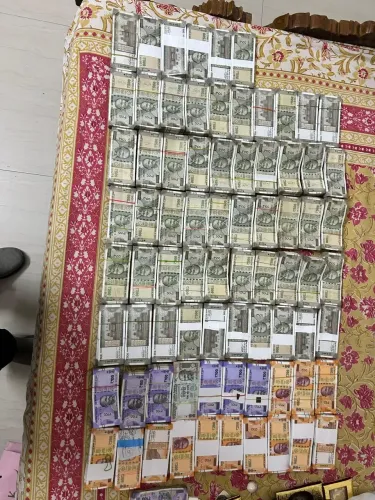
Narinder Rajput was caught in a CBI trap on 27 August allegedly accepting ₹40 lakh on behalf of Sinha and Vinay Kumar Kantheti .
The Special CBI Court in Thane had on 28 August declared the arrests illegal and released all three on bail — a ruling the High Court has now quashed.
Rakesh Kumar Sinha and Narinder Rajput are in CBI custody; efforts are underway to apprehend Vinay Kumar Kantheti , who remains at large.
The Bombay High Court on 16 September 2026 ordered that three accused in a Central Bureau of Investigation (CBI) corruption case involving Central Goods and Services Tax (CGST) officials be remanded to two days of CBI custody for interrogation, overturning an earlier order by a special court that had declared their arrests illegal. The High Court's intervention marks a significant turn in a bribery case that had stalled at the trial-court level.
Background: The Bribery Allegation
The CBI's Anti-Corruption Branch in Mumbai registered the case on 26 August under Section 7 of the Prevention of Corruption Act, 1988, acting on a formal complaint. The complaint alleged that Rakesh Kumar Sinha, CGST Superintendent of Khandeshwar in Raigad, had demanded illegal gratification in connection with proceedings relating to the complainant's firm. According to CBI officials, the initial demand was ₹1.5 crore, which was subsequently negotiated down to ₹40 lakh.
The Trap and Arrests
On 27 August, CBI operatives laid a trap in which Narinder Rajput, a private individual and Customs House Agent, was apprehended while allegedly accepting ₹40 lakh on behalf of Rakesh Kumar Sinha and Vinay Kumar Kantheti, an IRS officer of the 2009 batch serving as CGST Additional Commissioner. All three accused were subsequently arrested and produced before the Special CBI Court in Thane.
The CBI sought five days of police custody for custodial interrogation. However, by an order dated 28 August, the Special Court rejected that request, held the arrests to be illegal, and released all three accused on bail — a ruling that drew a swift legal challenge from the agency.
High Court Reversal
The CBI challenged the Special Court's order before the Bombay High Court through a Criminal Revision Application of 2026. On 16 September, the High Court allowed the revision petition, quashed and set aside the Special Court's order, and remanded the accused to two days of CBI custody. The court examined the arrest records and found that grounds of arrest had been duly communicated and that relevant family members and advocates had been properly informed — directly contradicting the Special Court's basis for declaring the arrests illegal.
Current Status of the Accused
Following the High Court's order, Rakesh Kumar Sinha and Narinder Rajput have been taken into CBI custody for interrogation. Efforts are reportedly underway to trace and apprehend Vinay Kumar Kantheti, the CGST Additional Commissioner, in accordance with law. The investigation into the alleged demand and acceptance of bribe in connection with CGST proceedings is continuing, according to CBI officials.
This case adds to a pattern of bribery allegations against tax officials that the CBI has been pursuing across multiple jurisdictions, raising questions about systemic oversight within indirect-tax administration.
Point of View
Raising questions about the consistency with which lower courts apply the Prevention of Corruption Act's procedural standards. The continued absence of Vinay Kumar Kantheti, a senior IRS officer, is the most pressing operational question: the longer a serving official evades custody, the more it strains the credibility of enforcement. More broadly, this case reflects a recurring pattern of bribery allegations within indirect-tax administration that periodic CBI action alone is unlikely to resolve without structural accountability mechanisms.
NationPress
17 Sept 2026
Frequently Asked Questions
What is the CGST bribery case before the Bombay High Court?
It is a CBI corruption case in which CGST Superintendent Rakesh Kumar Sinha allegedly demanded ₹40 lakh (reduced from an initial ₹1.5 crore) from a firm in connection with CGST proceedings. The CBI registered the case on 26 August under Section 7 of the Prevention of Corruption Act, 1988, and caught Narinder Rajput allegedly accepting the bribe on 27 August.
Why did the Bombay High Court intervene in this case?
The Bombay High Court intervened after the Special CBI Court in Thane rejected CBI's custody request, declared the arrests illegal, and released all three accused on bail on 28 August. The CBI challenged that order through a Criminal Revision Application, and on 16 September the High Court quashed the Special Court's order, finding that arrest procedures had been properly followed.
Who are the three accused in the CGST bribery case?
The three accused are Rakesh Kumar Sinha (CGST Superintendent, Khandeshwar, Raigad), Narinder Rajput (a private individual and Customs House Agent), and Vinay Kumar Kantheti (IRS officer, 2009 batch, CGST Additional Commissioner). Sinha and Rajput are in CBI custody; Kantheti is reportedly being traced.
What happens next in the case?
Rakesh Kumar Sinha and Narinder Rajput are currently in two-day CBI custody for interrogation. Authorities are working to trace and apprehend Vinay Kumar Kantheti, who remains at large. The broader investigation into the alleged bribery in connection with CGST proceedings is continuing.
Under which law was the CBI case registered?
The CBI registered the case under Section 7 of the Prevention of Corruption Act, 1988, which deals with public servants accepting or agreeing to accept gratification other than legal remuneration.