CM Fadnavis: State CSR Cell to boost funds for local bodies
Synopsis
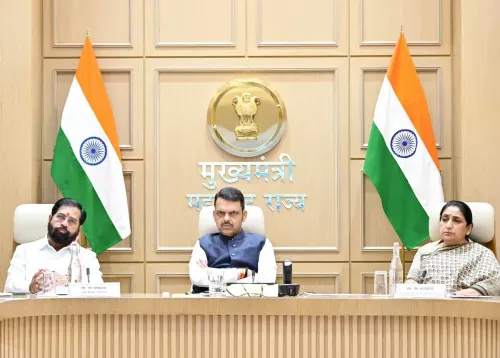
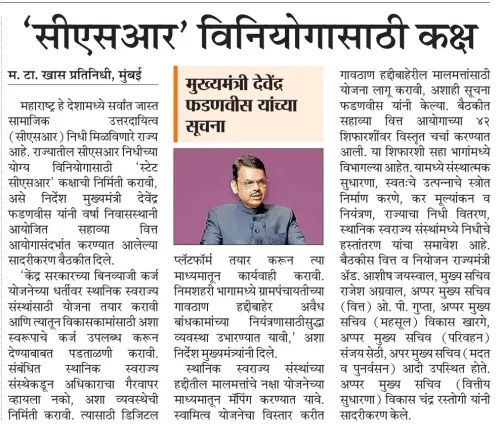
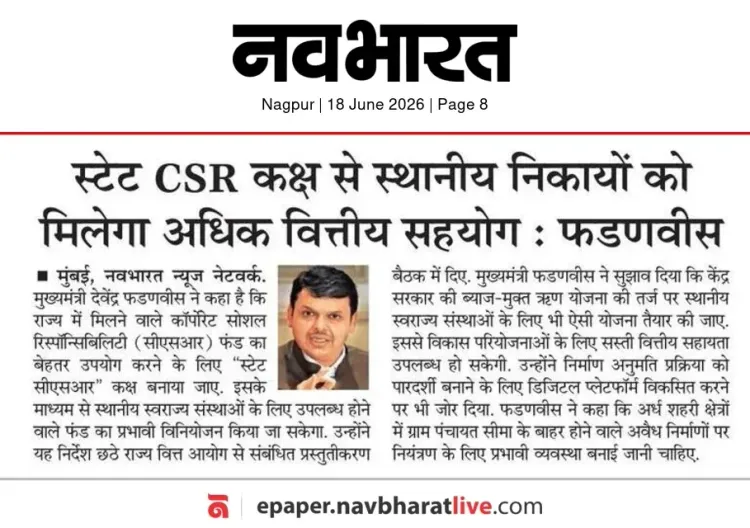
Chief Minister Devendra Fadnavis has announced that Maharashtra's State CSR Cell will provide greater financial support to local bodies, supplementing Finance Commission grants to strengthen decentralised governance across the state.
Key Takeaways
The Chief Minister's Office of Maharashtra announced on 18 June 2026 that the State CSR Cell will channel more funds to local bodies.
CM Devendra Fadnavis made the declaration, framing it in the context of the Finance Commission and local fiscal support.
The State CSR Cell coordinates corporate social responsibility contributions toward state development priorities, including local governance.
Both urban local bodies and gram panchayats are identified as beneficiaries of the increased financial support.
The move aligns with the constitutional mandate of decentralisation under the 73rd and 74th Amendments .
Next steps include issuance of operational guidelines by the State CSR Cell and potential references in the state budget and 16th Finance Commission discussions.
The Chief Minister's Office of Maharashtra announced on Thursday, 18 June 2026 that the state's State CSR Cell will channel greater financial support to local bodies, with Chief Minister Devendra Fadnavis making the declaration in a post shared on the official CMO handle.
Context
The post, replying to @Dev_Fadnavis, carries the statement: 'स्टेट CSR कक्ष से स्थानीय निकायों को मिलेगा अधिक वित्तीय सहयोग' — translated as 'Local bodies will receive greater financial support from the State CSR Cell.' The announcement signals a formal intent to use Maharashtra's corporate social responsibility coordination mechanism as a supplementary funding channel for urban and rural local governments.
The declaration was made in the context of the Finance Commission, referenced in the post's hashtags, pointing to the ongoing national conversation around fiscal devolution to third-tier governance bodies.
Policy Backdrop
India's 15th Finance Commission (2020–2026) had recommended substantial grants to rural and urban local bodies to strengthen basic services and decentralised governance. Maharashtra's State CSR Cell is a government mechanism designed to coordinate corporate social responsibility contributions toward state development priorities, including support for municipal and panchayat-level institutions.
Indian states have increasingly built formal structures to route CSR funds alongside statutory Finance Commission grants, aiming to address persistent resource gaps at the grassroots level. This approach aligns with the constitutional emphasis on decentralisation enshrined in the 73rd and 74th Amendments, which mandate the empowerment of gram panchayats and urban local bodies respectively.
Chief Minister Fadnavis, a senior BJP leader who has served multiple terms at the helm of Maharashtra, has consistently prioritised administrative and fiscal reform as central planks of his governance agenda.
Stakeholders and Impact
Urban local bodies — including municipal corporations and councils — and gram panchayats across Maharashtra stand to benefit from enhanced CSR-linked funding. These institutions often face a gap between their statutory responsibilities and the revenues they actually receive through devolution and local taxation.
By positioning the State CSR Cell as a conduit for additional corporate contributions, the state government aims to supplement Finance Commission grants without placing additional burden on the state exchequer. For communities dependent on local infrastructure, sanitation, water supply, and basic civic services, increased financial flows to local bodies can translate into tangible improvements in service delivery.
What's Next
Attention will now turn to the operational guidelines and fund-allocation mechanisms to be issued by the State CSR Cell, which will determine how corporate contributions are identified, pooled, and disbursed to eligible local bodies. Any references in the upcoming state budget or in deliberations around the 16th Finance Commission will also be closely watched.
The move could serve as a model for other states seeking to leverage non-tax revenue streams to deepen fiscal decentralisation, with Maharashtra's experience likely to inform the broader national debate on local body financing.
Point of View
Non-tax channels to plug the persistent funding gap faced by Maharashtra's local bodies — a gap that Finance Commission grants alone have not fully addressed. By formally positioning the State CSR Cell as a conduit to local governance, the state is effectively institutionalising corporate philanthropy into the devolution architecture, a move that carries both promise and accountability questions. The timing, ahead of likely deliberations around the 16th Finance Commission, also signals Maharashtra's intent to demonstrate proactive fiscal innovation at the sub-state level. Whether the cell can deliver at scale will depend heavily on the robustness of its allocation and oversight mechanisms.
NationPress
19 Sept 2026
Frequently Asked Questions
What is the State CSR Cell in Maharashtra?
The State CSR Cell is a Maharashtra government mechanism that coordinates corporate social responsibility contributions from companies toward state development priorities, including financial support for local bodies such as municipal corporations and gram panchayats.
What did CM Devendra Fadnavis announce about local bodies?
CM Devendra Fadnavis announced that local bodies in Maharashtra will receive greater financial support through the State CSR Cell, supplementing the grants they receive via Finance Commission devolution.
How does the Finance Commission relate to local bodies in India?
The Finance Commission recommends the division of tax revenues between the Union and states and also provides grants to rural and urban local bodies to fund basic services and strengthen third-tier governance.
Which local bodies will benefit from the State CSR Cell funds?
Both urban local bodies — such as municipal corporations and councils — and gram panchayats across Maharashtra are expected to benefit from the increased financial support channelled through the State CSR Cell.
What is the significance of the 73rd and 74th Amendments for local bodies?
The 73rd and 74th Constitutional Amendments mandate the empowerment and financial strengthening of gram panchayats and urban local bodies respectively, forming the legal foundation for decentralisation initiatives like Maharashtra's State CSR Cell funding push.