Assam Budget 2026: GPS, Weighbridges to Plug Mineral Revenue Leaks
Synopsis
The Assam government has announced GPS tracking for all minor mineral transport vehicles, along with weighbridges and CCTV surveillance, as part of Budget 2026 measures to stop revenue leakages in the state's mining sector.
Key Takeaways
The Assam Budget 2026 mandates GPS tracking on all vehicles transporting minor minerals in the state.
Weighbridges will be established to record actual tonnage of mineral consignments and prevent under-reporting.
A CCTV surveillance network will be deployed at key transit points to provide real-time visual oversight.
The measures target revenue leakages — a persistent problem driven by falsified trip records and unauthorised extraction.
The move aligns with a broader national trend of technology-driven enforcement in state mining administrations.
Rollout timelines and tendering for infrastructure are the immediate next steps to watch in 2026-27 .
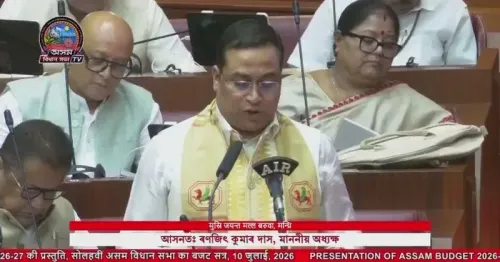
The Chief Minister's Office of Assam on Friday, 10 July 2026, announced a key revenue-protection measure as part of the Assam Budget 2026: the state government will mandate GPS tracking for all vehicles transporting minor minerals and deploy weighbridges and CCTV surveillance networks to curb revenue leakages.
Context
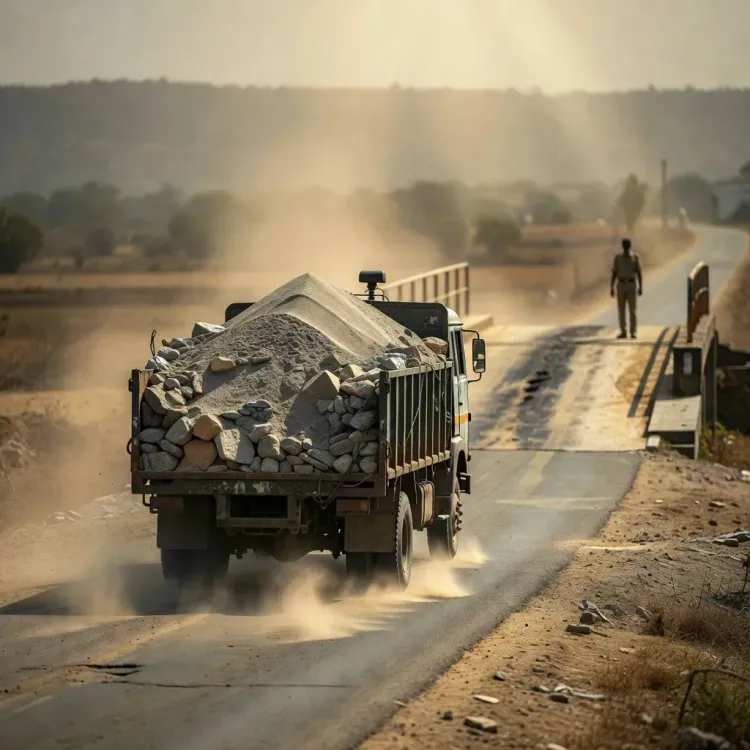
The announcement, shared under the hashtag #AssamBudget2026, targets a long-standing problem in mineral-rich states — the under-reporting of extraction volumes and illegal haulage that erodes royalty income. Minor minerals in Assam include sand, stone, gravel, and similar materials extracted from riverbeds and quarries across the state. The government has identified these as a significant source of revenue loss.
Under the proposed framework, every vehicle carrying minor minerals will be fitted with a GPS tracker, allowing authorities to monitor routes, loads, and destinations in real time. Fixed weighbridges will record the actual tonnage of each consignment, while CCTV cameras will provide visual oversight at key transit points.
Policy Backdrop
Assam is governed by Chief Minister Himanta Biswa Sarma, who has been in office since May 2021 and has consistently emphasised technology-led governance and fiscal discipline. The state's mining sector falls under the broader Mines and Minerals (Development and Regulation) Act framework, which governs royalty collection and lease administration across India.
Several Indian states have already piloted GPS-based mineral tracking systems to reduce illegal mining and improve royalty yields. Assam's move aligns with this national trend of deploying digital enforcement tools in mining administration, reflecting pressure on state governments to maximise own-tax and non-tax revenues without raising rates.
Revenue leakages in the minor minerals sector are typically driven by under-weighing of loads, falsified trip records, and unauthorised extraction sites — all of which the proposed surveillance infrastructure is designed to address simultaneously.
Stakeholders and Impact
The measures will directly affect mineral transporters — truck and vehicle operators who haul sand, stone, and gravel from quarries to construction sites across Assam. Compliance costs for GPS device installation and mandatory weighbridge checks are expected to rise for this segment, though the government has not yet announced any subsidy or transition support.
State revenue authorities stand to gain the most: accurate tonnage data linked to GPS movement logs will make it significantly harder to under-declare consignment volumes, potentially boosting royalty collections. The construction and infrastructure sectors, which depend heavily on minor minerals, may see tighter supply-chain documentation requirements as a downstream effect.
What's Next
The immediate watch points are the rollout timeline and the tendering process for procuring GPS devices, establishing weighbridge stations, and installing CCTV networks at mineral transit corridors. Authorities will also need to determine whether the tracking data will be integrated with national mineral databases or state-level e-governance portals during the 2026-27 fiscal year.
If implemented effectively, the surveillance framework could set a template for other mineral-producing states seeking to tighten enforcement without legislative overhaul — making Assam's execution closely watched by state administrations across India.
Point of View
Weighbridges, and CCTV for minor mineral transport is less a standalone budget line and more a signal of how Indian states are turning to surveillance infrastructure to solve a fiscal enforcement problem that legislation alone has failed to fix. For Chief Minister Himanta Biswa Sarma, the move reinforces a governance brand built around technology adoption and revenue maximisation without new taxes. The measure also reflects pressure on state finances: as capital expenditure demands rise, plugging non-tax revenue leaks becomes a low-political-cost way to improve the fiscal position. Whether the initiative delivers depends almost entirely on implementation fidelity — the history of similar schemes in other states shows that hardware deployment without robust back-end data integration yields limited gains.
NationPress
10 Jul 2026
Frequently Asked Questions
What is the Assam government doing to stop revenue leakage in mining?
The Assam government, as part of Budget 2026, will make GPS tracking mandatory for all vehicles transporting minor minerals, and will set up weighbridges and CCTV surveillance networks to monitor consignments and prevent under-reporting.
What are minor minerals in Assam?
Minor minerals include materials such as sand, stone, gravel, and similar substances extracted from riverbeds and quarries. They are a significant source of royalty revenue for the Assam state government.
How will GPS tracking help curb illegal mining in Assam?
GPS devices on mineral transport vehicles will allow authorities to track routes, monitor load movements in real time, and cross-check data against weighbridge records, making it harder to falsify trip logs or divert consignments illegally.
Who announced the Assam Budget 2026 mineral tracking plan?
The announcement was made by the Chief Minister's Office of Assam on 10 July 2026 as part of the highlights of the Assam Budget 2026.
Which other Indian states use GPS tracking for mineral transport?
Several Indian states have introduced GPS-based tracking systems for mineral haulage to reduce illegal mining and improve royalty collection, reflecting a wider national shift toward technology-driven enforcement in mining administration.