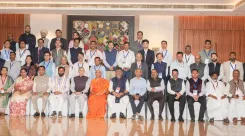
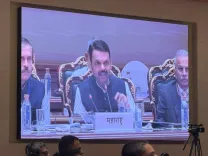
NCW chief Vijaya Rahatkar leads POSH training, inspects Sakhi OSC in Kannauj
Synopsis
NCW Chairperson Vijaya Rahatkar's two-day Uttar Pradesh tour — spanning Kanpur and Kannauj — combined POSH compliance training, a Sakhi OSC inspection, welfare distribution, and a push for gender-sensitive policing. The visit puts a spotlight on ground-level implementation gaps in the POSH Act, 2013, especially in UP's vast unorganised sector.
Key Takeaways
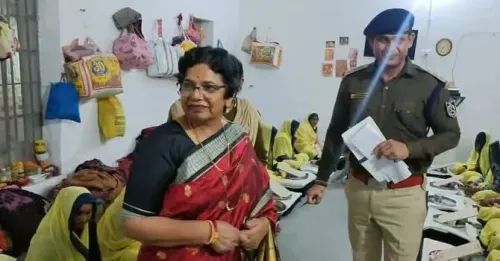
NCW Chairperson Vijaya Rahatkar inspected the Sakhi One Stop Centre (OSC) in Kannauj, Uttar Pradesh on 10 July .
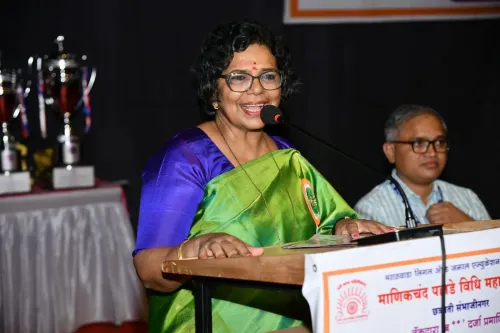
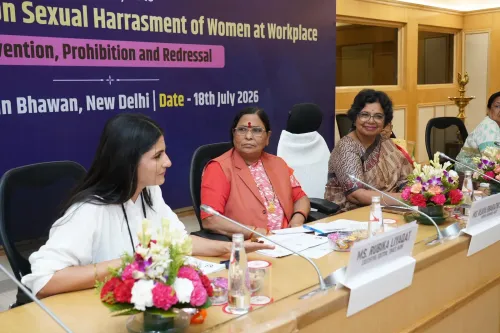
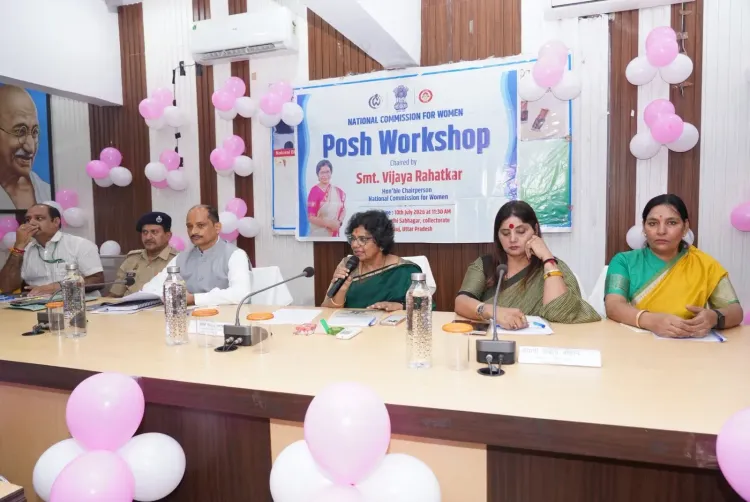
She led a POSH training programme emphasising impartial Internal Committees and timely complaint resolution under the POSH Act, 2013 .
Rahatkar distributed mobile phones to women, cheques to children, and scientific equipment to institutions during a welfare distribution drive.
On Thursday , she held a 'Mahila Jansunvai' in Kanpur and discussed women's safety with senior division officials.
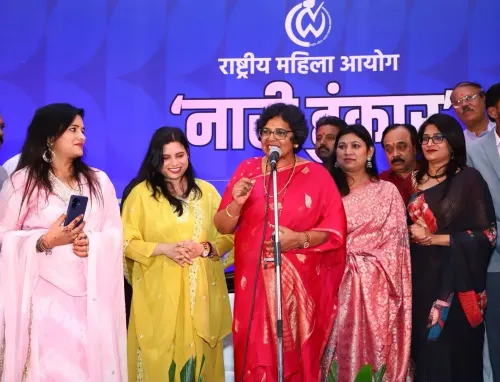
She addressed the Shakti Aur Suraksha programme, calling for stronger gender-sensitive policing across Uttar Pradesh.
National Commission for Women (NCW) Chairperson Vijaya Rahatkar on Friday, 10 July inspected the Sakhi One Stop Centre (OSC) in Kannauj, Uttar Pradesh, and led a Prevention of Sexual Harassment (POSH) training programme for employers and employees in the district. The visit is part of a broader two-day outreach across Uttar Pradesh focused on workplace safety and women's institutional empowerment.
Key Highlights of the POSH Training
Addressing participants at the training programme, Rahatkar stressed that the empowerment of women is possible only when every workplace is safe, respectful, and offers equal opportunities. She underlined the need for competent and impartial Internal Committees (IC) under the POSH Act, 2013, calling for transparent, confidential, and timely resolution of complaints.
Rahatkar also emphasised regular compliance monitoring, awareness about Local Committees (LC) for women in the unorganised sector, and consistent capacity-building for both employers and employees. 'A safe workplace is not just a legal obligation but the foundation of women's economic empowerment and nation-building,' she said.
Sakhi OSC Inspection and Welfare Distribution
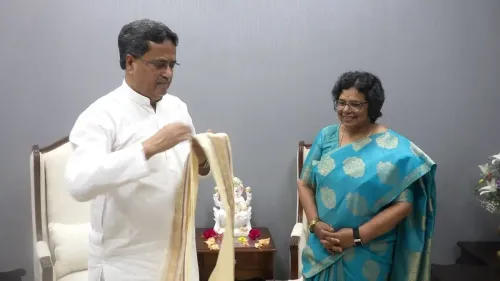
At the Sakhi One Stop Centre in Kannauj, Rahatkar reviewed available facilities and services, directing officials to ensure prompt, sensitive, and effective assistance to women in distress. Following the inspection, she distributed benefits to beneficiaries under various public welfare schemes.
The NCW Chairperson also participated in an 'annaprashan' ceremony for newborn infants and a 'god bharai' programme. Mobile phones were provided to women, cheques distributed to children, and scientific equipment handed over to various institutions, according to the NCW.
Kanpur Engagements on Gender-Sensitive Policing
The Kannauj visit followed a Thursday engagement in Kanpur, where Rahatkar led a 'Mahila Jansunvai' (women's public hearing) at the Circuit House. She subsequently held discussions with senior administration and police officials of the Kanpur division on women's safety and welfare.
At the inaugural session of Shakti Aur Suraksha, Rahatkar highlighted the urgent need for advancing gender-sensitive policing practices — a push that reflects the NCW's broader mandate to strengthen institutional frameworks for women's protection across states.
Broader Context
The POSH Act, 2013 mandates every organisation with 10 or more employees to constitute an Internal Committee for redressal of sexual harassment complaints. Critics and gender rights groups have long flagged patchy implementation, particularly in the unorganised sector where Local Committees often remain under-resourced or inactive. Rahatkar's field visits signal a renewed push by the NCW to bridge that compliance gap at the ground level.
With similar outreach programmes being conducted across multiple states, the NCW's focus on Uttar Pradesh — India's most populous state — carries particular significance for the millions of women employed in its informal economy. Further engagements are expected as part of the Chairperson's ongoing state-level review programme.
Point of View
Yet Internal Committees in small organisations and Local Committees for the unorganised sector remain chronically under-constituted. A Chairperson visiting district-level centres signals intent, but intent without enforcement data tells an incomplete story. The NCW would strengthen its case considerably by publishing state-wise POSH compliance rates alongside these field visits — so the public can measure whether outreach is translating into institutional change on the ground.
NationPress
9 Oct 2026
Frequently Asked Questions
What is the POSH Act, 2013 and why is it relevant?
The Prevention of Sexual Harassment (POSH) Act, 2013 mandates every organisation with 10 or more employees to set up an Internal Committee for redressal of workplace sexual harassment complaints. It is relevant because compliance — especially in the unorganised sector — remains uneven across India, which is why the NCW is conducting field-level training and inspections.
What did NCW Chairperson Vijaya Rahatkar do in Kannauj on 10 July?
Rahatkar inspected the Sakhi One Stop Centre in Kannauj, reviewed its facilities, and directed officials to provide prompt and sensitive assistance to women. She also led a POSH training programme and participated in welfare distribution, an 'annaprashan' ceremony, and a 'god bharai' programme.
What is a Sakhi One Stop Centre?
A Sakhi One Stop Centre (OSC) is a government-run facility that provides integrated support services — including medical, legal, psychological, and shelter assistance — to women affected by violence or in distress. The centres are part of a centrally sponsored scheme.
What did Rahatkar do during her Kanpur visit?
On Thursday, Rahatkar held a 'Mahila Jansunvai' (public hearing for women) at the Circuit House in Kanpur and discussed women's safety and welfare with senior administration and police officials of the Kanpur division. She also addressed the Shakti Aur Suraksha programme on gender-sensitive policing.
Who is responsible for POSH compliance in the unorganised sector?
Local Committees (LC), constituted at the district level by state governments, are responsible for handling POSH complaints from women in the unorganised sector. Rahatkar specifically called for greater awareness about LCs and regular capacity-building for their members.