Bihar CM Office Reviews University Reform Drive

Synopsis
The Chief Minister's Office of Bihar on 26 June 2026 disclosed a comprehensive review of reform initiatives across all state universities, targeting transparency, efficiency, digital administration, and academic excellence — continuing the state's alignment with NEP 2020 goals.
Key Takeaways
The Chief Minister's Office of Bihar announced on 26 June 2026 that a detailed review of university reform initiatives had been conducted.
The review covered all state universities in Bihar and focused on four pillars: transparency, efficiency, digital administration, and academic excellence .
The initiative aligns with goals set under the National Education Policy 2020 , which mandates e-governance and institutional accountability in higher education.
University administrators, faculty, and students across Bihar's public university system are the primary stakeholders.
No specific outcomes or directives from the review have been announced; follow-up actions are expected in coming months.
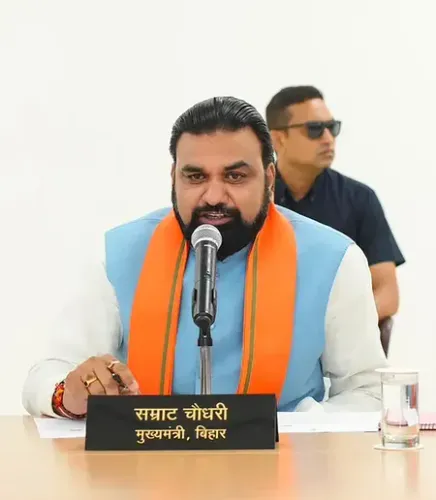
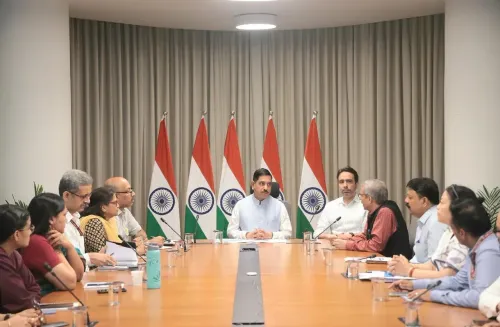
The Chief Minister's Office of Bihar on Friday, 26 June 2026, shared details of a comprehensive review of reform initiatives being carried out across all state universities, aimed at advancing transparency, efficiency, digital governance, and academic excellence.
Context
The post, a reply to @samrat4bjp, states that 'राज्य के सभी विश्वविद्यालयों में पारदर्शिता, दक्षता, डिजिटल प्रशासन एवं शैक्षणिक उत्कृष्टता को बढ़ावा देने के उद्देश्य से संचालित विभिन्न सुधारात्मक पहलों की विस्तृत समीक्षा की गई' — translated: 'a detailed review was conducted of various reform initiatives being implemented in all universities of the state to promote transparency, efficiency, digital administration, and academic excellence.' The communication signals that the Bihar government is actively monitoring the progress of ongoing university-level reforms rather than merely announcing them.
Policy Backdrop
Bihar has pursued incremental modernisation of its public universities over the past decade, with reform drives gaining momentum after 2015 under Chief Minister Nitish Kumar. Following the rollout of the National Education Policy 2020 (NEP 2020), the state initiated alignment measures to embed digital administration and greater transparency into university governance structures. The review mentioned in the post fits within this longer arc of periodic governmental assessments designed to hold institutions accountable to reform targets.
NEP 2020 specifically calls for the adoption of e-governance frameworks, outcome-based academic assessments, and institutional audits — areas that align directly with the four pillars cited in the Chief Minister's Office post: transparency, efficiency, digital administration, and academic excellence.
Stakeholders and Impact
University administrators, faculty, and students across Bihar's state-run universities are the primary stakeholders of this review process. For administrators, such reviews can trigger directives on administrative restructuring or digital tool adoption. For students and faculty, the emphasis on academic excellence and transparency could translate into reformed examination systems, grievance redressal mechanisms, and more accountable institutional leadership.
Bihar operates a significant number of state universities serving lakhs of students, making the scope of any systemic reform both consequential and complex. Consistent governmental review is widely seen as a prerequisite for translating policy intent into ground-level change in large public university systems.
What's Next
The Chief Minister's Office has not announced specific follow-up measures in this communication, but the pattern of such reviews in Bihar typically precedes either the issuance of administrative directives to universities or references in state budget allocations and legislative assembly discussions. Observers will watch for the release of any formal report, digital governance toolkit, or policy directive stemming from this review in the coming weeks and months. The state's ability to operationalise its stated reform goals across all universities will be a key indicator of the effectiveness of this exercise.
Point of View
Where higher education quality has historically been a political vulnerability, such messaging serves a dual purpose: reassuring reform advocates while putting university administrators on notice. The real test will be whether this review translates into verifiable, time-bound outcomes rather than remaining a process milestone.
NationPress
25 Sept 2026
Frequently Asked Questions
What did the Bihar CM Office say about university reforms?
The Chief Minister's Office of Bihar stated on 26 June 2026 that a detailed review was conducted of various reform initiatives in all state universities, aimed at promoting transparency, efficiency, digital governance, and academic excellence.
Which universities are covered under Bihar's university reform review?
The review covers all state universities in Bihar, though the specific institutions and the review's findings have not been individually named in the official communication.
How does NEP 2020 relate to Bihar's university reforms?
The National Education Policy 2020 mandates e-governance, transparency, and outcome-based academic standards in higher education — goals that directly correspond to the four pillars Bihar cited in its university reform review.
What are the expected outcomes of Bihar's university reform review?
No specific outcomes have been announced yet. Follow-up actions could include administrative directives to universities, new digital governance tools, or references in state budget and legislative proceedings.
Who benefits from Bihar's state university reform initiatives?
University administrators, faculty, and students across Bihar's public university system stand to benefit, particularly through improved institutional accountability, digital services, and academic standards.