Bihar Cabinet clears 11 proposals on education, skills and township rules
Synopsis
Bihar's Cabinet cleared 11 proposals in a single sitting — converting B.Ed. colleges into multidisciplinary institutions under NEP 2020, extending a ₹430.08 crore youth skilling scheme through 2031 to train 2.57 lakh youths annually, and easing land transaction rules in Greenfield Satellite Townships. The breadth of the decisions points to a state government in acceleration mode ahead of elections.
Key Takeaways
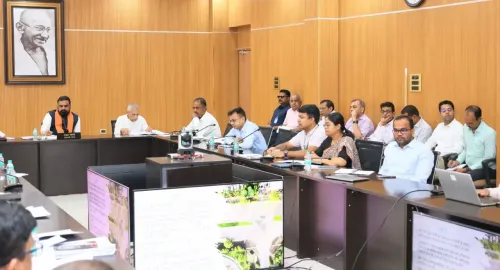
The Bihar Cabinet approved 11 proposals on 12 August 2026 at the Main Secretariat, Patna .
Standalone private B.Ed. institutions will be converted into multidisciplinary degree colleges under NEP 2020 and NCTE guidelines.
The Kushal Yuva Programme has been extended from 2026–27 to 2030–31 with an outlay of ₹430.08 crore , targeting training for over 2.57 lakh youths per year.
The programme is expected to directly create 6,436 employment opportunities annually, with training in AI , drones, solar energy and more.
Restrictions on land purchase, sale and transfer in notified Greenfield Satellite Township areas have been lifted, with BUDA empowered to regulate development under approved plans.
The Bihar Cabinet on 12 August 2026 approved 11 agenda items at the Main Secretariat in Patna, covering higher education reform, youth skill development and land regulation in planned urban zones. The decisions signal a coordinated push by the state government to align institutional frameworks with national policy mandates.
B.Ed. Colleges to Become Multidisciplinary Institutions
The Cabinet cleared a proposal to transform standalone private B.Ed. institutions in Bihar into multidisciplinary degree colleges, in alignment with the National Education Policy (NEP) 2020 and directives from the National Council for Teacher Education (NCTE).
Under the new framework, NCTE-recognised private teacher-education institutions will be permitted to offer undergraduate and skill-based courses across Arts, Science, Commerce and other disciplines alongside their existing B.Ed. programmes. Courses will be introduced subject to standards and approvals prescribed by the respective universities, the University Grants Commission (UGC), NCTE and the Bihar government.
The government expects the move to broaden access to higher education by enabling students to pursue a wider range of programmes within their own districts or nearby areas — a particularly significant step for Bihar, where geographic barriers have historically constrained enrolment. The initiative is aimed at improving the state's Gross Enrolment Ratio (GER), which trails the national average.
Kushal Yuva Programme Extended Through 2030–31
The Cabinet also approved the extension of the Kushal Yuva Programme (Skilled Youth Programme) under Saat Nischay-3, continuing the scheme from the 2026–27 academic year through 2030–31 with a sanctioned outlay of ₹430.08 crore.
The extended programme will train young people in emerging and employment-oriented domains including Artificial Intelligence (AI), drone technology, solar energy, networking, digital marketing, banking, Tally, foreign languages and entrepreneurship. According to the government, the initiative is expected to directly generate 6,436 employment opportunities and provide training to more than 2.57 lakh youths every year.
Notably, the inclusion of AI and drone technology reflects a deliberate effort to future-proof the state's workforce — a departure from earlier iterations of the programme that focused primarily on conventional vocational trades.
Land Transaction Rules Eased in Greenfield Satellite Townships
The Cabinet granted ex-post-facto approval to the resolution in Memo No. 7920 dated 29 July 2026, lifting restrictions on the purchase, sale and transfer of land in notified Greenfield Satellite Township areas following the final publication of development plans.
The decision also empowers the Bihar Urban Development Authority (BUDA) to lift restrictions on land transactions imposed after the publication of a draft development plan. However, land development and building construction in these zones will remain regulated under approved development plans and applicable Development Control Regulations (DCR), ensuring that growth in these townships proceeds within planned urban-development norms.
This comes amid Bihar's broader effort to attract investment and structured urban expansion outside its saturated core cities, with Greenfield townships seen as a key instrument for decongestion and economic dispersal.
Broader Policy Direction
Taken together, the 11 decisions reflect the Bihar government's stated priorities of expanding educational access, improving youth employability and establishing a regulated framework for planned urban growth. With assembly elections on the horizon, the timing of these announcements — spanning education, skilling and urban development — is likely to sharpen the government's development narrative. Implementation timelines and monitoring mechanisms will be closely watched by civil society and opposition alike.
Point of View
But the harder question is execution. The B.Ed.-to-multidisciplinary conversion is only as meaningful as the university affiliations it unlocks — if approvals move slowly, the reform stays on letterhead. The Kushal Yuva extension's AI and drone additions are forward-looking, but Bihar's skilling ecosystem has historically struggled with placement outcomes, not just training numbers. And easing land transactions in Greenfield Townships without robust DCR enforcement risks replicating the unplanned sprawl the policy was designed to prevent. The government's development narrative is coherent; the delivery architecture needs equal attention.
NationPress
27 Sept 2026
Frequently Asked Questions
What did the Bihar Cabinet approve on 12 August 2026?
The Bihar Cabinet approved 11 proposals covering higher education reform, youth skill development and urban land regulation. Key decisions included converting private B.Ed. colleges into multidisciplinary institutions, extending the Kushal Yuva Programme through 2030–31, and easing land transaction rules in Greenfield Satellite Townships.
How will private B.Ed. colleges in Bihar change under the new decision?
NCTE-recognised private B.Ed. institutions in Bihar will now be allowed to offer undergraduate and skill-based courses in Arts, Science, Commerce and other disciplines alongside their existing B.Ed. programmes, in line with NEP 2020 and UGC guidelines. The aim is to improve the state's Gross Enrolment Ratio by expanding course options within students' home districts.
What is the Kushal Yuva Programme and how has it been extended?
The Kushal Yuva Programme is a state-run youth skilling initiative under Saat Nischay-3. The Cabinet has extended it from the 2026–27 academic year through 2030–31 with a sanctioned budget of ₹430.08 crore, targeting training for more than 2.57 lakh youths annually in areas including AI, drone technology, solar energy and digital marketing.
What changes have been made to land rules in Bihar's Greenfield Satellite Townships?
Restrictions on the purchase, sale and transfer of land in notified Greenfield Satellite Township areas — imposed after the final publication of development plans — have been lifted. The Bihar Urban Development Authority (BUDA) has also been empowered to remove restrictions tied to draft development plan publications, while construction remains regulated under Development Control Regulations.
Who is affected by the Bihar Cabinet's decisions on education and skills?
The decisions primarily affect students in districts currently underserved by higher-education institutions, private B.Ed. college managements seeking to diversify, and youth aged roughly 15–28 eligible for the Kushal Yuva Programme. Landowners and developers in notified Greenfield Satellite Township zones are directly affected by the land regulation changes.