CM Samrat Choudhary Clears Bihar B.Ed. College Overhaul

Synopsis
Bihar CM Samrat Choudhary announced cabinet approval to convert over 300 stand-alone B.Ed. colleges into multidisciplinary campuses, aligning with NEP 2020 by offering arts, science, commerce, and vocational courses alongside teacher-education programmes to boost quality and employability.
Key Takeaways
Bihar CM Samrat Choudhary announced cabinet approval on 12 August 2026 to convert over 300 stand-alone B.Ed. colleges into multidisciplinary degree institutions.
Students will be able to combine B.Ed. with undergraduate degrees in arts, science, commerce , and vocational courses on a single campus.
The reform directly implements the National Education Policy 2020 recommendation to phase out isolated teacher-training colleges.
The decision aligns Bihar's institutions with University Grants Commission norms being adopted by multiple states.
Phased conversion timelines, funding mechanisms, and UGC compliance requirements are yet to be notified by the state government.
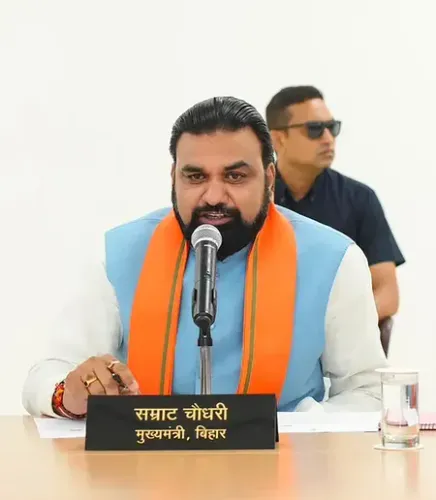
Over 300 stand-alone B.Ed. institutions in Bihar are set for a fundamental transformation — no longer single-purpose teacher-training silos, but full multidisciplinary campuses where a student can pursue arts, science, commerce, and vocational courses alongside their education degree. Bihar Chief Minister Samrat Choudhary announced on Wednesday, 12 August 2026 that the state cabinet has approved the conversion and academic strengthening of these institutions, a move that reshapes the architecture of higher education across the state.
Posting in Hindi, CM Choudhary wrote that through this initiative, students will get the opportunity to study B.Ed. alongside undergraduate and professional courses in arts, science, commerce, and other subjects — all within a single campus. 'गुणवत्तापूर्ण शिक्षा, कौशल विकास, अनुसंधान और रोजगारपरक शिक्षा को नई गति मिलेगी' — 'quality education, skill development, research, and employability-oriented education will receive fresh momentum,' he added.
NEP 2020's Blueprint Lands in Bihar
The decision is Bihar's most concrete state-level adoption of the National Education Policy 2020, which explicitly recommended phasing out isolated teacher-education colleges and integrating them into multidisciplinary institutions. The rationale behind NEP 2020's prescription was straightforward: a B.Ed. student trained in isolation from broader academic disciplines produces a narrower educator. Merge the campus, diversify the curriculum, and you raise both the teacher and the taught. Several states have moved in this direction to align with University Grants Commission norms, but Bihar's approval — covering more than 300 institutions in a single cabinet decision — signals an unusually broad sweep. For a state where teacher recruitment and educational quality have long been pressure points, the scale of the reform is notable.What Changes for B.Ed. Students Across Bihar
For the students most directly affected — those enrolled in or aspiring to join B.Ed. programmes — the shift promises a richer academic environment. Under the current stand-alone model, a B.Ed. campus typically offers nothing beyond teacher-training coursework. Under the new framework, the same campus will host undergraduate degree programmes and vocational tracks, giving students the flexibility to combine a teaching qualification with a subject-area degree or a market-ready skill certification. The cabinet's approval covers both the physical and academic 'strengthening' of these institutions, suggesting capital investment alongside curriculum reform. Specific phased timelines, funding mechanisms, and UGC compliance roadmaps are expected to follow through state government notifications. For Bihar's NDA government, the announcement also carries political weight — framed under the hashtag #NDA4Bihar, it positions the ruling alliance as the executor of a nationally endorsed reform that directly touches students, educators, and the state's employment pipeline in one stroke.Point of View
It serves a dual purpose: delivering a tangible reform with visible beneficiaries — students and educators — while signalling administrative alignment with the Centre's education agenda ahead of any political cycle. The scale, covering hundreds of institutions in one approval, also reflects a Bihar government willing to move in bulk rather than pilot-and-expand, which accelerates impact but raises questions about implementation bandwidth and UGC compliance capacity that the state will need to answer quickly.
NationPress
27 Sept 2026
Frequently Asked Questions
What did Bihar cabinet approve for B.Ed. colleges?
The Bihar cabinet approved the conversion of over 300 stand-alone B.Ed. institutions into multidisciplinary degree colleges, allowing students to pursue arts, science, commerce, and vocational courses alongside their B.Ed. programme on a single campus.
How does this relate to NEP 2020?
The National Education Policy 2020 explicitly recommended merging isolated teacher-education colleges into multidisciplinary institutions to improve academic quality and employability. Bihar's cabinet decision is a direct state-level implementation of that recommendation.
How many B.Ed. colleges will be affected in Bihar?
According to CM Samrat Choudhary's announcement, more than 300 stand-alone B.Ed. institutions across Bihar are covered under the cabinet approval.
What benefits will B.Ed. students get from this change?
Students will be able to study for a B.Ed. qualification alongside undergraduate degrees in arts, science, or commerce, and vocational or professional courses — all within the same campus, improving both academic depth and employment prospects.
What happens next after the cabinet approval?
State government notifications are expected to follow, detailing phased conversion timelines, funding allocations, and the steps required for UGC compliance across the affected institutions.