CM Samrat Choudhary Reviews Bihar's College and School Build Push
Synopsis
Bihar CM Samrat Choudhary chaired a review meeting at Lok Sewak Avas on 22 October 2026, assessing permanent campus construction for 211 degree colleges and directing accelerated building of 16,440 classrooms across 2,996 schools this financial year.
Key Takeaways
Bihar CM Samrat Choudhary chaired an education infrastructure review at Lok Sewak Avas on 22 October 2026 .
Construction progress on permanent campuses for 211 newly established degree colleges was placed under scrutiny.
Officials were directed to accelerate new school buildings in 2,996 schools within the current financial year.
The construction drive covers 16,440 new classrooms across Bihar.
The push is framed under the state's SamriddhBihar agenda and the national ViksitBharat vision.
Financial-year deadlines and a formal review mechanism signal an accountability-first approach to delivery.
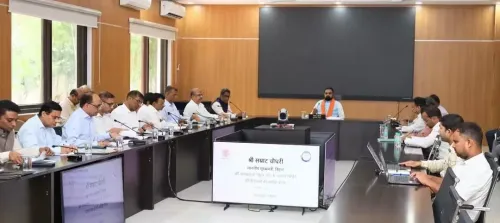
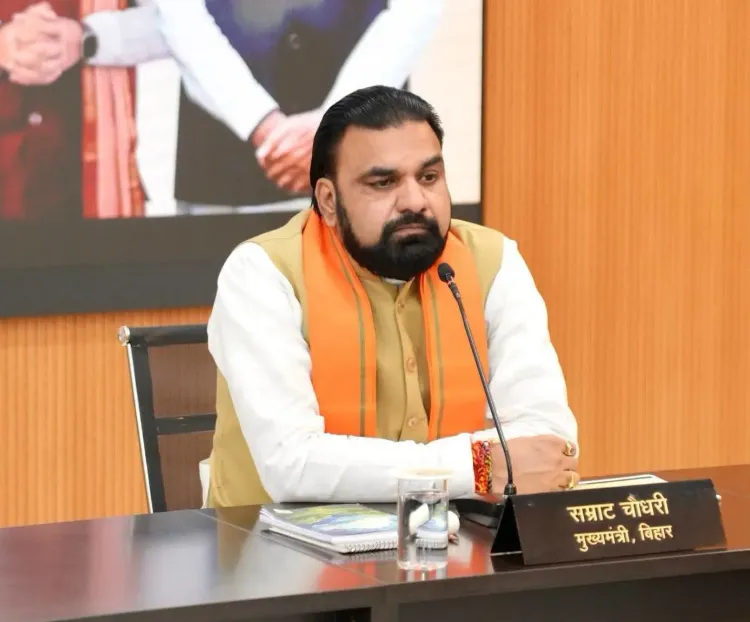
Inside the Sankalp Sabhagar at Lok Sewak Avas, Bihar Chief Minister Samrat Choudhary convened a high-level review meeting on Thursday, 22 October 2026 — placing education infrastructure squarely at the centre of the state's development agenda. At the table: the construction timelines of 211 newly established degree colleges and the aggressive school-building push for an entire financial year.
The CM reviewed the progress on permanent campuses for the 211 newly established degree colleges and directed officials to accelerate construction of new school buildings in 2,996 schools, together with 16,440 classrooms, before the current financial year closes. The directive was unambiguous: speed up, no exceptions.
What the numbers say about Bihar's classroom deficit
The scale here is telling. 2,996 schools receiving new buildings and 16,440 classrooms being constructed in a single financial year represents one of the largest simultaneous school-infrastructure drives the state has announced. For a state with one of India's largest student-age populations, physical infrastructure — a functioning classroom, a permanent college building — is not an amenity. It is a prerequisite.
The 211 degree colleges currently operating without permanent campuses represent a structural bottleneck in Bihar's higher education pipeline. Temporary or rented premises constrain faculty recruitment, laboratory facilities, and overall institutional credibility. Pushing permanent construction forward directly addresses that bottleneck.
Sankalp Sabhagar, and the politics of a review meeting
Holding the review at Lok Sewak Avas — the Chief Minister's official residence — rather than a ministerial secretariat signals personal ownership of the outcome. When a CM chairs a construction-progress review himself, the message to the implementing machinery is clear: delays have political consequences.
The hashtags accompanying the post — #SamriddhBihar (Prosperous Bihar), #ViksitBharat (Developed India), #EducationForAll — frame the drive within both the state's brand narrative and the Centre's overarching national-development vocabulary. It ties a state-level infrastructure sprint to a larger ideological arc, positioning Bihar's classroom construction as a brick-by-brick contribution to India's 2047 development vision.
Bihar's long road on education infrastructure
Bihar's effort to expand degree colleges and school buildings has been a recurring state priority across successive governments, reflecting the gap between enrolment demand and available infrastructure. The current push — timed to financial-year deadlines and anchored in a formal review mechanism — suggests an attempt to move from announcement to accountability, with progress tracking built into the process from the start.
Whether the pace of on-ground construction matches the pace of directives issued will be the real test. Bihar's next legislative session and financial-year audit will be the first hard checkpoint — and students waiting on permanent campuses will notice the difference long before any official report lands.
Point of View
The BJP-led state government is framing routine infrastructure work as part of a grander ideological narrative ahead of Bihar's political calendar. The dual focus on both higher education (degree college campuses) and school-level infrastructure (classrooms) suggests a strategy of visible, broad-based impact rather than targeting any single tier. The real indicator of seriousness will be the audit trail at the financial year's close — whether ground-level construction matches the meeting-room mandate.
NationPress
23 Oct 2026
Frequently Asked Questions
How many degree colleges is Bihar building permanent campuses for?
Bihar Chief Minister Samrat Choudhary reviewed construction progress for 211 newly established degree colleges that are awaiting permanent campuses, directing officials to accelerate work.
How many classrooms is Bihar constructing in 2026?
16,440 classrooms are being constructed across 2,996 schools in Bihar during the current financial year, as directed by CM Samrat Choudhary at the review meeting.
Where did Samrat Choudhary hold the education review meeting?
The review meeting was held at Sankalp Sabhagar , located at Lok Sewak Avas — the Chief Minister's official residence in Patna.
What is SamriddhBihar?
SamriddhBihar means 'Prosperous Bihar' and is a branding initiative under which the Bihar state government frames its development programmes, including education infrastructure drives.
Why is Bihar building so many new school classrooms?
Bihar has one of India's largest student-age populations and faces a significant gap between enrolment demand and available physical infrastructure, making large-scale classroom and school construction a recurring state priority.