Bihar CM Orders Degree Colleges in 211 Blocks from July 1
Synopsis
Bihar Chief Minister Nitish Kumar has directed the Higher Education Department to launch degree-level education in 211 blocks currently without a college from 1 July 2026. Colleges built on donated land will be named after the donor, creating a community-contribution incentive to fast-track the expansion.
Key Takeaways
211 blocks in Bihar currently have no degree college and will get one from 1 July 2026 under a new directive.
The order was issued by Chief Minister Nitish Kumar during a review meeting of the Higher Education Department on 26 May 2026 .
Colleges built on donated land will be named after the land donor or a person recommended by them.
The move targets rural youth, especially women, who currently lack access to degree education within their home blocks.
The naming-rights model mirrors community-contribution approaches used in other Indian states to mobilise private land for public institutions.
Faculty deployment, university affiliation, and funding details are expected to be confirmed in subsequent Higher Education Department reports.
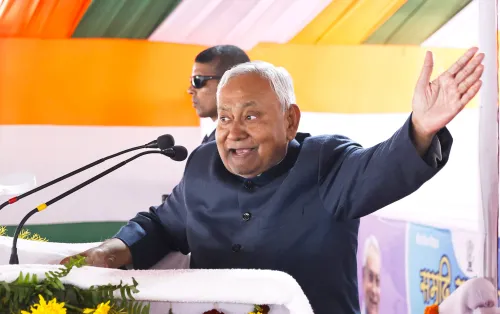
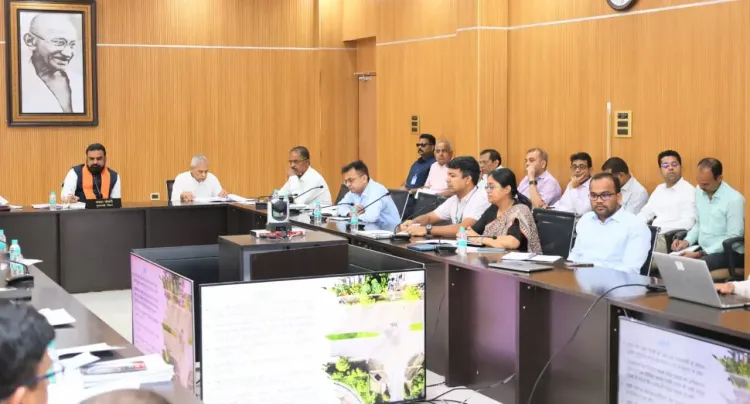
The Chief Minister's Office of Bihar announced on Tuesday, 26 May 2026, that Chief Minister Nitish Kumar has directed the Higher Education Department to commence degree-level education in 211 blocks currently without a degree college, effective 1 July 2026. The directive came during a review meeting on higher education and also introduced a naming-rights incentive for land donors.
The post, shared from the official Chief Minister's Office account, quoted the Chief Minister as saying: 'From 1 July, degree-level education should be started in the 211 blocks that do not have a degree college. Colleges for which land is donated will be named after the donor or a person recommended by them.' (jis prakhandom mein mahavidyalay hetu bhoomi daan di jaegi, us mahavidyalay ka naam daandaata athwa anushansit vyakti ke naam par rakha jaega)
Context
Bihar is divided into over 530 administrative blocks (prakhands), and access to degree-level education has historically been concentrated in urban centres and district headquarters. Students in remote blocks have faced long commutes or been forced to migrate to towns, a barrier that disproportionately affects women and economically weaker sections. The Chief Minister's review meeting identified 211 such blocks with no degree college at all, and set a firm start date of 1 July 2026 for classes to begin.Policy Backdrop
This directive fits within Bihar's multi-year push to decentralise higher education, which has included the establishment of new universities and model colleges since the mid-2000s under successive state administrations. The Higher Education Department Bihar has been the nodal body for expanding institutional infrastructure, and block-level college placement has been a recurring commitment in state budget speeches and education policy documents. The naming-rights mechanism — under which a college is named after whoever donates the required land — mirrors community-contribution models that several other Indian states have used to mobilise private land for public educational facilities, reducing the burden on the state exchequer for land acquisition.Stakeholders and Impact
The primary beneficiaries are rural youth, particularly young women in blocks where social norms or financial constraints make long-distance travel to college impractical. By anchoring a college within each block, the state aims to raise Gross Enrolment Ratio (GER) figures, which in Bihar have historically trailed the national average. Local landowners and community leaders stand to gain recognition through the naming-rights provision, creating a tangible civic incentive for land contribution. District administrations will be tasked with identifying suitable donors and coordinating with the Higher Education Department to meet the 1 July deadline.What's Next
The practical test of the announcement will be whether classes actually commence across all 211 blocks by 1 July 2026 — a timeline that demands rapid identification of venues, faculty deployment, and affiliation with existing universities. The volume and speed of land donations under the naming incentive will be a key early indicator of community uptake. Subsequent state budget sessions and Higher Education Department progress reports are expected to detail funding allocations, faculty recruitment, and enrolment outcomes. If successfully implemented, the model could position Bihar as a reference case for block-level higher-education access in large, rural-majority Indian states.Point of View
The announcement is part of a longer arc of state-level catch-up on social infrastructure that has defined Nitish Kumar's governance brand. The real measure of success will be enrolment data and faculty strength six months after the July launch, not the announcement itself.
NationPress
10 Oct 2026
Frequently Asked Questions
Which 211 blocks in Bihar will get new degree colleges?
The Chief Minister's Office has identified 211 administrative blocks across Bihar that currently have no degree college; the specific list of blocks is expected to be released by the Higher Education Department as implementation proceeds.
When will new degree colleges start in Bihar's blocks?
Chief Minister Nitish Kumar has set 1 July 2026 as the start date for degree-level education in the 211 identified blocks.
How will Bihar's new block-level colleges be named?
Colleges for which land is donated by a community member or organisation will be named after the donor or a person recommended by the donor, as announced during the CM's higher education review.
What is Bihar's plan to expand higher education in rural areas?
Bihar is pursuing block-level placement of degree colleges to reduce urban-rural gaps, building on a multi-year drive that has included new universities and model colleges since the mid-2000s.
Who benefits from Bihar's new degree college expansion?
Rural youth — particularly young women and economically weaker students in remote blocks — are the primary beneficiaries, as the new colleges will eliminate the need for long-distance travel to access degree education.