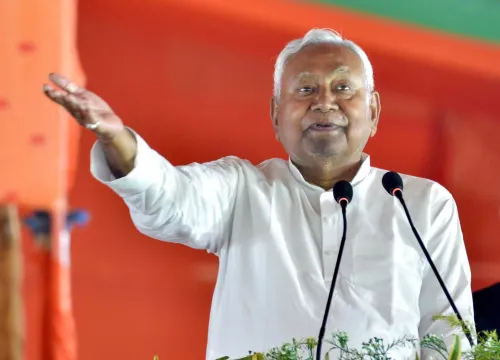
CM Nitish Kumar: 'Police Didi' to Guard Bihar Schools
Synopsis
Bihar Chief Minister Nitish Kumar has announced the 'Police Didi' initiative, deploying female police officers near schools to protect girl students, reaffirming his administration's zero-tolerance stance on crime in the state.
Key Takeaways
Chief Minister Nitish Kumar declared that there is 'no place for crime and criminals in Bihar' and that the rule of law will prevail under all circumstances.
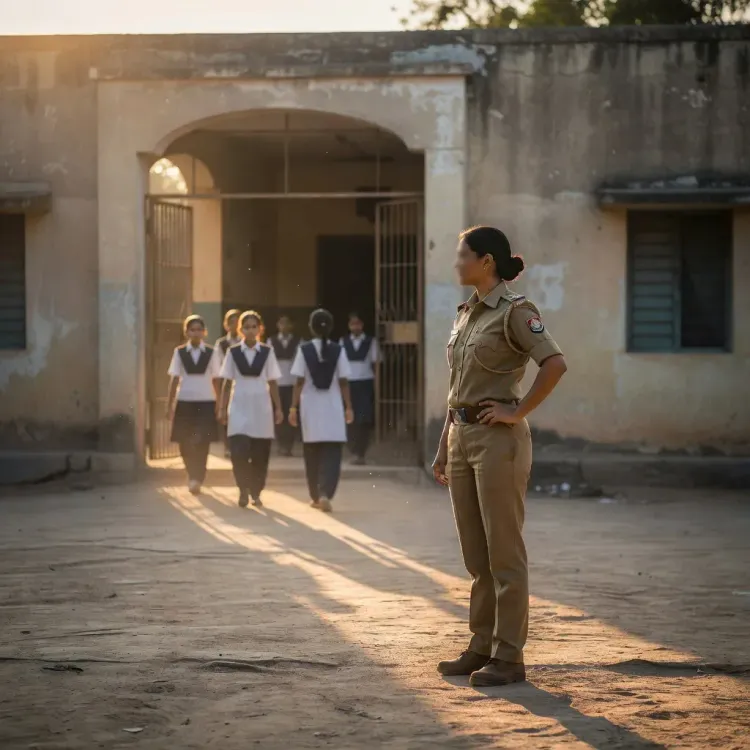
A new initiative called 'Police Didi' will deploy female police personnel near schools specifically to strengthen security for girl students.
The announcement was made by the Chief Minister's Office of Bihar on 19 June 2026 .
Bihar Police is the implementing agency responsible for the on-ground rollout of the scheme.
The initiative aligns with the Bihar government's long-standing Sushasan (good governance) framework dating back to 2005 .
A detailed deployment plan, district coverage, and revised school-safety SOPs are yet to be formally announced.
The Chief Minister's Office of Bihar announced on Friday, 19 June 2026 that Chief Minister Nitish Kumar has declared zero tolerance for crime in the state and unveiled a plan to deploy female police personnel — called 'Police Didi' — near schools to strengthen the safety of girl students and women.
In a statement shared on the official CMO account, the Chief Minister said: 'There is no place for crime and criminals in Bihar, and the rule of law will be maintained under all circumstances.' He further stated that to 'further strengthen the security of girl students and daughters, Police Didi will be deployed near schools.'
Context
The announcement comes amid continued public focus on the safety of women and girls in educational settings across India. Chief Minister Nitish Kumar framed the initiative as a direct extension of his administration's long-standing commitment to law and order, using the term 'Sushasan' (good governance) — a political identity his government has cultivated since 2005. The deployment of Police Didi is intended to provide a visible, approachable female police presence in school vicinities, reducing the risk of harassment and crime targeting students.
Policy Backdrop
Since 2005, successive Bihar governments under Nitish Kumar have linked stricter policing with social-sector goals, particularly female education and safety. Programmes targeting crime against women have been a recurring feature of the state's governance narrative. The Police Didi concept follows this lineage — positioning uniformed women officers as both deterrents and community contacts for girl students in and around school premises. Bihar Police would be the implementing agency responsible for identifying personnel, defining patrol schedules, and coordinating with school administrations.
Stakeholders and Impact
The primary beneficiaries are girl students and women in Bihar, particularly those attending government and aided schools where security infrastructure is often limited. School communities — including teachers, parents, and local administrators — stand to be directly affected by the revised safety protocols that the Police Didi deployment would require. Broader civil society groups focused on women's empowerment and child safety are likely to watch the rollout closely, as the initiative's success will depend heavily on sustained deployment rather than a one-time announcement.
What's Next
The detailed rollout plan for Police Didi — including the number of personnel to be deployed, the districts to be covered first, and revised school-safety standard operating procedures — is yet to be made public. Bihar Police is expected to issue operational guidelines in the coming weeks. Subsequent crime data from school-adjacent areas will serve as a key metric for evaluating the programme's impact. If implemented at scale, the initiative could become a model referenced by other states grappling with similar safety concerns in educational settings.
Point of View
Relatable term, the administration is making a deliberate communication choice aimed at both visibility and public trust among women and school communities. The initiative also arrives at a moment when women's safety in educational settings is a charged national conversation, giving Bihar an opportunity to position itself as proactive. Whether the scheme translates into sustained deployment or remains a headline commitment will be the real test of its governance intent.
NationPress
18 Sept 2026
Frequently Asked Questions
What is the 'Police Didi' scheme in Bihar?
'Police Didi' is a Bihar government initiative announced by Chief Minister Nitish Kumar to deploy female police personnel near schools, with the aim of strengthening the security of girl students and women in school vicinities.
Who announced the Police Didi initiative?
The initiative was announced by Chief Minister Nitish Kumar, as communicated through the official Chief Minister's Office of Bihar account on 19 June 2026.
Which students will benefit from the Police Didi scheme?
Girl students and young women attending schools across Bihar are the primary intended beneficiaries of the Police Didi deployment.
Has Bihar launched similar women's safety schemes before?
Yes. Since 2005, the Bihar government under Nitish Kumar has repeatedly linked stricter policing with women's empowerment goals, making school and community safety a recurring policy priority under its 'Sushasan' (good governance) framework.
When will Police Didi be deployed near Bihar schools?
A specific timeline has not yet been announced. The detailed rollout plan, including districts to be covered and operational guidelines from Bihar Police, is expected to be released in the coming weeks.