CM Nitish Launches Free Live Classes in Bihar High Schools
Synopsis
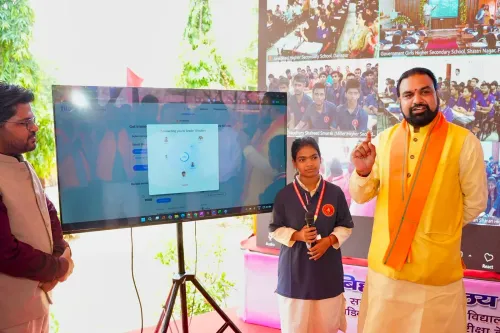
Chief Minister Nitish Kumar has announced 'Bihar School Live Classes,' a free live digital education initiative for high school students in Bihar, enabled through MoUs between the state Education Department and seven voluntary organisations. The scheme uses modern technology to deliver quality instruction at no cost to students.
Key Takeaways
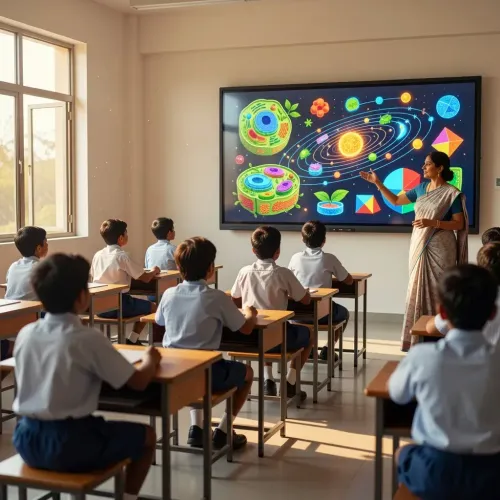
Bihar School Live Classes will be launched in government high schools across Bihar .
The initiative is backed by MoUs between the Education Department, Government of Bihar and 7 voluntary organisations .
Classes will be delivered using modern technology and will be available to students free of cost .
The announcement was made by Chief Minister Nitish Kumar on 16 July 2026 .
The scheme aligns with the National Education Policy 2020 's emphasis on blended and digital learning.
Identities of the seven partner organisations and exact MoU terms remain to be officially disclosed.
The Chief Minister's Office of Bihar announced on Thursday, 16 July 2026 that Chief Minister Nitish Kumar has approved the launch of 'Bihar School Live Classes' — a new initiative to deliver free, technology-driven education to high school students across the state through Memoranda of Understanding (MoUs) signed with seven voluntary organisations and the Education Department, Government of Bihar.
What Was Announced
Quoting the Chief Minister directly, the official post stated: 'शिक्षा विभाग एवं 7 स्वयंसेवी संस्थाओं के साथ हुए समझौता ज्ञापन (MoU) के माध्यम से बिहार के हाई स्कूलों में बिहार स्कूल लाइव क्लासेज संचालित की जाएंगी' — meaning, 'Through MoUs signed with the Education Department and 7 voluntary organisations, Bihar School Live Classes will be conducted in high schools of Bihar.' The announcement further noted that students will receive quality education free of cost through modern technology. The initiative marks a formal institutional framework for live digital instruction in government high schools across the state.
Context
Bihar has long grappled with learning outcome gaps in its government school system, particularly at the secondary level and in rural districts. The state began integrating smart classrooms and digital tools into secondary schools between 2018 and 2020, building early infrastructure for technology-aided learning. The 'Bihar School Live Classes' programme represents a more structured, partnership-based escalation of that effort, formalising the role of civil society organisations alongside the state education machinery.
The initiative aligns with the National Education Policy (NEP) 2020, which emphasises blended learning, digital infrastructure, and public-private collaboration to improve educational access and quality. Bihar's successive state budgets have allocated increasing funds for education technology, teacher recruitment, and school infrastructure as part of broader governance reforms championed by Chief Minister Nitish Kumar since 2005.
Policy Backdrop
The use of MoUs with voluntary organisations to co-deliver public education services reflects a growing model in Indian state governance — leveraging civil society capacity to extend reach without proportional increases in government staffing. For Bihar, a state with a large youth population and significant rural-urban educational disparity, live classes streamed into high schools could help address the shortage of specialist subject teachers in remote areas. The Education Department, Government of Bihar will serve as the nodal body overseeing the programme's implementation and quality standards.
The specific identities of the seven voluntary organisations involved in the MoUs, as well as the precise terms and commencement dates of the agreements, have not been confirmed in publicly available records and should be treated as pending official disclosure.
Stakeholders and Impact
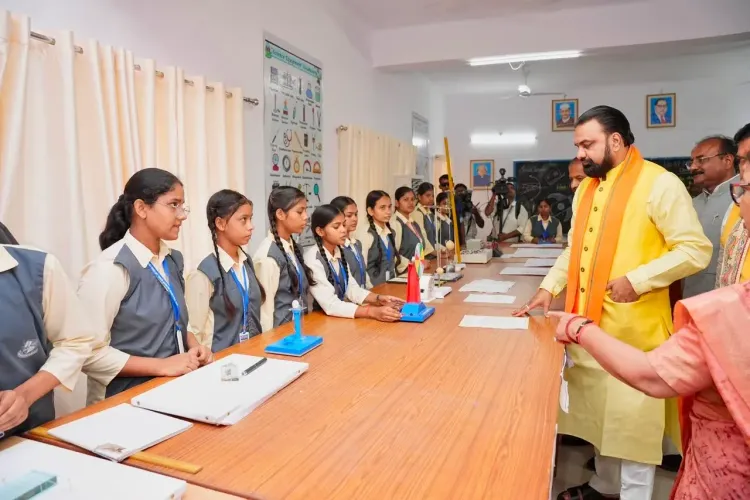
The primary beneficiaries are high school students enrolled in government schools across Bihar — a cohort that has historically had limited access to quality instruction in subjects requiring specialised expertise. Teachers stand to gain a supplementary resource that can support classroom delivery, while voluntary organisations gain a formal mandate and institutional backing for their educational outreach work. The 'free of cost' provision is a critical feature, ensuring the programme does not create an access barrier for students from economically weaker households.
What's Next
The rollout of Bihar School Live Classes is expected to begin with select high schools before scaling across the state, though a confirmed phase-wise timeline has not yet been made public. Evaluation of learning outcomes, coverage statistics, and the operational performance of the seven partner organisations will be key indicators to watch as the programme progresses. The government's ability to sustain and expand the initiative will depend on consistent technology infrastructure — particularly internet connectivity — in schools across Bihar's diverse geographies.
Point of View
The government creates accountability structures that informal digital learning efforts have historically lacked. The scheme also carries political salience ahead of Bihar's ongoing development narrative, positioning education technology as a flagship governance output. Whether the programme delivers measurable learning gains will depend on execution quality — particularly last-mile connectivity and teacher integration — rather than the policy design alone.
NationPress
16 Jul 2026
Frequently Asked Questions
What is Bihar School Live Classes?
Bihar School Live Classes is a new government initiative that will deliver free live digital education to high school students in Bihar through MoUs signed between the state Education Department and seven voluntary organisations.
Who announced Bihar School Live Classes?
Chief Minister Nitish Kumar announced the initiative, with the official announcement shared by the Chief Minister's Office of Bihar on 16 July 2026 .
Will Bihar School Live Classes be free for students?
Yes, the programme is designed to provide quality education to students completely free of cost using modern technology.
Which organisations are partnering with Bihar for live school classes?
Seven voluntary organisations have signed MoUs with the Bihar Education Department for the initiative, though their specific identities have not yet been officially confirmed in public records.
How does Bihar School Live Classes relate to NEP 2020?
The initiative aligns with the National Education Policy 2020 , which promotes digital infrastructure, blended learning, and public-private collaboration to improve educational access and quality in government schools.