Shekhawat launches Buddhist-AI book at IGNCA, New Delhi
Synopsis
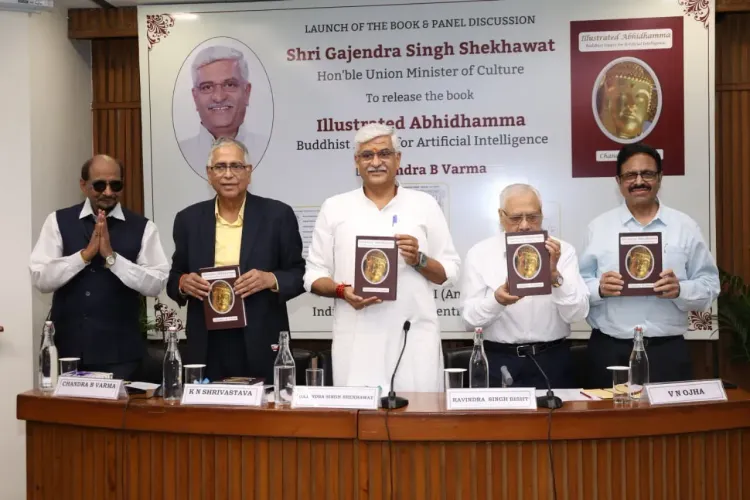
Union Culture Minister Gajendra Singh Shekhawat on 16 July 2026 launched 'Illustrated Abhidhamma: Buddhist Inputs for Artificial Intelligence' at IGNCA in New Delhi, calling such efforts a bridge between India's ancient knowledge heritage and modern technology, with implications for AI ethics policy.
Key Takeaways
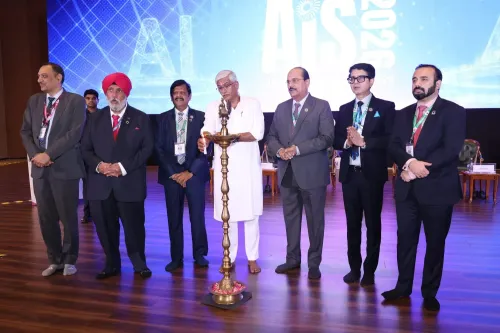
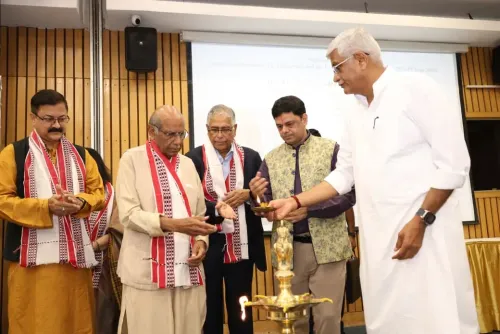
Union Culture and Tourism Minister Gajendra Singh Shekhawat participated in the launch of 'Illustrated Abhidhamma: Buddhist Inputs for Artificial Intelligence' at IGNCA, New Delhi on 16 July 2026 .
The book explores convergence of Buddhist philosophy (Abhidhamma) , Indian knowledge tradition, and artificial intelligence.
IGNCA , established in 1985 under the Ministry of Culture, hosted the multidisciplinary event.
The launch aligns with NITI Aayog's 2018 AI strategy and the National Education Policy 2020 , both of which emphasise integrating traditional Indian knowledge into modern frameworks.
Minister Shekhawat described such efforts as opening 'new possibilities for the future' by linking ancient wisdom with modern technology.
Follow-up academic collaborations at IGNCA and possible references in Digital India Act debates are anticipated.
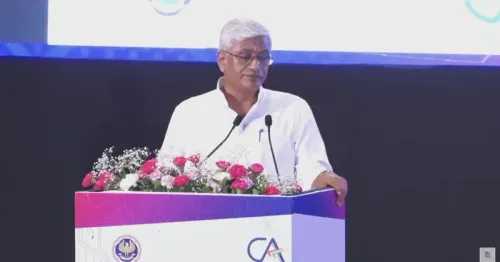
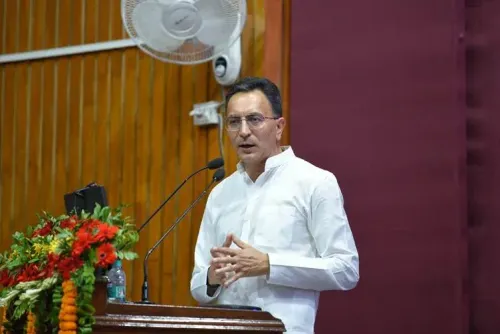
Union Culture and Tourism Minister Gajendra Singh Shekhawat participated in the launch and discussion of the book 'Illustrated Abhidhamma: Buddhist Inputs for Artificial Intelligence' at the Indira Gandhi National Centre for the Arts (IGNCA), New Delhi, on Thursday, 16 July 2026. The event brought together cultural scholars and technology researchers to explore the intersection of Buddhist philosophy and artificial intelligence.
Context
Speaking at the launch, Shekhawat addressed themes centred on the convergence of India's knowledge tradition (Bharatiya Gyan Parampara), Buddhist philosophy (Bauddh Darshan), and artificial intelligence (Kritrim Buddhimatta). He said, in translation: 'Such efforts that connect India's ancient knowledge wealth with modern technology pave the way for new possibilities for the future.'
The venue, IGNCA, is an autonomous institution under the Ministry of Culture, established in 1985 to promote multidisciplinary research, preservation, and dissemination of Indian arts and cultural heritage. It has increasingly served as a platform for dialogues that bridge classical Indian thought with contemporary disciplines.
Policy Backdrop
The event sits within a broader policy push to integrate India's ancient philosophical traditions with modern science and technology. NITI Aayog's National Strategy for Artificial Intelligence, released in 2018 under the #AIforAll framework, stressed the importance of ethical frameworks and the inclusion of traditional knowledge systems in AI development.
The National Education Policy 2020 further mandated the integration of Indian Knowledge Systems — including Buddhist and other philosophical traditions — into academic curricula and research. Events such as Thursday's book launch reflect the government's consistent positioning of ancient Indian wisdom as a resource for shaping ethical AI design and cognitive science.
Stakeholders and Impact
The book's framing of Abhidhamma — the systematic philosophical analysis within the Pali Buddhist canon — as a resource for AI ethics is part of a pattern visible across several Asian countries that draw on Buddhist ethics to shape AI governance debates. Scholars of cognitive science, AI researchers, and cultural historians stand to engage directly with the volume's arguments.
For India's cultural institutions, the launch signals that IGNCA is positioning itself at the intersection of heritage scholarship and frontier technology discourse, a role that could attract interdisciplinary academic collaborations going forward.
What's Next
Observers will watch for follow-up workshops or academic collaborations led by IGNCA on Buddhist inputs into AI ethics. The themes raised at the event could also surface in parliamentary discussions around proposed amendments to the Digital India Act, particularly in debates over ethical frameworks for AI regulation. Minister Shekhawat's participation underscores the Ministry of Culture's intent to position India's classical philosophical heritage as a living contributor to 21st-century technology policy.
Point of View
Shekhawat reinforces the government's long-running project of positioning ancient Indian wisdom as contemporary and globally relevant. This mirrors strategies in other Buddhist-majority Asian nations and could give India a distinct cultural-diplomatic angle in multilateral AI governance forums. The choice of IGNCA as venue also signals that the institution is being repositioned as a bridge between heritage scholarship and frontier technology policy.
NationPress
16 Jul 2026
Frequently Asked Questions
What is the book 'Illustrated Abhidhamma: Buddhist Inputs for Artificial Intelligence' about?
The book explores how Buddhist philosophical concepts from the Abhidhamma — the systematic analytical tradition within Pali Buddhism — can inform ethical frameworks and design principles for artificial intelligence.
Where was the book launch held and who attended?
The launch was held at the Indira Gandhi National Centre for the Arts (IGNCA) in New Delhi on 16 July 2026 , with Union Culture Minister Gajendra Singh Shekhawat participating alongside cultural scholars and AI researchers.
What did Gajendra Singh Shekhawat say at the IGNCA event?
Shekhawat said that efforts connecting India's ancient knowledge wealth with modern technology 'pave the way for new possibilities for the future,' speaking on themes of Indian knowledge tradition, Buddhist philosophy, and artificial intelligence.
How does this event relate to India's AI policy?
It aligns with NITI Aayog's 2018 National AI Strategy and the National Education Policy 2020 , both of which call for integrating traditional Indian knowledge systems, including Buddhist philosophy, into modern research and technology frameworks.
What is IGNCA and why was it chosen for this event?
The Indira Gandhi National Centre for the Arts is an autonomous body under the Ministry of Culture , established in 1985 to promote multidisciplinary research and preservation of Indian arts; it has become a key venue for dialogues bridging classical Indian thought with contemporary disciplines like AI.