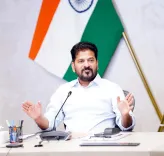
CM Dhami Vows No Eligible Citizen Left Out of State Schemes
Synopsis
Uttarakhand Chief Minister Pushkar Singh Dhami on 16 July 2026 pledged that no eligible citizen will be denied government scheme benefits, announcing a doorstep-outreach model guided by a four-part mantra of simplification, solution, disposal, and satisfaction to make public services more transparent and citizen-centred.
Key Takeaways
CM Pushkar Singh Dhami declared on 16 July 2026 that his government's clear resolve is that no eligible person be denied access to government scheme benefits.
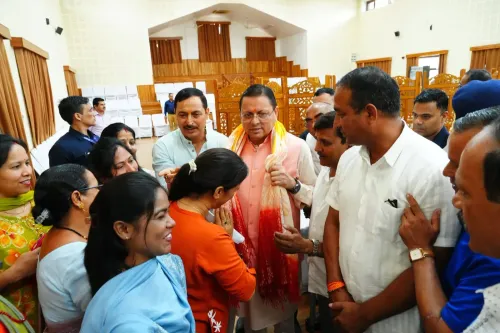
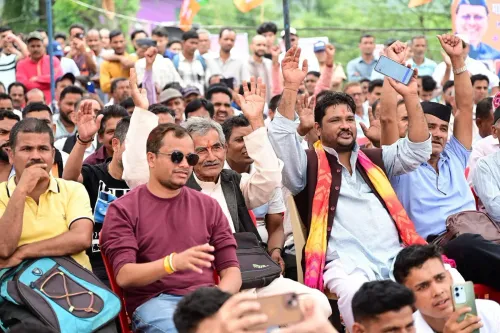
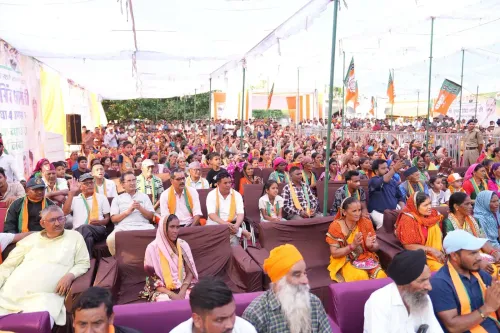
The administration is actively reaching citizens at their doorsteps to ensure swift grievance resolution rather than requiring citizens to approach government offices.
The four-part governance mantra — simplification, solution, disposal, and satisfaction — has been articulated as the guiding framework for public service delivery.
Uttarakhand's Right to Service Act, 2011 provides the statutory backbone for time-bound citizen service delivery that underpins these efforts.
The policy priority primarily targets rural and hill-district households in Uttarakhand who face geographic and logistical barriers to scheme access.
Measurable targets for scheme saturation and grievance redressal are expected to be detailed in future assembly sessions and budget presentations.
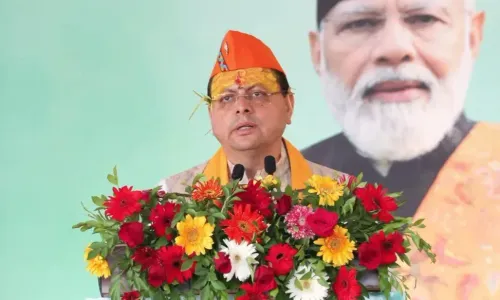
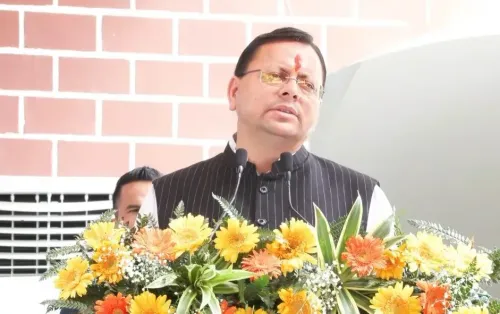
Uttarakhand Chief Minister Pushkar Singh Dhami on Thursday, 16 July 2026, reaffirmed his government's commitment to ensuring that every eligible resident of the state receives the benefits of government welfare schemes, pledging proactive doorstep outreach and faster grievance resolution as the cornerstones of his administration's public service approach.
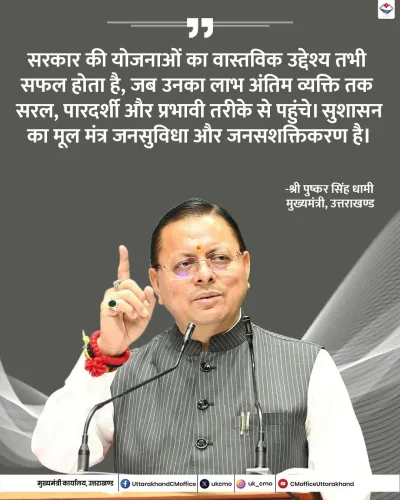
Posting on X, CM Dhami wrote: 'हमारी सरकार का स्पष्ट संकल्प है कि कोई भी पात्र व्यक्ति सरकारी योजनाओं के लाभ से वंचित न रहे।' ['It is the clear resolve of our government that no eligible person should be deprived of the benefits of government schemes.'] He added that the government is itself reaching the doorstep of every citizen to ensure swift resolution of problems, guided by the mantra of 'सरलीकरण, समाधान, निस्तारण और संतुष्टि' — simplification, solution, disposal, and satisfaction.
Context
The statement comes as the Uttarakhand government continues to push for last-mile delivery of welfare benefits across a state whose terrain — marked by remote hill districts and dispersed rural populations — has historically made scheme access difficult. CM Dhami, who has led the state since 2021, has consistently framed governance reform around reducing the distance between citizens and the state machinery.
The four-part mantra he cited — simplification, solution, disposal, and satisfaction — signals a structured internal framework for evaluating how public grievances and scheme applications are handled at every level of administration.
Policy Backdrop
Uttarakhand enacted the Uttarakhand Right to Service Act, 2011, one of the earlier such laws in India, mandating time-bound delivery of notified citizen services. The current administration's emphasis on doorstep outreach builds on that statutory foundation, extending the principle from office-bound delivery to active field-level engagement.
Across India, states have scaled up doorstep and digital delivery of welfare benefits under national frameworks such as Digital India, launched in 2015. BJP-governed states in particular have emphasised proactive outreach camps, beneficiary verification drives, and grievance redressal melas to reduce leakages and improve saturation of central and state schemes among eligible households.
Stakeholders and Impact
The primary beneficiaries of this policy direction are eligible citizens — particularly rural and hill-district households in Uttarakhand — who may lack the mobility, documentation awareness, or digital access to independently navigate scheme enrolment processes. For these populations, government outreach that travels to them rather than requiring them to travel to offices can be decisive in determining whether entitlements are actually received.
State-level officials and district administration staff are the key implementation actors. Their capacity to conduct sustained outreach, process applications on the spot, and resolve grievances within defined timelines will determine whether the chief minister's stated resolve translates into measurable improvement in scheme coverage.
What's Next
Future Uttarakhand assembly sessions and budget presentations are expected to provide specific targets for scheme saturation and grievance redressal timelines, offering a clearer picture of how the government intends to measure progress against this commitment. The administration's ability to demonstrate concrete outcomes — particularly in remote constituencies — will be a key metric as the state moves through its current legislative term. Sustained investment in field-level outreach infrastructure will be essential to converting the stated mantra into verifiable last-mile impact.
Point of View
Mobile service-delivery machine rather than a passive bureaucratic entity — a framing that has become standard among BJP chief ministers seeking to demonstrate governance credibility ahead of electoral cycles. The four-part mantra of simplification, solution, disposal, and satisfaction mirrors the structured performance-monitoring language increasingly used by state governments to signal internal discipline to both citizens and the party high command. Uttarakhand's difficult hill terrain makes last-mile delivery a genuine policy challenge, not merely a rhetorical one, lending the commitment greater political weight than similar statements in more accessible states. Whether the pledge produces verifiable saturation data or remains aspirational will be tested in the state's next legislative and budgetary cycle.
NationPress
15 Oct 2026
Frequently Asked Questions
What did Uttarakhand CM Dhami say about government schemes on 16 July 2026?
CM Pushkar Singh Dhami stated that his government's clear resolve is that no eligible person should be denied the benefits of government schemes, and that the administration is reaching citizens at their doorsteps to resolve problems swiftly.
What is the four-part mantra CM Dhami mentioned for governance?
CM Dhami cited 'simplification, solution, disposal, and satisfaction' as the guiding mantra for making public services more effective, transparent, and citizen-centred in Uttarakhand.
What law backs Uttarakhand's citizen service delivery commitments?
The Uttarakhand Right to Service Act, 2011 mandates time-bound delivery of notified citizen services and forms the statutory foundation for the state's public service reform efforts.
How does Uttarakhand plan to reach citizens in remote hill areas for scheme benefits?
The Uttarakhand government is conducting doorstep outreach, taking the administration directly to citizens rather than requiring them to travel to government offices, with a focus on swift grievance resolution.
Why is last-mile scheme delivery a particular challenge in Uttarakhand?
Uttarakhand's geography — characterised by remote hill districts and dispersed rural populations — has historically made it difficult for eligible citizens to access government offices and enrol in welfare schemes, making proactive outreach especially important.