CM Dhami Reaffirms Push for Inclusive, Self-Reliant Uttarakhand
Synopsis
Uttarakhand Chief Minister Pushkar Singh Dhami on 13 June 2026 pledged that development must reach the last person in society, reaffirming his government's focus on public welfare, good governance and building a self-reliant Uttarakhand.
Key Takeaways
CM Pushkar Singh Dhami posted on X on 13 June 2026 reaffirming his government's inclusive development vision for Uttarakhand .
He committed to ensuring the 'light of development' reaches the person at the last end of society — a direct invocation of last-mile delivery.
The post aligns with the national 'Sabka Saath, Sabka Vikas' framework and the 'Atmanirbhar Bharat' self-reliance campaign adapted at the state level.
Uttarakhand , a Himalayan state of over 1.1 crore residents, faces persistent last-mile delivery challenges in remote hill districts.
Upcoming state budget presentations and assembly debates will be key tests of how these commitments translate into concrete policy allocations.
Uttarakhand Chief Minister Pushkar Singh Dhami on Saturday, 13 June 2026, reaffirmed his government's commitment to reaching the last person in society with the fruits of development, pledging to build a strong, prosperous and self-reliant Uttarakhand through public welfare, good governance and all-round growth.
Posting on X, CM Dhami wrote in Hindi: 'हमारा प्रयास है कि विकास की किरण समाज के अंतिम छोर पर खड़े व्यक्ति तक पहुंचे' ('Our endeavour is that the light of development reaches the person standing at the last end of society'). He added that every citizen of the state must become a participant in the journey of development.
Context
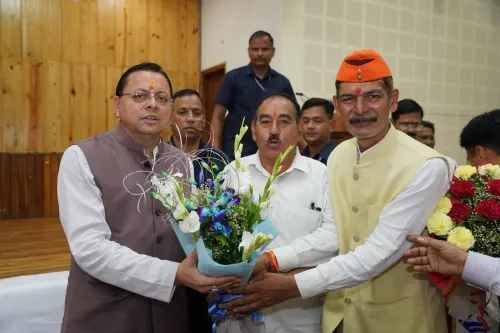
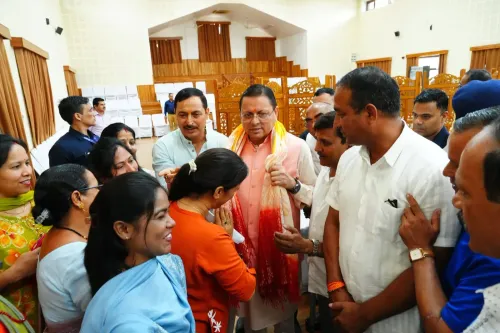
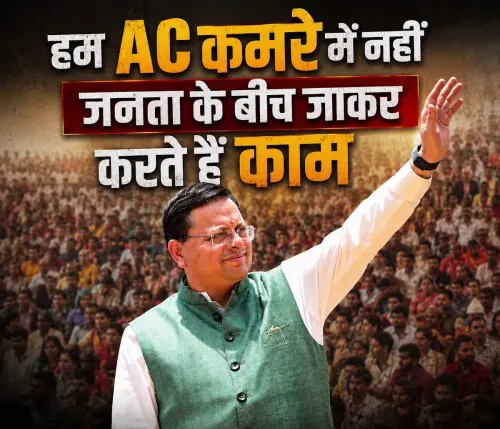
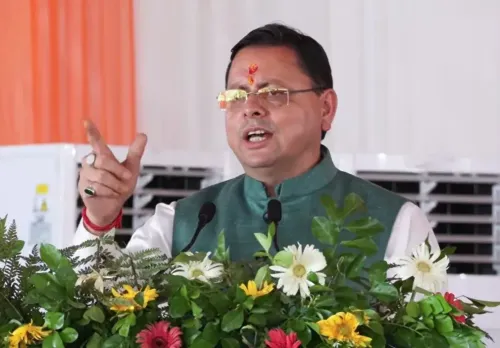
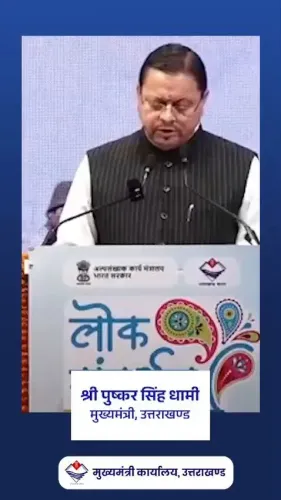
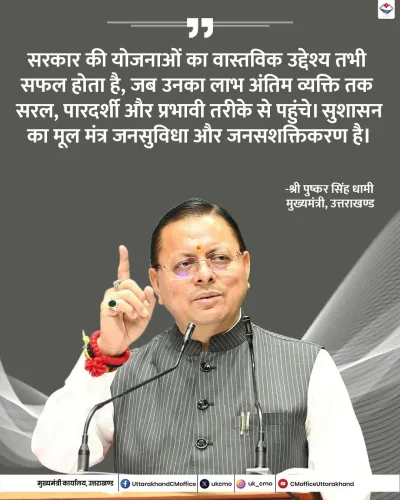
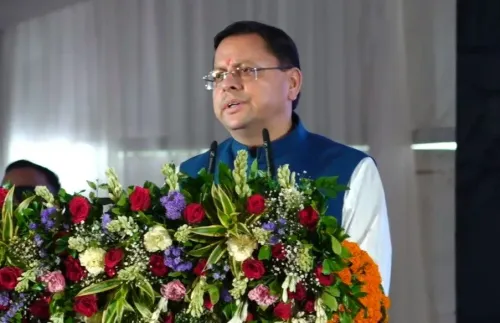
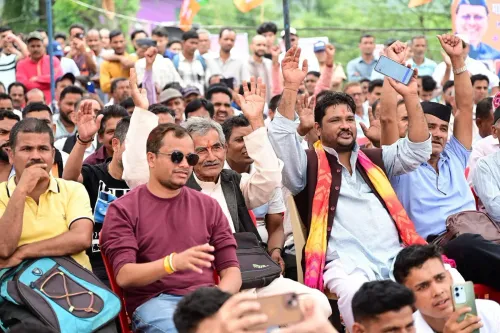
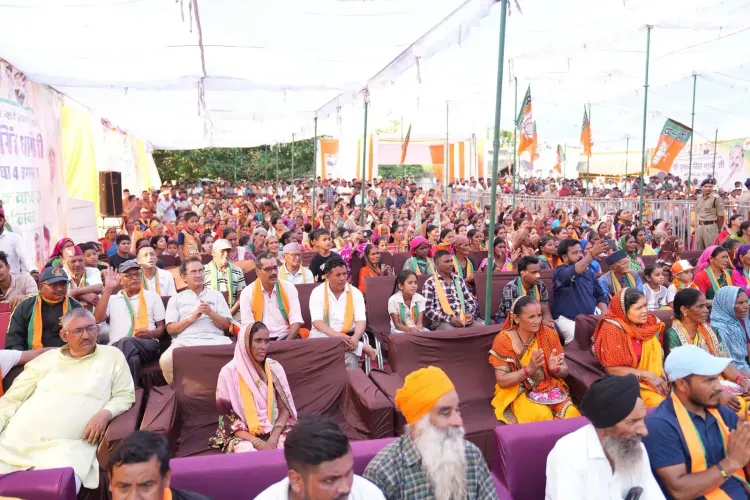
Dhami has consistently positioned his administration around the principle of last-mile welfare delivery since assuming office in 2021. The post, accompanied by four images, signals a renewed public articulation of that governance philosophy, likely tied to ongoing state-level outreach or a welfare programme event, though the specific trigger has not been independently confirmed.
The language of the post — invoking 'जनकल्याण, सुशासन और सर्वांगीण विकास' (public welfare, good governance and all-round development) — closely mirrors the vocabulary used in recent state budget communications and administrative reviews in Uttarakhand.
Policy Backdrop
The statement draws directly from two national frameworks championed by BJP-led governments. The first is the 'Sabka Saath, Sabka Vikas' (Together with all, development for all) inclusive growth doctrine adopted since 2014. The second is the 'Atmanirbhar Bharat' (Self-Reliant India) campaign launched by Prime Minister Narendra Modi in May 2020, which state governments have since adapted into their own planning frameworks.
Uttarakhand, established as a separate state in 2000, has pursued self-reliant growth through a combination of infrastructure expansion, welfare scheme penetration and administrative efficiency drives — particularly accelerating after 2017. CM Dhami's administration has continued that trajectory, emphasising digital governance and direct benefit transfers to marginalised communities in the Himalayan state's remote terrain.
Stakeholders and Impact
The primary beneficiaries of the vision articulated by Dhami are Uttarakhand's marginalised and geographically isolated citizens — including hill communities in districts such as Pithoragarh, Chamoli and Uttarkashi where last-mile service delivery has historically been challenging due to terrain. For these populations, the gap between policy announcement and on-ground implementation remains the critical measure of success.
For the state's broader 1.1 crore residents, the commitment to 'sarvangeen vikas' (all-round development) signals continued government focus on sectors ranging from rural roads and healthcare to skill development and employment generation under centrally and state-sponsored schemes.
What's Next
Observers will watch Uttarakhand's upcoming state budget presentations and assembly debates to assess how the welfare commitments expressed by CM Dhami translate into allocations and measurable targets. The state's performance on welfare scheme implementation — including beneficiary saturation data for flagship programmes — will be the concrete test of the administration's stated resolve. Any follow-up policy announcements or scheme launches in the weeks ahead will be closely tracked as indicators of the direction Dhami's government intends to take heading into the next fiscal planning cycle.
Point of View
Sabka Vikas' canopy that has defined the party's developmental narrative since 2014. The emphasis on the 'last person in society' is a politically deliberate framing that speaks to Uttarakhand's significant tribal, hill-community and economically marginalised voter base. Coming mid-term in his tenure, the statement reads as both a performance accountability signal and a forward-looking positioning ahead of budget season. The real measure will be whether scheme saturation data and infrastructure metrics in remote districts back the rhetoric when assembly scrutiny arrives.
NationPress
13 Sept 2026
Frequently Asked Questions
What did Uttarakhand CM Pushkar Singh Dhami say on 13 June 2026?
CM Dhami pledged that his government's effort is to ensure the light of development reaches the last person in society and that every citizen of Uttarakhand becomes a participant in the development journey, committing to public welfare, good governance and all-round growth.
What is CM Dhami's development vision for Uttarakhand?
CM Dhami's stated vision is to build a strong, prosperous and self-reliant ('aatmanirbhar') Uttarakhand through inclusive governance, last-mile welfare delivery and all-round development for all residents, including marginalised communities in remote hill districts.
How does Dhami's statement connect to national BJP policy?
The statement draws on two national BJP frameworks: the 'Sabka Saath, Sabka Vikas' inclusive development doctrine adopted since 2014, and the 'Atmanirbhar Bharat' self-reliance campaign launched in May 2020, both of which state governments including Uttarakhand have integrated into their planning.
Which communities are most affected by Uttarakhand's last-mile development push?
Hill communities in remote districts such as Pithoragarh, Chamoli and Uttarkashi are among the most affected, as difficult terrain has historically made last-mile delivery of welfare schemes and infrastructure challenging in these areas.
What should we watch next regarding Uttarakhand's development agenda?
Key indicators to watch include Uttarakhand's upcoming state budget presentations, assembly debates on welfare scheme implementation, and beneficiary saturation data for flagship programmes that will test whether CM Dhami's stated commitments translate into measurable on-ground outcomes.