CM Dhami: Welfare must reach Uttarakhand's last citizen
Synopsis
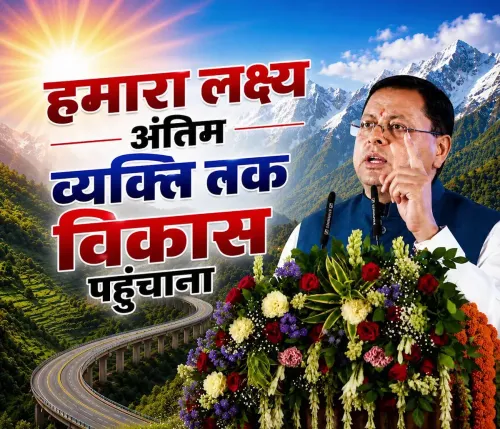
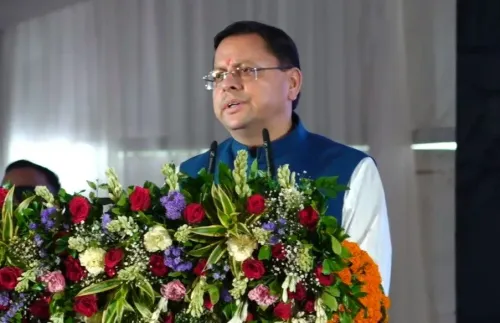
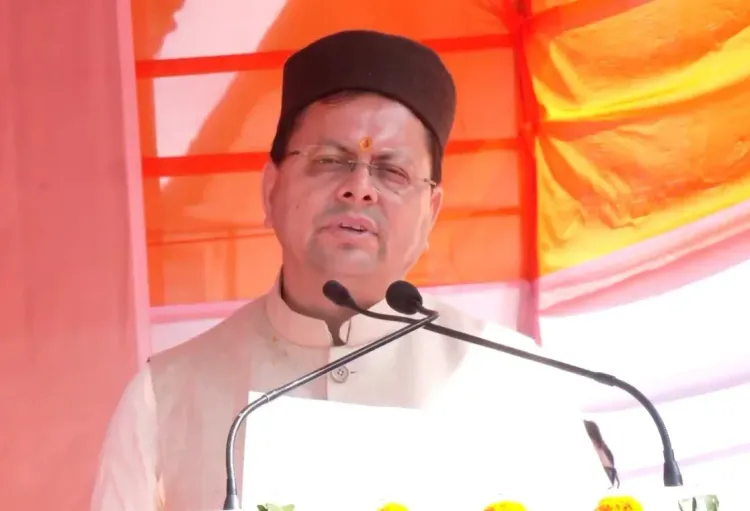
Chief Minister Pushkar Singh Dhami of Uttarakhand declared on October 15, 2026 that his government's resolve is to deliver every welfare scheme to the farthest citizen, measuring success by satisfaction rather than paperwork.
Key Takeaways
CM Pushkar Singh Dhami posted the statement on October 15, 2026 via the official Chief Minister's Office account on X.
He reaffirmed the government's resolve to ensure welfare scheme benefits reach every citizen at the farthest end of society .
Dhami defined development's true worth as visible satisfaction and happiness on every citizen's face — not just administrative delivery.
The statement reflects a broader governance pattern in Indian state politics of emphasising last-mile beneficiary saturation over scheme launches.
Uttarakhand's hill terrain makes last-mile delivery particularly challenging, giving the commitment added political and practical weight.
Every welfare scheme is only as good as the farthest person it reaches. That is the governing philosophy Chief Minister Pushkar Singh Dhami of Uttarakhand restated on Thursday, October 15, 2026 — a declaration that puts last-mile delivery, not just policy announcement, at the centre of his administration's accountability standard.
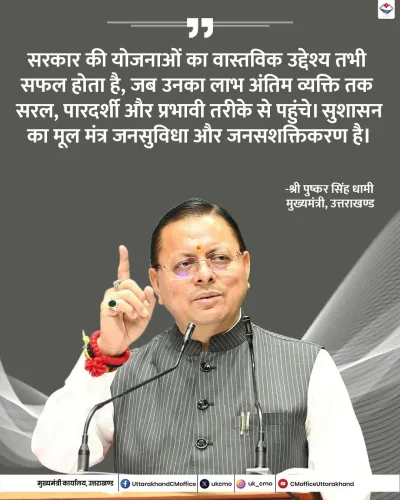
Speaking through the Chief Minister's Office account on X, CM Dhami stated: 'Hamari sarkar ka sankalp hai ki pratyek jankalyankari yojana ka labh samaj ke antim chhor par khade vyakti tak pahunche' — 'Our government's resolve is that the benefit of every public welfare scheme must reach the person standing at the farthest end of society.' He added that development is meaningful only when every citizen of the state carries a smile of satisfaction and happiness.
The 'last mile' as a governance benchmark
The phrase 'last mile' — antim chhor in Hindi — has become one of the defining litmus tests of Indian developmental politics over the past decade. Central and state governments alike have increasingly been judged not on scheme launches but on beneficiary saturation: how deep into remote villages, tribal hamlets, and urban slums does a programme actually travel? For a hill state like Uttarakhand, where terrain isolates entire communities, that benchmark is sharper than almost anywhere else in the country. CM Dhami, who has held office since 2021, has consistently framed his administration around this inclusive-delivery idiom. The state runs a broad portfolio of centrally and state-sponsored welfare programmes — covering housing, rations, health insurance, and women's empowerment — whose ground-level reach is periodically reviewed through district-level implementation reports.Satisfaction, not paperwork, as the real success metric
What makes today's statement noteworthy is its insistence on a human, qualitative outcome — 'a smile of satisfaction' — rather than a numerical disbursement figure. It implicitly raises the governance bar: a scheme that reaches a beneficiary on paper but leaves them confused or short-changed does not meet the standard being articulated. That framing puts pressure on district administration and delivery machinery to close the gap between scheme design and lived experience. For citizens in Uttarakhand's more remote hill districts, where access to banks, internet connectivity, and government offices can require hours of travel, the Chief Minister's words will be measured against observable ground realities in the months ahead.Point of View
Pledging last-mile reach is a politically durable but also genuinely demanding commitment. The shift in success metric — from disbursement numbers to citizen satisfaction — reflects a maturation in welfare discourse that Indian voters increasingly demand. Whether district machinery in remote hill areas can operationalise that standard is the real test this rhetoric sets up.
NationPress
15 Oct 2026
Frequently Asked Questions
What did CM Pushkar Singh Dhami say about welfare schemes in Uttarakhand?
On October 15, 2026, CM Dhami stated that his government's resolve is for every welfare scheme's benefit to reach the person at the farthest end of society, and that development is only meaningful when every citizen has a smile of satisfaction.
What does 'last-mile delivery' mean in the context of Indian welfare schemes?
Last-mile delivery refers to ensuring government welfare benefits actually reach the most remote or marginalised beneficiaries — in villages, tribal areas, or isolated hill communities — rather than stopping at administrative or urban centres.
Why is last-mile welfare delivery particularly challenging in Uttarakhand?
Uttarakhand's mountainous terrain isolates many communities from banks, government offices, and connectivity infrastructure, making it harder for welfare programmes to reach residents without dedicated outreach and logistics.
When did Pushkar Singh Dhami become Chief Minister of Uttarakhand?
Pushkar Singh Dhami has served as Chief Minister of Uttarakhand since 2021.
How does CM Dhami measure the success of welfare delivery?
In his October 2026 statement, Dhami defined success not by paperwork or disbursement figures but by the visible satisfaction and happiness on every citizen's face — a qualitative benchmark that raises the bar for ground-level implementation.