CM Rekha Gupta Hails Leh Airport as India's First Geothermal Terminal

Synopsis
Delhi CM Rekha Gupta highlighted PM Narendra Modi's inauguration of the Kushok Bakula Rimpoche Airport terminal in Leh, which has become India's first airport terminal with a geothermal heating system, marking a milestone in sustainable infrastructure for Ladakh.
Key Takeaways
Kushok Bakula Rimpoche Airport in Leh, Ladakh has become India's first airport terminal with a geothermal heating system.
Delhi CM Rekha Gupta shared the development on October 15, 2026 , quoting PM Narendra Modi .
Geothermal heating replaces fossil-fuel-based systems, reducing costs and emissions in sub-zero Himalayan conditions.
Ladakh became a Union Territory in 2019 , accelerating central funding for infrastructure in the strategically vital border region.
The terminal sets a potential template for sustainable heating at other cold-climate airports across the Himalayan north.
The upgrade aligns with the UDAN scheme , India's regional connectivity programme launched in 2017 .
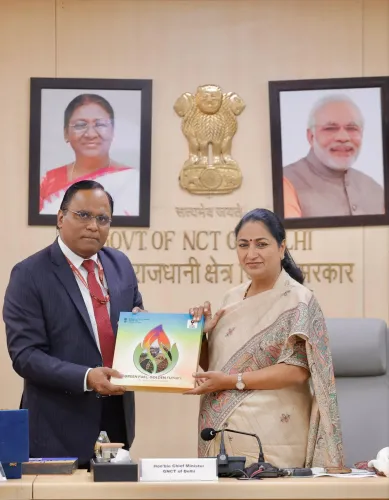
A Himalayan airport has just rewritten the rulebook on sustainable infrastructure. Delhi Chief Minister Rekha Gupta on Thursday, October 15, 2026, highlighted a landmark development in Leh, Ladakh — the Kushok Bakula Rimpoche Airport terminal has become India's first airport terminal equipped with a geothermal heating system, a milestone she attributed to Prime Minister Narendra Modi.
Sharing Modi's words, Gupta posted: 'शिलान्यास भी, लोकार्पण भी - विकास की रफ्तार भी, पर्यावरण संरक्षण का संकल्प भी!' — 'Foundation-laying and inauguration both — the pace of development and the resolve for environmental protection both!' The message framed the terminal upgrade as proof that India's infrastructure push in its most extreme frontier is no longer at odds with ecological responsibility.
Why Leh's Airport Needed a Heating Revolution
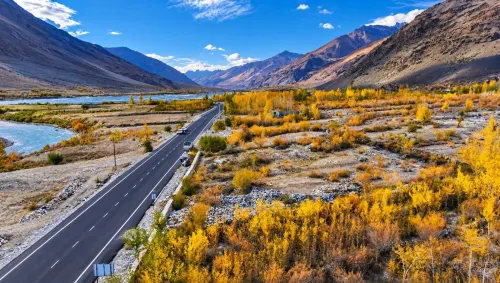
Leh sits at roughly 3,500 metres above sea level, where winter temperatures plunge well below freezing and conventional fossil-fuel heating carries both enormous cost and a heavy carbon footprint. For years, keeping airport terminals and public buildings operational through Ladakh's brutal winters meant burning diesel and coal — an environmental contradiction in one of the planet's most fragile high-altitude ecosystems.
Geothermal heating taps the earth's own sub-surface warmth, circulating it through the building without combustion. Applied at this altitude and scale, it sidesteps the fuel logistics chain that has long burdened Ladakh — a region where every litre of diesel must travel mountain roads before it can heat a room. The shift is practical as much as it is symbolic.
Ladakh's Infrastructure Arc Since 2019
Ladakh became a Union Territory in 2019, a reorganisation that channelled direct central funding into one of India's most strategically sensitive border regions. Since then, connectivity projects — roads, tunnels, airstrips — have moved at a pace the erstwhile state structure rarely permitted. The UDAN regional connectivity scheme, launched in 2017, has been a parallel thread, bringing scheduled air access to remote Himalayan towns that previously relied entirely on mountain roads.
The Kushok Bakula Rimpoche Airport — named after a revered Buddhist monk and diplomat — already handles a significant volume of tourists, pilgrims, and defence logistics. Upgrading its terminal with geothermal technology slots neatly into a broader pattern: India is now trying to build in these ecologically sensitive zones with the environment, not simply despite it.
A Template for the North's Cold-Climate Airports
The 'first' tag matters because it sets a replicable template. Srinagar, Shimla, Kullu-Manali, Jammu — several northern airports face similar sub-zero heating demands every winter. If the Leh terminal's geothermal system performs reliably through even one full Ladakhi winter, the case for rolling it out across the Himalayan aviation network becomes compelling both on cost and emissions grounds.
Delhi CM Rekha Gupta's decision to amplify this development — tagging it #DevelopmentInLadakh — underlines how the BJP's national infrastructure narrative is being distributed through state and regional leaders, widening the political footprint of central projects. The message travels from the world's highest cold deserts to the national capital's political conversation in a single post.
India just showed that building at the top of the world does not have to mean burning through it — and the pressure is now on to prove that at every airport along the Himalayas.
Point of View
First-of-its-kind projects in border Union Territories that serve simultaneously as strategic signals and governance showcases. By having Delhi CM Rekha Gupta amplify a central government achievement, the party demonstrates that its regional leadership functions as a megaphone for the Modi development narrative. The Ladakh pivot since 2019 has consistently bundled strategic necessity with ecological messaging — the geothermal upgrade deepens that brand. The real test, however, is whether this remains a singular photo-op or becomes the first node in a replicable sustainable-heating network across India's Himalayan airports.
NationPress
15 Oct 2026
Frequently Asked Questions
What is special about Leh's Kushok Bakula Rimpoche Airport terminal?
The terminal has become India's first airport terminal equipped with a geothermal heating system, which uses the earth's sub-surface warmth to heat the building without burning fossil fuels.
What is geothermal heating and why does it matter in Leh?
Geothermal heating draws warmth from beneath the earth's surface to heat buildings. In Leh, which sits at around 3,500 metres altitude with extreme sub-zero winters, it replaces costly and polluting diesel-based heating systems.
Why did Delhi CM Rekha Gupta post about a Ladakh airport?
Rekha Gupta shared PM Narendra Modi's statement about the terminal inauguration, highlighting it as a national achievement in sustainable infrastructure under the hashtag #DevelopmentInLadakh.
When did Ladakh become a Union Territory and how did it change infrastructure development?
Ladakh was designated a Union Territory in 2019, enabling direct central funding and faster approvals for connectivity and infrastructure projects in the strategically sensitive border region.
Could geothermal heating be used at other Indian airports?
The Leh terminal is being positioned as a template. Several other cold-climate airports in northern India — including those in Srinagar, Shimla, and Kullu-Manali — face similar winter heating demands and could potentially adopt the same technology.