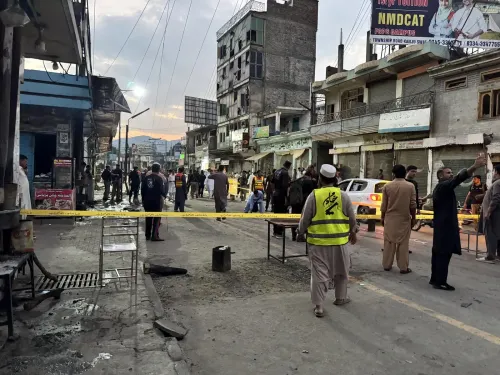
Pakistan condemned for bulldozing Baloch homes, displacing thousands across 14 areas
Synopsis
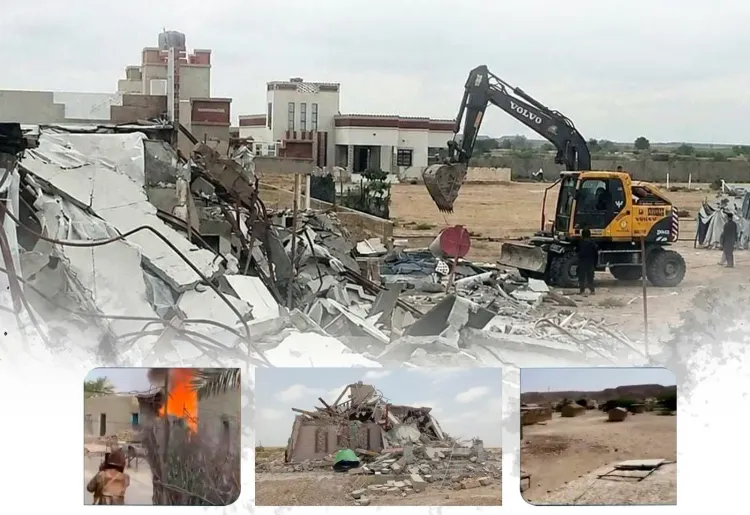
Pakistan is facing sharp international condemnation after the Baloch Yakjehti Committee accused authorities of bulldozing ancestral homes and forcibly evicting thousands of families across at least 14 areas of Balochistan — with no government response and an appeal to the UN already on the table.
Key Takeaways
The Baloch Yakjehti Committee (BYC) on 15 October 2026 condemned Pakistani authorities for forcibly displacing thousands of Baloch families.
At least 14 named areas — including Jiwani, Noshki, Mastung, and Mashkay — have been affected, with more vacate notices reportedly issued.
Displaced residents are sheltering in rest houses at Koh-e-Murad, Kech district , or with relatives.
The Baloch Voice for Justice (BVJ) separately called the demolitions an erasure of cultural identity and human dignity .
Both organisations have urged the United Nations and global rights bodies to intervene immediately.
Pakistan's federal and provincial governments had not publicly responded to the allegations at the time of reporting.
The Baloch Yakjehti Committee (BYC), a prominent human rights body, on Thursday, 15 October 2026, strongly condemned Pakistani authorities for allegedly carrying out the forced displacement of thousands of families across Balochistan, stripping residents of their ancestral homes, livelihoods, and generational ties to the land. The condemnation follows months of reported evictions spanning at least 14 named areas of the province.
Scale of Displacement
According to the BYC, affected areas include Zehri, Sarawan, Kaland, Jiwani, Noshki, Chagai, Kharan, Mand, Dasht, Sani Shoran, Mangchar, Mastung, Mashkay, and several others where notices to vacate have reportedly already been issued. The rights body warned that the list of affected settlements continues to grow, with residents given little more than a written notice before being uprooted.
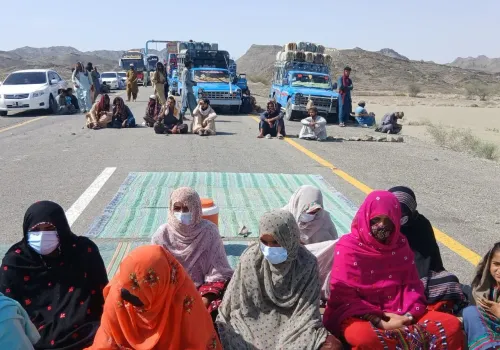
'Local people are handed a piece of paper and stripped of the life they built over years of toil, forced to accept the identity of a migrant on their own land for the rest of their lives,' the BYC stated, adding that displaced families either end up in makeshift roadside settlements in urban centres or wander through temporary shelters indefinitely.
Impact on Livelihoods and Cultural Identity
The BYC stressed that the displacement extends far beyond the physical loss of shelter. Coastal fishermen have reportedly been cut off from the sea, farmers from their fields, and herders from their flocks and grazing pastures. Generations-old skills and economic practices, the organisation said, have been rendered meaningless by administrative decree.
The Baloch Voice for Justice (BVJ), a separate rights organisation, echoed these concerns, stating that the destruction of ancestral settlements amounted to the erasure of cultural identity, human dignity, and historical memory. 'Burning homes, bulldozing ancestral settlements, cutting down orchards and trees, and displacing people from their lands is not merely the destruction of buildings and villages, but is tantamount to erasing generations of memories, cultural identity, human dignity, and the bonds tied to the earth,' the BVJ said in a statement.
Conditions on the Ground
Many of those displaced, according to the BYC, are currently sheltering in rest houses at Koh-e-Murad in Kech district, while others have been forced to seek accommodation with relatives. The organisation described the displaced as living 'a nomadic life' with no clear timeline for resolution or return.
Call for International Intervention
Both the BYC and BVJ have called on the United Nations and international human rights organisations to take immediate notice of the situation, ensure protection of affected residents' rights, and implement effective measures to halt what they describe as an ongoing humanitarian crisis. As of the time of reporting, neither the Pakistani government nor provincial authorities in Balochistan had publicly responded to these allegations.
The latest condemnations add to a long-documented pattern of alleged rights violations in Balochistan, a resource-rich province that has seen decades of conflict between armed separatist groups and Pakistani security forces, with civilians frequently caught in the crossfire.
Point of View
Destruction of homes and orchards, and no avenue for legal redress — fits a documented template of demographic disruption used in conflict zones globally. What is striking here is the breadth: over a dozen named districts, months of continuity, and no official denial from Islamabad. Pakistan's silence is itself a data point. With the UN now in the frame, the question is whether international pressure can move beyond statements — Balochistan has remained a diplomatic blind spot for decades, and there is little in the current geopolitical alignment to suggest that changes soon.
NationPress
15 Oct 2026
Frequently Asked Questions
What is the Baloch Yakjehti Committee accusing Pakistan of?
The Baloch Yakjehti Committee (BYC) accuses Pakistani authorities of forcibly evicting thousands of Baloch families from their ancestral homes across at least 14 areas of Balochistan. The organisation says residents are handed eviction notices and given no meaningful recourse, effectively rendering them internal migrants on their own land.
Which areas of Balochistan have been affected by the forced displacement?
According to the BYC, affected areas include Zehri, Sarawan, Kaland, Jiwani, Noshki, Chagai, Kharan, Mand, Dasht, Sani Shoran, Mangchar, Mastung, Mashkay, and several others. The organisation warned that the list continues to expand, with more vacate notices already issued in additional settlements.
Where are the displaced Baloch families sheltering?
Many displaced individuals are reportedly sheltering in rest houses at Koh-e-Murad in Kech district, while others have been forced to seek refuge with relatives. The BYC described their condition as a 'nomadic life' with no clear path to return.
What has the Baloch Voice for Justice said about the demolitions?
The Baloch Voice for Justice (BVJ) stated that bulldozing ancestral settlements and burning homes amounted to erasing cultural identity, human dignity, and generations of historical memory. The group called for immediate intervention from the United Nations and global human rights organisations.
Has Pakistan's government responded to these allegations?
As of 15 October 2026, neither the Pakistani federal government nor Balochistan's provincial authorities had issued a public response to the allegations made by the BYC or BVJ. Both organisations have called on international bodies to step in and halt the displacement.