CM Shivakumar Launches Karnataka AI Hub and AI Policy
Synopsis
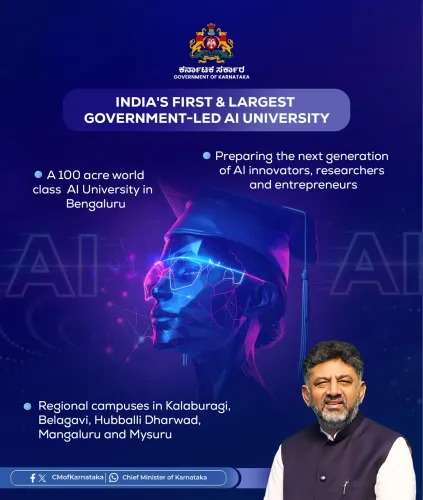
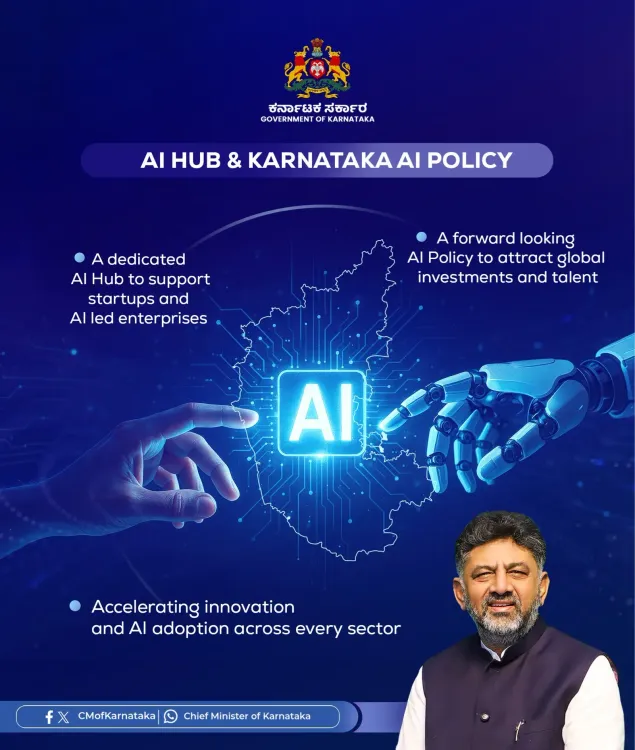
Chief Minister D.K. Shivakumar has announced a dedicated AI Hub and a Karnataka AI Policy, aiming to accelerate innovation, support startups, and attract global investment into the state's already formidable technology ecosystem centred in Bengaluru.
Key Takeaways
Shivakumar announced a dedicated AI Hub and the Karnataka AI Policy on 14 July 2026 .
The initiatives target three goals: accelerating innovation, supporting startups, and attracting global investments.
The announcement builds on Karnataka's Startup Policy of 2015 and aligns with India's national AI strategy introduced by NITI Aayog in 2018 .
Bengaluru , India's leading IT and startup hub, is the primary geography expected to benefit from the new AI infrastructure.
Key operational details — budget, timeline, and industry partnerships — are yet to be disclosed publicly.
Karnataka joins a growing list of Indian states competing to establish specialised technology hubs to attract foreign direct investment.
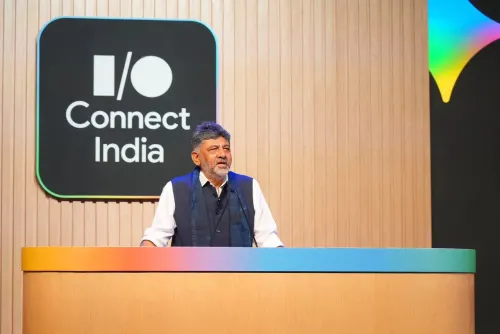
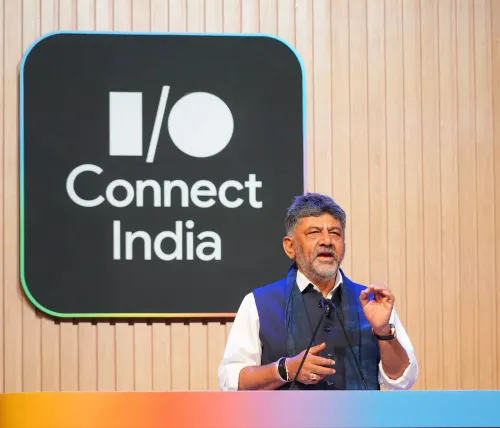
The Chief Minister's Office of Karnataka announced on Tuesday, 14 July 2026 that Chief Minister Shri D.K. Shivakumar has unveiled a dedicated AI Hub and a formal Karnataka AI Policy, positioning the state as a frontrunner in India's artificial intelligence economy. The twin initiatives are designed to accelerate innovation, bolster the startup ecosystem, and draw global investment into the state.
Context
The announcement, made by the Chief Minister's Office via its official channel, states that the AI Hub and the accompanying policy will 'accelerate innovation, support startups and attract global investments.' Shivakumar, a senior Congress leader who has consistently emphasised economic development and investment attraction since assuming office, framed the move as a deliberate effort to consolidate Karnataka's leadership in emerging technology sectors.
Bengaluru, the state capital, already anchors India's most mature IT and startup ecosystem, hosting hundreds of multinational technology firms, deep-tech research institutions, and a dense network of venture-backed companies. A state-level AI policy gives that ecosystem a formal governance and incentive framework.
Policy Backdrop
India's AI policy lineage stretches back to 2018, when NITI Aayog released the National Strategy for Artificial Intelligence — branded #AIforAll — to build domestic capabilities and ethical governance structures. Karnataka has a parallel track record: its Startup Policy of 2015, subsequently revised, created incentive structures for tech entrepreneurship that helped Bengaluru cement its status as India's startup capital.
Indian states have increasingly competed to roll out sector-specific technology policies aimed at attracting foreign direct investment and building local innovation clusters, extending the central government's broader digital frameworks to the sub-national level. The Karnataka AI Policy fits squarely within this pattern, seeking to translate national-level AI ambitions into a state-specific regulatory and investment environment.
Stakeholders and Impact
The primary beneficiaries identified in the announcement are tech startups, AI researchers, and global investors. A dedicated AI Hub would, in principle, provide physical infrastructure, compute access, and a co-location advantage that early-stage AI companies typically struggle to secure independently.
For global technology firms already operating in Bengaluru, a clear state AI policy signals regulatory predictability — a factor consistently cited by investors when comparing Indian states as investment destinations. Researchers at academic and applied-science institutions in the city stand to benefit from structured collaboration frameworks that such hubs typically enable.
What's Next
Key details that will determine the initiative's real-world impact — including the AI Hub's location, capital outlay, operational timeline, and specific incentives under the Karnataka AI Policy — are yet to be made public. Observers will also watch for whether the state's framework aligns with or is integrated into central government schemes such as the national AI mission.
Industry partnerships and the pace of private-sector commitments in the months following the announcement will be the clearest early indicators of whether Karnataka can translate this policy signal into measurable investment and job creation in the AI sector.
Point of View
The administration signals both infrastructure intent and regulatory clarity, two factors that global AI investors weigh heavily. The timing also aligns with intensifying national momentum around AI governance, allowing Karnataka to position itself as a first-mover at the sub-national level. Whether the initiative delivers depends almost entirely on execution specifics — funding, talent pipelines, and private-sector buy-in — none of which have been detailed yet.
NationPress
13 Oct 2026
Frequently Asked Questions
What is the Karnataka AI Hub announced by CM Shivakumar?
The Karnataka AI Hub is a dedicated infrastructure initiative announced by Chief Minister D.K. Shivakumar on 14 July 2026 to support artificial intelligence innovation, startups, and global investment in the state, particularly centred on Bengaluru's existing technology ecosystem.
What does the Karnataka AI Policy cover?
The Karnataka AI Policy, announced alongside the AI Hub, is a formal governance and incentive framework for artificial intelligence development in the state. Specific policy text and provisions have not yet been made public.
How does Karnataka's AI initiative relate to India's national AI strategy?
India's national AI strategy was introduced by NITI Aayog in 2018 under the #AIforAll framework. Karnataka's AI Policy is a state-level effort that extends and complements that national framework, giving it a sub-national implementation structure.
Who benefits from the Karnataka AI Hub?
The primary beneficiaries are tech startups, AI researchers, and global investors. The hub is expected to provide infrastructure, co-location advantages, and a clearer regulatory environment for companies and researchers operating in Bengaluru.
When was the Karnataka AI Hub announced?
The Karnataka AI Hub and Karnataka AI Policy were announced on Tuesday, 14 July 2026, by Chief Minister D.K. Shivakumar, as communicated through the official Chief Minister's Office of Karnataka account on X.