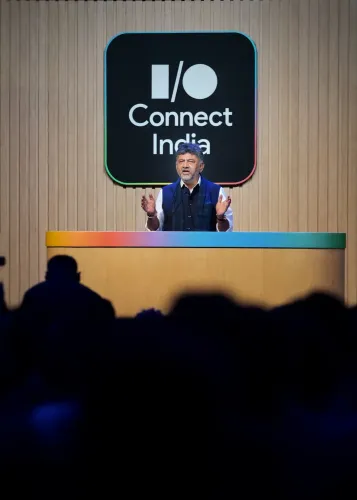
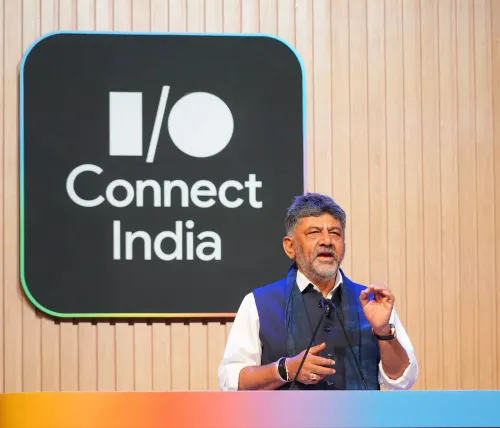
Karnataka to launch India's first govt-driven AI University: CM Shivakumar
Synopsis
Karnataka CM D.K. Shivakumar used the Google I/O Connect India 2026 stage to announce India's first government-driven AI University and a dedicated AI Hub — a direct bid to institutionalise Bengaluru's tech dominance at a time when states across India are competing fiercely for AI investment and talent.
Key Takeaways
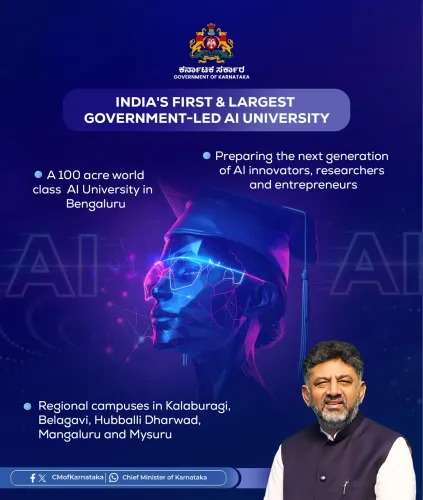
Shivakumar announced India's first government-driven AI University on 14 July 2026 .
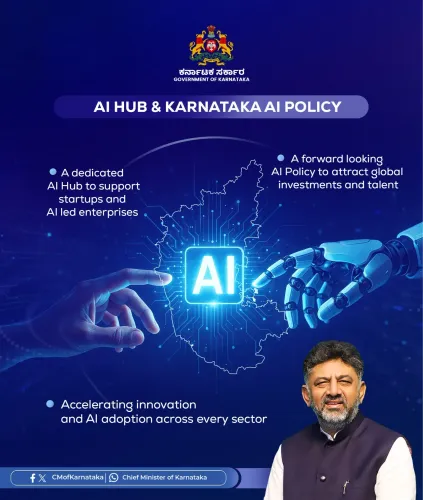
A dedicated AI Hub will be set up as an incubation centre for startups, companies, academic institutions, and innovators.
The announcement was made at Google I/O Connect India 2026 at the Bangalore International Exhibition Centre (BIEC) .
Karnataka contributes nearly 40 per cent of India's software exports; Bengaluru hosts more than 17,000 startups .
The government aims to make Karnataka an AI-native state , integrating AI into education, healthcare, agriculture, and governance.
Google was invited to collaborate on AI solutions across four sectors : education, healthcare, agriculture, and governance.
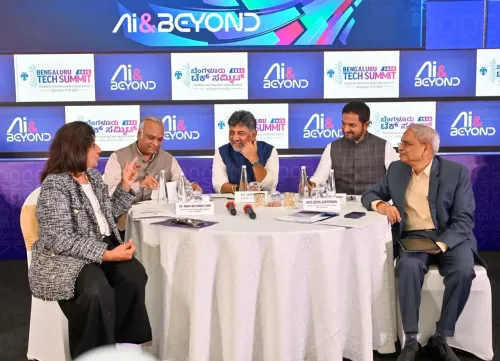
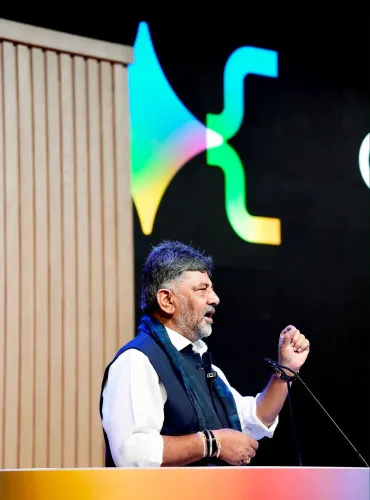
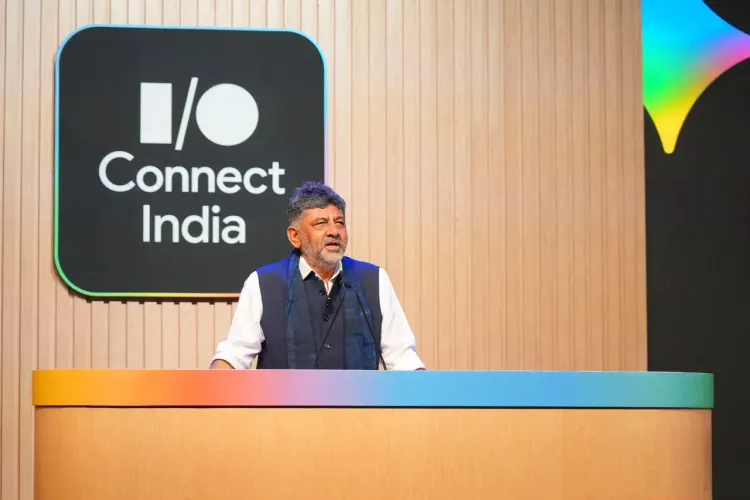
Karnataka Chief Minister D.K. Shivakumar on Tuesday, 14 July announced that Karnataka will establish India's first government-driven Artificial Intelligence University, positioning the state as a global destination for responsible AI innovation. The announcement was made at the inauguration of Google I/O Connect India 2026 at the Bangalore International Exhibition Centre (BIEC) in Bengaluru.
What Was Announced
Alongside the AI University, Shivakumar unveiled plans for a dedicated AI Hub to serve as an incubation centre for research and development. The hub is designed to bring together startups, companies, academic institutions, and innovators to accelerate AI-driven solutions. The AI University, according to the Chief Minister, will focus on developing world-class AI talent, advancing research, and fostering collaboration between academia, industry, and government.
Karnataka's AI Ambitions
Addressing technology leaders, entrepreneurs, developers, researchers, and policymakers from India and abroad, Shivakumar described Artificial Intelligence as the defining technological revolution of the present generation — comparable, he argued, to the transformative impact of the steam engine, electricity, the internet, and mobile technology.
'Karnataka's vision is to build one of the world's leading centres for responsible Artificial Intelligence. Bengaluru is not just India's technology capital but one of the world's most vibrant innovation ecosystems,' he said.
The Chief Minister noted that Karnataka contributes nearly 40 per cent of India's software exports, while Bengaluru is home to more than 17,000 startups and thousands of Global Capability Centres (GCCs) developing products for global markets.
AI in Governance and Public Services
Shivakumar outlined the government's goal of making Karnataka an AI-native state by integrating artificial intelligence into governance and public service delivery. He envisioned AI helping teachers improve learning outcomes, enabling doctors to diagnose diseases earlier, providing farmers with better advisory services, delivering faster citizen-centric government services, and empowering small businesses to compete more effectively.
He also stressed the need to strengthen Karnataka's digital infrastructure — including data centres, hyperscale computing facilities, and research ecosystems — to support next-generation AI innovation.
Google's Role and Proposed Collaboration
Praising Google for its long-standing partnership with Karnataka, Shivakumar noted that the company has made Bengaluru one of its most significant global centres for engineering, research, and innovation. He also acknowledged the reach of Google's products — including Search, Android, YouTube, Maps, Chrome, Gmail, and Google Pay — in transforming how Indians access information, conduct business, and interact with government services.
The Chief Minister invited Google to deepen its engagement with the state, proposing collaboration in developing AI solutions for education, healthcare, agriculture, and governance, as well as supporting startups and expanding learning opportunities for students.
What Comes Next
Shivakumar concluded by urging developers to 'build boldly', entrepreneurs to 'dream big', and students to embrace lifelong learning. The formal framework for both the AI University and the AI Hub is yet to be detailed, but the announcements signal Karnataka's intent to institutionalise its AI leadership at a national level. With the global race for AI talent intensifying, how quickly the state translates these announcements into operational institutions will be closely watched.
Point of View
But the gap between declaration and delivery in Indian public higher education is historically wide. Karnataka's 40 per cent share of software exports gives it genuine credibility as an AI hub, yet the state has yet to detail the university's governance structure, funding model, or timeline — the details that will determine whether this is a landmark institution or a headline. With Tamil Nadu, Telangana, and Maharashtra all competing aggressively for AI investment, Karnataka cannot afford a prolonged gestation. The AI Hub's incubation model is the more immediately executable piece; the university is the longer bet, and it needs a credible blueprint fast.
NationPress
12 Oct 2026
Frequently Asked Questions
What is the AI University announced by Karnataka CM Shivakumar?
It is India's first government-driven Artificial Intelligence University, announced by Karnataka Chief Minister D.K. Shivakumar on 14 July 2026. The university is intended to develop world-class AI talent, promote advanced research, and foster collaboration between academia, industry, and government.
Where was the announcement made?
The announcement was made at the inauguration of Google I/O Connect India 2026 at the Bangalore International Exhibition Centre (BIEC) in Bengaluru on 14 July 2026.
What is the AI Hub that Karnataka plans to set up?
The AI Hub will function as an incubation centre for research and development, bringing together startups, companies, academic institutions, and innovators to accelerate AI-driven solutions. It was announced alongside the AI University as part of Karnataka's broader AI strategy.
Why does Karnataka's AI push matter nationally?
Karnataka contributes nearly 40 per cent of India's software exports and Bengaluru hosts over 17,000 startups, making it the country's most established tech ecosystem. A government-driven AI University would be the first of its kind in India, potentially setting a template for other states.
What role has Google been asked to play in Karnataka's AI plans?
Chief Minister Shivakumar invited Google to collaborate on developing AI solutions for education, healthcare, agriculture, and governance, as well as to support startups and expand learning opportunities. Google already counts Bengaluru among its most significant global centres for engineering and research.