CM Sai's Chhattisgarh Hails PM Modi for Taking Bastar Dhokra Art Global
Synopsis
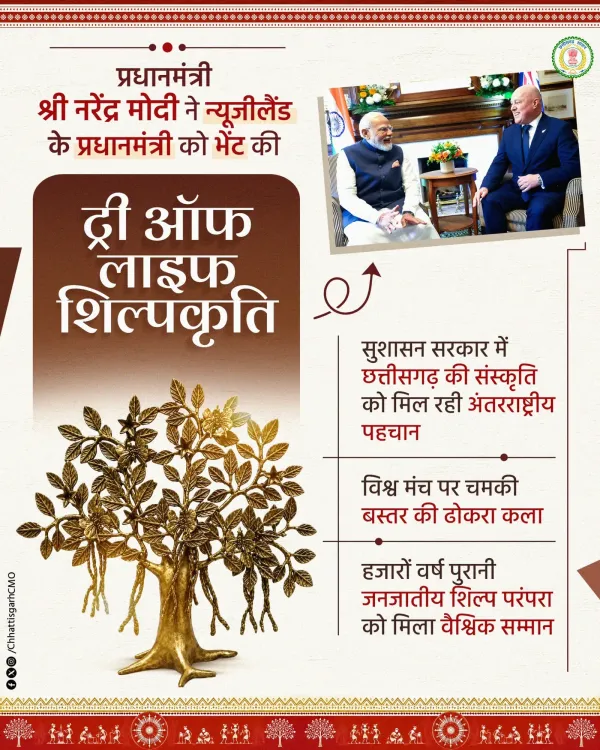
The Chhattisgarh CMO on 14 July 2026 celebrated global recognition of the 'Bastar Dhokra Tree of Life' after PM Modi presented the ancient tribal craft to an international audience, with CM Vishnu Deo Sai reaffirming the state's commitment to preserving its indigenous cultural heritage.
Key Takeaways
The Chief Minister's Office of Chhattisgarh announced on 14 July 2026 that the Bastar Dhokra Tree of Life has received global recognition.
Prime Minister Narendra Modi presented the craft to an international audience, elevating Chhattisgarh's cultural stature.
Dhokra is an ancient lost-wax metal casting technique practised by tribal communities in Bastar for over 4,000 years .
Chief Minister Vishnu Deo Sai , in office since December 2023 , has committed to preserving and promoting the state's tribal art and heritage.
The development aligns with India's broader Incredible India cultural diplomacy strategy, which has promoted regional crafts at global platforms since 2002 .
Tribal Dhokra artisans of Bastar stand to benefit from increased international visibility, potential export linkages, and stronger institutional support.
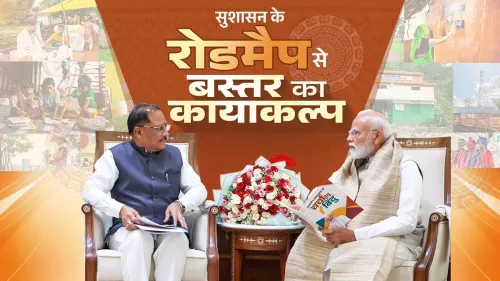
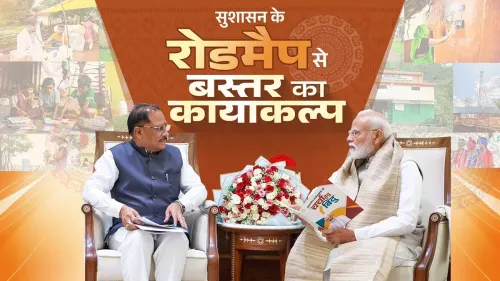
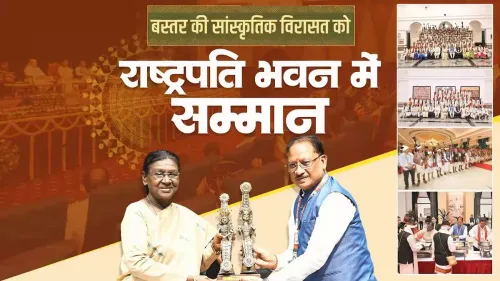
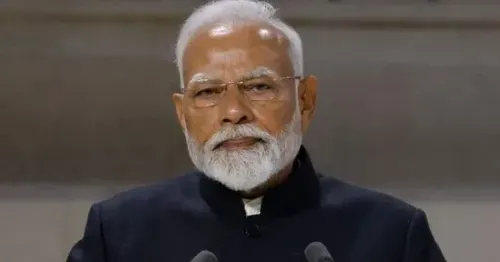
The Chief Minister's Office of Chhattisgarh on Tuesday, 14 July 2026 declared it a moment of pride for every citizen of the state after the iconic craft 'Bastar Dhokra Tree of Life' received recognition on a global stage, with Prime Minister Narendra Modi presenting the piece to the world as a symbol of the region's centuries-old tribal artistry.
The CMO's post, written in Hindi, stated: 'Chhattisgarh ke pratyek nagrik ke liye garv ka kshan' ('A moment of pride for every citizen of Chhattisgarh'), adding that the craft encapsulates the soul of the state's tribal heritage and age-old craftsmanship. It credited PM Modi with elevating Chhattisgarh's stature by presenting Bastar's rich artistic legacy before the world.
Context
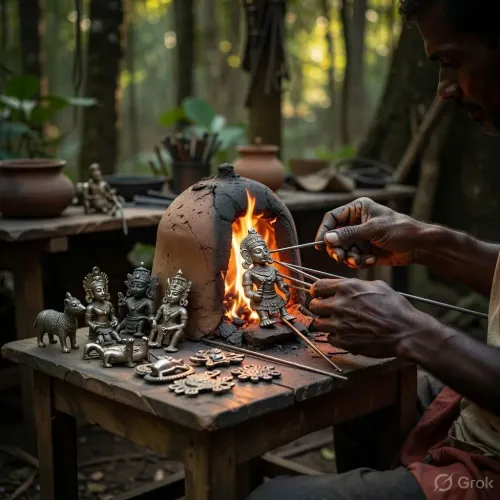
The Bastar Dhokra Tree of Life is a work of metal craft produced by tribal artisans from the Bastar division of southern Chhattisgarh. Dhokra is an ancient lost-wax casting technique, believed to be among the oldest non-ferrous metal casting methods still in practice in India, with roots tracing back over 4,000 years. The 'Tree of Life' motif is a recurring symbol in Bastar tribal art, representing the interconnectedness of nature, community, and ancestry.
The CMO's post confirmed that Chief Minister Vishnu Deo Sai has committed his administration to preserving and promoting the state's unique tribal art and cultural heritage. Sai, who took office in December 2023, belongs to the Scheduled Tribe community himself, lending personal significance to the state's cultural outreach agenda.
Policy Backdrop
India's Incredible India campaign, active since 2002, has been a consistent vehicle for showcasing regional craft traditions — including tribal metalwork — at international tourism expos, diplomatic summits, and bilateral engagements. Dhokra craft from Chhattisgarh and neighbouring states has featured in this broader cultural diplomacy effort for years.
The promotion of indigenous art forms through high-level diplomatic channels is part of a wider national strategy to harness soft power while simultaneously supporting artisan livelihoods in Scheduled Tribe areas. Geographical Indication (GI) tags and handicraft export facilitation have been parallel policy instruments used to formalise and protect such crafts at the national level.
Stakeholders and Impact
The most direct beneficiaries of this global recognition are the Dhokra artisan communities of Bastar, whose craft has historically struggled to reach premium markets despite its antiquity and artistry. International visibility generated by a prime ministerial presentation can translate into increased demand, better pricing, and institutional support for craft clusters.
For Chhattisgarh as a state, the moment reinforces its identity as a custodian of living tribal traditions. The hashtag #CulturalDiplomacy used in the CMO's post signals that the state government views this not merely as a cultural event but as a strategic positioning exercise on the global stage.
What's Next
The CMO's affirmation of commitment under CM Sai's leadership points toward potential state-level policy action: expanded craft clusters, artisan welfare schemes, and participation in future international cultural fairs or trade exhibitions. Observers will watch whether this recognition translates into concrete support mechanisms — such as enhanced GI tag enforcement, export linkages, or dedicated Dhokra craft villages — for the artisans of Bastar.
As India continues to leverage regional cultural heritage in its diplomatic engagements, the spotlight on Bastar Dhokra art could open new chapters for tribal craft communities seeking both global markets and institutional recognition.
Point of View
The BJP-governed state aligns its tribal heritage narrative with the Centre's soft-power agenda, reinforcing party coherence on cultural identity. For CM Vishnu Deo Sai, the first tribal Chief Minister of Chhattisgarh under the current dispensation, championing Dhokra art carries both symbolic and electoral weight in a state where Scheduled Tribe voters are a decisive constituency. The framing of craft promotion as 'cultural diplomacy' signals an ambition to move beyond domestic celebration toward international branding — a pattern seen with other GI-tagged crafts like Madhubani and Pattachitra. Whether this moment translates into measurable policy support for Bastar's artisan communities will be the real test of intent.
NationPress
12 Oct 2026
Frequently Asked Questions
What is the Bastar Dhokra Tree of Life?
The 'Bastar Dhokra Tree of Life' is a traditional metal craft sculpture created by tribal artisans from the Bastar region of Chhattisgarh using the ancient Dhokra lost-wax casting technique. The Tree of Life is a central motif in Bastar tribal art, symbolising the bond between nature, community, and ancestry.
What is Dhokra art and where does it come from?
Dhokra is one of the oldest known non-ferrous metal casting methods in the world, estimated to be over 4,000 years old. It is practised by tribal communities across central and eastern India, with Bastar in Chhattisgarh being one of its most celebrated centres. Artisans use the lost-wax process to create intricate figurines, jewellery, and decorative objects.
Why did PM Modi present the Bastar Dhokra craft internationally?
PM Narendra Modi presented the Bastar Dhokra Tree of Life on a global platform as part of India's broader cultural diplomacy efforts, which use regional art and craft to build soft power and showcase the country's indigenous heritage. The Chhattisgarh CMO confirmed the presentation and called it a proud moment for the state.
Who is Vishnu Deo Sai and what is his connection to tribal heritage?
Vishnu Deo Sai is the Chief Minister of Chhattisgarh, in office since December 2023. He belongs to the Scheduled Tribe community and has made the preservation and promotion of the state's tribal art and cultural heritage a priority of his administration.
How does global recognition benefit Dhokra artisans in Bastar?
International recognition — especially through a prime ministerial presentation — can significantly boost demand for Dhokra craft, improve pricing, and attract institutional support such as GI tag enforcement and export facilitation. It also raises the profile of artisan communities who have historically had limited access to premium global markets.