Bastar Dhokra art gifted to Australian PM gets global spotlight
Synopsis
When Modi handed Australian PM Albanese a handcrafted Dhokra metal boat in Jagdalpur, it was more than a diplomatic courtesy — it was a lifeline signal to over 10,000 tribal artisans in Bastar whose craft community has already shrunk from 15,000. Whether the global spotlight converts into sustained orders is the real story.
Key Takeaways
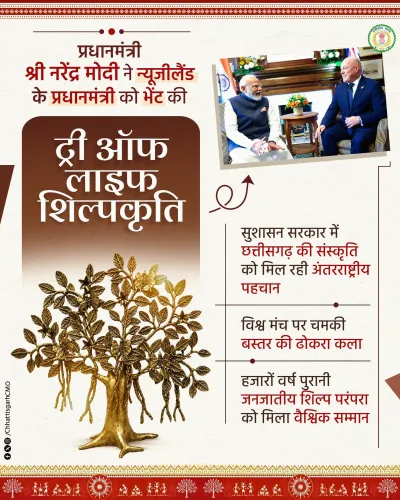
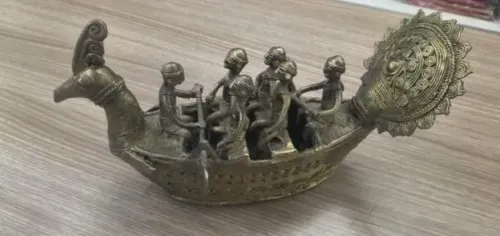
PM Narendra Modi gifted Australian PM Anthony Albanese a handcrafted Dhokra metal boat on 13 July in Jagdalpur, Chhattisgarh .
Bastar's Dhokra artisan community has declined from nearly 15,000 to over 10,000 across seven districts due to falling demand.
The 'Vocal for Local' campaign has begun reversing the trend, with renewed interest drawing some artisans back to the craft.
Modi has previously gifted Dhokra and other traditional art pieces to world leaders at the G20 summit , establishing a pattern of cultural diplomacy.
Local traders expect the gesture to boost demand in both national and international markets, potentially opening new export corridors.
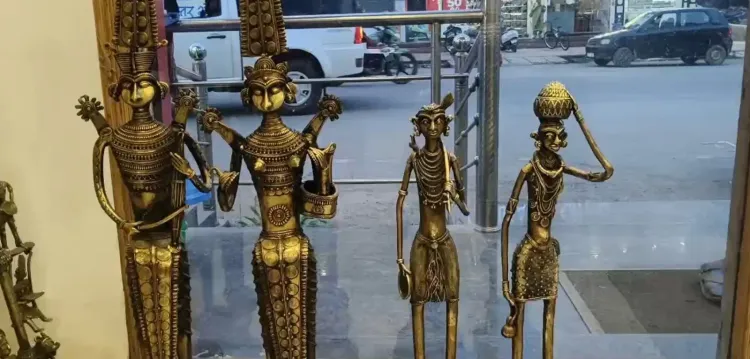
Prime Minister Narendra Modi placed Bastar's centuries-old Dhokra tribal craft on the world stage on 13 July by presenting Australian Prime Minister Anthony Albanese with a handcrafted metal boat fashioned in the traditional Dhokra style. The gesture, made in Jagdalpur, Chhattisgarh, has been received with pride by local artisans and traders who view it as a watershed moment for a craft form that has long struggled for wider recognition.
The Gift and Its Symbolism
The handcrafted metal boat carries layered meaning. Anil Lukkad, a Jagdalpur-based businessman engaged in the Dhokra trade, noted that boats have historically ferried people across shores — making the object a fitting metaphor for friendship, cooperation, and cultural exchange between India and Australia. Lukkad described the moment as 'a matter of immense pride not only for Chhattisgarh but for the entire nation,' adding that the gift represents a blending of tradition with diplomacy.
Bastar's Artisan Community: Scale and Strain
At its peak, Bastar's Dhokra community numbered close to 15,000 artisans spread across the region's seven districts. Declining demand forced many to abandon the craft, and the active artisan count has since dropped to over 10,000. Renewed consumer interest, partly driven by the Centre's 'Vocal for Local' campaign, has begun drawing practitioners back — but the community remains fragile. Lukkad expressed confidence that high-profile diplomatic gifts of this nature will accelerate demand in both domestic and international markets.
A Pattern of Cultural Diplomacy
This is not an isolated gesture. Modi has consistently deployed Indian handicrafts as soft-power instruments at global forums. At the G20 summit, world leaders reportedly received unique pieces of Dhokra and other traditional art forms as official gifts. According to Lukkad, these cultural tokens leave a lasting impression of India's heritage while simultaneously reinforcing bilateral ties. Critics and craft advocates alike acknowledge that such visibility, while symbolic, can translate into tangible export interest and buyer inquiries for artisans who otherwise lack market access.
Economic Stakes for Tribal Craftspeople
The economic dimension is significant. Thousands of families across Bastar's seven districts depend on Dhokra work as a primary or supplementary livelihood. Each high-profile endorsement — whether at a G20 meeting or a bilateral summit — has historically generated a short-term spike in orders. The challenge, craft economists argue, is converting episodic attention into sustained supply-chain integration. Lukkad believes the Australian PM's gift could open new export corridors if followed up with structured trade facilitation.
What Comes Next
Local artisan groups and traders are hopeful that the international spotlight will prompt government agencies to expand marketing support and ease export documentation for Dhokra products. As Bastar's craftspeople celebrate this recognition, the broader question is whether diplomatic visibility will translate into durable livelihoods — or remain a moment of pride without structural follow-through.
Point of View
But the artisan community's decline from 15,000 to 10,000 practitioners tells a harder story. Diplomatic visibility creates a demand spike, not a demand floor — and without structured export facilitation, fair-price guarantees, and supply-chain integration, Bastar's craftspeople will keep riding a cycle of episodic attention followed by neglect. The real measure of these gestures is not the photograph at the summit; it is the order book six months later.
NationPress
12 Oct 2026
Frequently Asked Questions
What did PM Modi gift to Australian PM Anthony Albanese?
PM Modi gifted Australian PM Anthony Albanese a handcrafted metal boat made in Bastar's traditional Dhokra art style on 13 July in Jagdalpur, Chhattisgarh. The gift was intended to showcase India's tribal craft heritage on the global diplomatic stage.
What is Dhokra art and where does it come from?
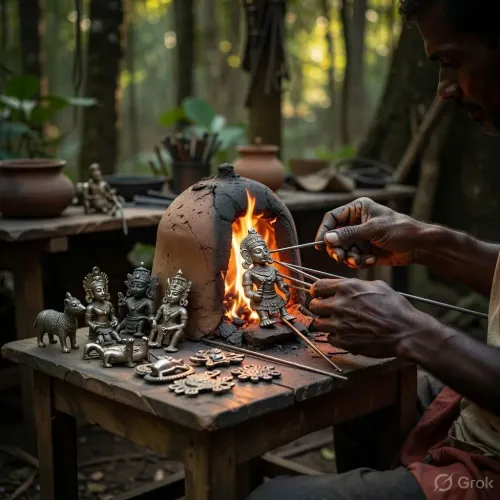
Dhokra is a centuries-old metal casting craft practised by tribal artisans in the Bastar region of Chhattisgarh. It uses the lost-wax casting technique to create intricate figurines, utensils, and decorative objects, and is one of India's oldest known non-ferrous metal crafts.
How many artisans are engaged in Dhokra work in Bastar?
Currently, more than 10,000 artisans across Bastar's seven districts are engaged in Dhokra work. The number was once closer to 15,000, but declining demand forced many to abandon the craft in recent years.
Has PM Modi gifted Indian handicrafts to foreign leaders before?
Yes. At the G20 summit, world leaders reportedly received unique pieces of Dhokra and other traditional Indian art forms as official gifts. Modi has consistently used Indian handicrafts as instruments of cultural diplomacy at international forums.
What impact could this gift have on Bastar's artisan community?
Local traders and artisan groups are hopeful the international exposure will boost demand in national and international markets and potentially open new export corridors. However, craft advocates note that sustained economic benefit requires follow-up through structured trade facilitation and marketing support, not just diplomatic visibility.