CM Sai Hails PM Modi's Mann Ki Baat Mention of Malhar Heritage
Synopsis
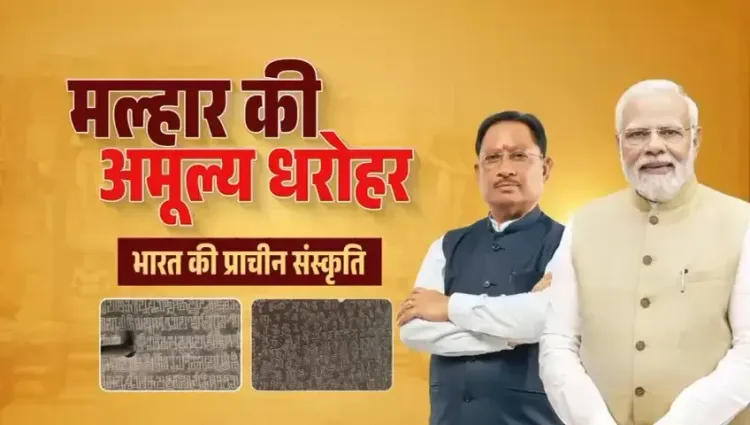
Chhattisgarh CM Vishnu Deo Sai praised PM Modi for spotlighting rare Brahmi-script, Pali-language copper plates from Malhar in Mann Ki Baat, calling it a proud moment for the state and reaffirming his government's commitment to preserving the region's ancient cultural heritage.
Key Takeaways
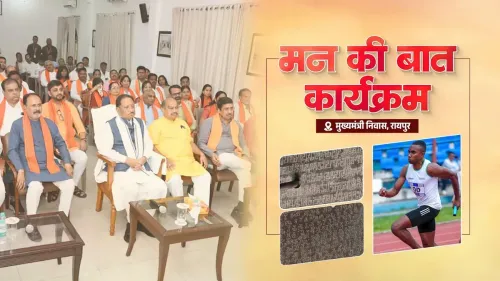
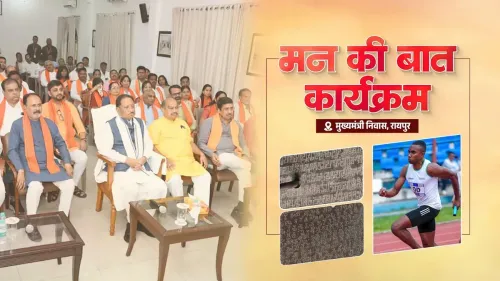
CM Vishnu Deo Sai responded to PM Narendra Modi 's mention of Malhar 's ancient copper plates during a Mann Ki Baat broadcast on 31 May 2026 .
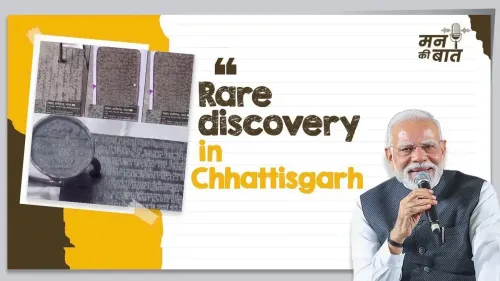
The copper plates from Malhar, Chhattisgarh are inscribed in Brahmi script and the Pali language , reflecting early Indian knowledge traditions.
CM Sai described the PM's reference as giving Chhattisgarh's cultural heritage 'a new identity on the national stage.' The Chhattisgarh government reaffirmed its commitment to preservation, promotion, and intergenerational transfer of the state's historical legacy.
Mann Ki Baat , launched in October 2014 , has regularly featured India's ancient sites and scripts as part of a civilisational-pride narrative.
The national spotlight could spur further ASI activity, museum development, or heritage tourism infrastructure at Malhar .
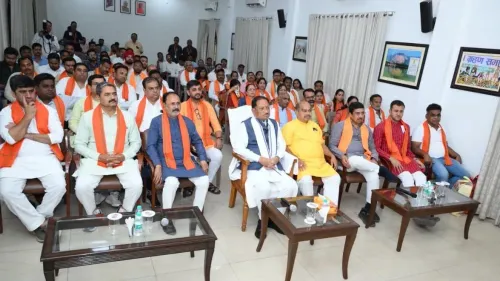
Chhattisgarh Chief Minister Vishnu Deo Sai on Sunday, 31 May 2026 welcomed Prime Minister Narendra Modi's mention of rare ancient copper plates discovered at Malhar during a Mann Ki Baat broadcast, calling it a moment of pride for the entire state and a new national recognition of Chhattisgarh's historical legacy.
Context
In his post, CM Sai wrote that when 'Malhar ka gaurav' ('the glory of Malhar') resonated in Mann Ki Baat, 'gauravit hua pura Chhattisgarh' ('the whole of Chhattisgarh felt proud'). He described PM Modi's reference to ancient copper plates inscribed in Brahmi script and the Pali language, recovered from Malhar, as a moment that places the state's rich knowledge tradition and cultural heritage on a national platform.
The Chief Minister characterised these artefacts not merely as objects of archaeological importance but as 'living testimony' to India's ancient intellectual wealth, cultural excellence, and historical consciousness.
Policy Backdrop
Mann Ki Baat, PM Modi's monthly radio address that began in October 2014, has periodically spotlighted India's ancient scripts, Buddhist heritage, and regional archaeological discoveries as part of a broader civilisational-pride narrative. The programme has become a consistent platform for elevating lesser-known regional sites to national attention.
Malhar, located in Bilaspur district, Chhattisgarh, is a historically significant archaeological site associated with early Indian knowledge traditions. The copper plates inscribed in Brahmi script and Pali language found there are considered markers of Buddhist and early historic presence in the region. Their mention on a national broadcast aligns with the central government's sustained effort since 2014 to integrate regional finds into a unified narrative of India's cultural continuity.
Stakeholders and Impact
For Chhattisgarh's archaeology and heritage tourism sectors, the PM's national-level acknowledgement could translate into increased public interest in the Malhar site and potentially attract institutional attention from bodies such as the Archaeological Survey of India (ASI). Academics working on Brahmi epigraphy and Pali manuscripts stand to benefit from heightened visibility.
CM Sai stated that his government remains 'continuously committed' to the preservation, promotion, and transfer of this historical heritage to future generations, so that coming generations stay 'powerfully connected' to their roots, history, and cultural identity. The message reinforces the state administration's positioning on cultural conservation as a governance priority.
What's Next
The Chief Minister's reaffirmation of the state government's commitment to heritage preservation raises the possibility of dedicated policy announcements — including potential museum infrastructure, interpretive centres, or expanded ASI survey activity at Malhar. Heritage tourism development around the site could follow if the national spotlight sustains interest.
For Chhattisgarh, the episode illustrates how regional archaeological discoveries can be amplified through central platforms, creating momentum for both conservation funding and cultural tourism — a dynamic that other states with similar underexplored sites will be watching closely.
Point of View
Effusive response — fits a well-established pattern in which the BJP-led central and state governments co-amplify regional cultural discoveries to build a unified civilisational narrative. For Chhattisgarh, a state that joined BJP governance in late 2023, such moments serve a dual purpose: they validate the state's historical significance on a national platform and reinforce the ruling party's cultural-heritage credentials ahead of future electoral cycles. The episode also signals that Malhar, long known within academic circles, may now be on a trajectory toward mainstream heritage tourism investment — a shift that could meaningfully benefit the local economy while raising questions about conservation standards at the site.
NationPress
21 Oct 2026
Frequently Asked Questions
What are the Malhar copper plates mentioned in Mann Ki Baat?
The Malhar copper plates are rare ancient artefacts discovered at the Malhar archaeological site in Bilaspur district, Chhattisgarh, inscribed in Brahmi script and the Pali language. They are considered significant evidence of early Indian knowledge traditions and Buddhist heritage in the region.
What did PM Modi say about Malhar in Mann Ki Baat?
PM Modi referenced the ancient Brahmi-script and Pali-language copper plates recovered from Malhar, Chhattisgarh, during a Mann Ki Baat broadcast, highlighting them as part of India's rich cultural and historical legacy. The specific episode date has not been officially confirmed in available records.
Who is Vishnu Deo Sai and why did he react to Mann Ki Baat?
Vishnu Deo Sai is the BJP Chief Minister of Chhattisgarh. He responded to PM Modi's Mann Ki Baat mention of Malhar's copper plates to express state pride and reaffirm his government's commitment to preserving Chhattisgarh's ancient cultural heritage.
Where is Malhar located and why is it historically important?
Malhar is an archaeological site in Bilaspur district, Chhattisgarh. It is historically important for yielding ancient copper plates inscribed in Brahmi script and Pali language, which are markers of early Buddhist and historic presence in central India.
What is Mann Ki Baat?
Mann Ki Baat is a monthly radio address by Prime Minister Narendra Modi that began in October 2014. It regularly features discussions of India's cultural achievements, ancient heritage, and regional historical discoveries to promote national awareness of India's civilisational legacy.