CM Sai Hails Chhattisgarh's Moment in Mann Ki Baat 134
Synopsis
Chhattisgarh CM Vishnu Deo Sai welcomed the 134th Mann Ki Baat episode, in which PM Modi personally spoke with Jashpur sprinter Animesh Kujur about his national record and highlighted conservation of rare copper-plate inscriptions from the historic Malhar site in Bilaspur.
Key Takeaways
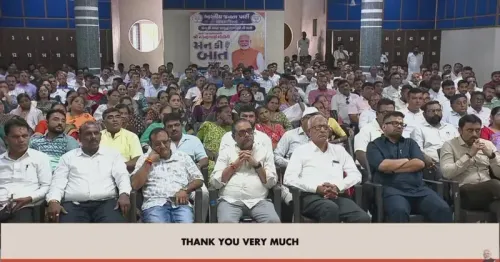
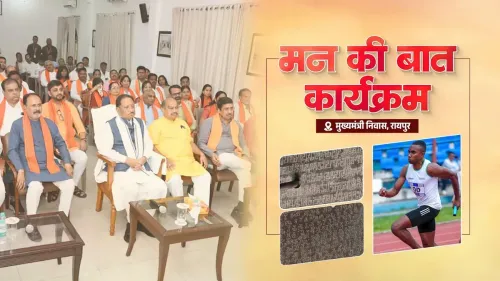
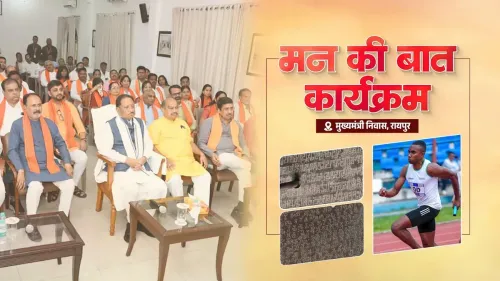
CM Vishnu Deo Sai listened to the 134th episode of Mann Ki Baat at his Raipur residence on 31 May 2026 .
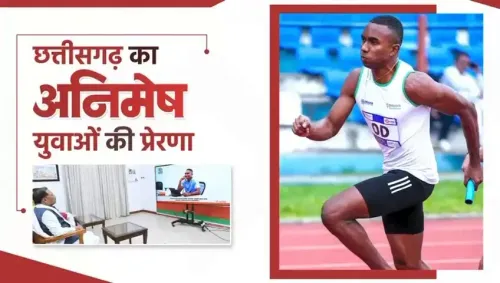
PM Narendra Modi held an on-air phone conversation with sprinter Animesh Kujur from Chhuittangar village, Jashpur , who set a national athletics record.
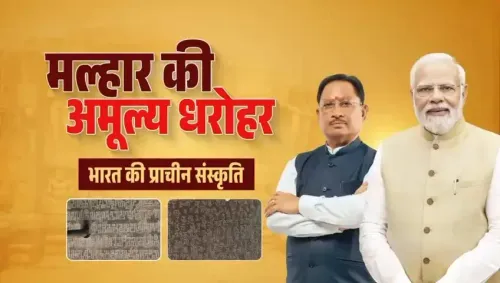
Modi also cited conservation efforts around rare copper-plate inscriptions from the archaeological site of Malhar, Bilaspur .
Mann Ki Baat has been broadcast monthly since October 2014 as a direct citizen-outreach programme.
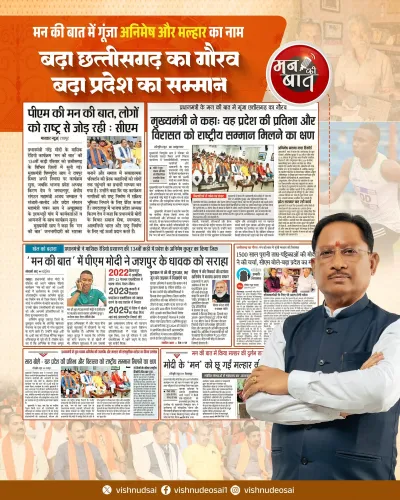
CM Sai called the national recognition of Chhattisgarh's talent and heritage a matter of pride for all residents of the state.
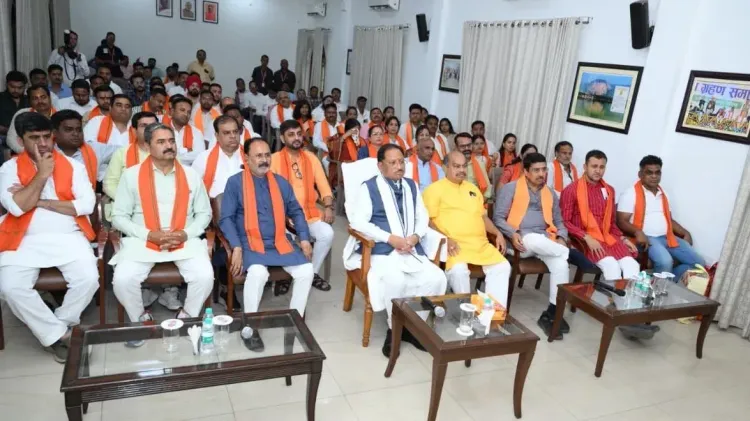
Chhattisgarh Chief Minister Vishnu Deo Sai on Sunday, 31 May 2026, listened to the 134th episode of Prime Minister Narendra Modi's monthly radio programme Mann Ki Baat at his official residence in Raipur, and took to social media to highlight the two Chhattisgarh-specific mentions that featured in the broadcast.
Context
In the episode, Prime Minister Modi spotlighted Animesh Kujur, a young sprinter from the small village of Chhuittangar in Jashpur district — a predominantly tribal belt in northern Chhattisgarh. Modi held a phone conversation with Kujur on air, listening to the story of hard work and struggle behind the athlete's national-record performance. CM Sai described the Prime Minister's personal acknowledgement as 'garv ka vishay' (a matter of pride) for every resident of Chhattisgarh.
The episode also drew attention to rare copper-plate inscriptions recovered from Malhar, a historically significant archaeological site in Bilaspur district known for its ancient Shiva temples and pre-medieval artefacts. Modi cited ongoing conservation efforts around these finds as a meaningful step in preserving India's cultural heritage.
Policy Backdrop
Mann Ki Baat was launched by Prime Minister Modi in October 2014 as a monthly radio address on All India Radio, designed to connect the central government directly with citizens by highlighting grassroots achievements and national milestones. Over more than a decade, the programme has become a platform for amplifying stories from every state, often giving national visibility to individuals and initiatives that would otherwise remain local.
Chhattisgarh's state administration, led by CM Sai since his swearing-in in December 2023, has aligned itself with the central government's emphasis on documenting and protecting pre-medieval artefacts and monuments, particularly in the state's tribal belts. The Malhar site in Bilaspur has long been on the radar of archaeologists for its layered historical significance.
Stakeholders and Impact
For young athletes in Chhattisgarh's tribal districts, national-level recognition on a programme with the reach of Mann Ki Baat can translate into institutional support, sponsorships, and a pipeline of aspiring sportspersons. Animesh Kujur's story — emerging from a small village in Jashpur to set a national record — fits squarely into the broader narrative of rural sporting talent finding mainstream acknowledgement.
For heritage conservationists, the Prime Minister's mention of the Malhar copper-plate inscriptions is significant. Such mentions have historically preceded increased central funding and administrative attention for archaeological preservation projects at the state level.
What's Next
Observers will watch for follow-up state government announcements on sports infrastructure investment in Jashpur and other tribal districts, as well as any new central allocations for archaeological conservation at Malhar. Future Mann Ki Baat episodes are likely to continue featuring Chhattisgarh stories as the state government actively surfaces local achievements for national platforms. The convergence of tribal sporting success and heritage preservation as twin themes from one state in a single episode underscores Chhattisgarh's growing visibility in the national policy conversation.
Point of View
Effusive social media response is a textbook example of state-level amplification of central messaging, reinforcing alignment between Raipur and Delhi ahead of any future electoral cycle. The spotlight on Animesh Kujur from Jashpur also carries a political subtext: tribal communities in Chhattisgarh are a key constituency, and personalised recognition from the Prime Minister on a mass-reach platform is a soft but potent form of outreach. Taken together, the episode and the CM's reaction signal that Chhattisgarh's governance narrative is being actively woven into the national story of 'Viksit Bharat.'
NationPress
16 Oct 2026
Frequently Asked Questions
What did PM Modi say about Chhattisgarh in Mann Ki Baat episode 134?
PM Modi spoke on air with sprinter Animesh Kujur from Jashpur's Chhuittangar village, praising his national-record achievement, and also highlighted conservation efforts around rare copper-plate inscriptions from the Malhar archaeological site in Bilaspur.
Who is Animesh Kujur and where is he from?
Animesh Kujur is a young sprinter from Chhuittangar, a small village in Jashpur district, Chhattisgarh. He set a national athletics record and was personally acknowledged by PM Modi during the 134th Mann Ki Baat episode.
What is the Malhar site in Bilaspur?
Malhar is a historically significant archaeological site in Bilaspur district, Chhattisgarh, known for ancient Shiva temples and rare copper-plate inscriptions from the pre-medieval period. Conservation efforts at the site were cited by PM Modi in Mann Ki Baat.
When did Mann Ki Baat start and how often is it broadcast?
Mann Ki Baat was launched by Prime Minister Narendra Modi in October 2014. It is broadcast monthly on All India Radio and serves as a direct outreach programme connecting the Prime Minister with citizens across India.
Why did CM Vishnu Deo Sai post about Mann Ki Baat?
CM Sai posted to express pride that Chhattisgarh — its tribal sporting talent and its ancient heritage — received national recognition in the 134th episode, and to amplify the Prime Minister's acknowledgements to a state audience.