PM Modi highlights rare copper plates found in Chhattisgarh
Synopsis
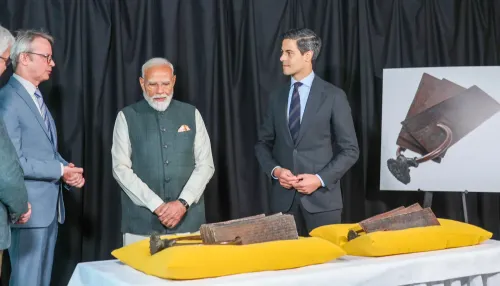
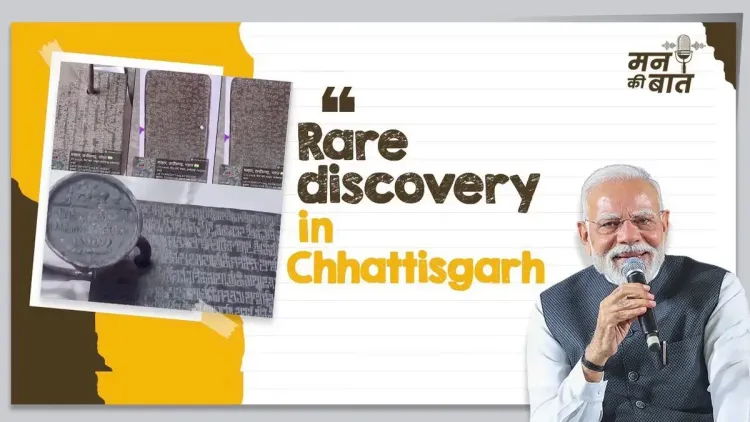
Three rare copper plates from the sixth-seventh century CE have been found at Malhar in Chhattisgarh under the Gyan Bharatam Abhiyan. Prime Minister Narendra Modi highlighted the discovery on Mann Ki Baat, saying the plates offer vital insights into ancient governance, religion and culture.
Key Takeaways
Three rare copper plates have been discovered at Malhar, Chhattisgarh under the Gyan Bharatam Abhiyan .
The plates are believed to date to the sixth and seventh centuries CE .
They are expected to provide information on governance, religion and culture of early medieval India.
Prime Minister Narendra Modi announced the find through his monthly programme Mann Ki Baat on 31 May 2026 .
Malhar in Bilaspur district is an established early medieval archaeological site linked to the Dakshina Kosala region.
Formal epigraphic analysis by the Archaeological Survey of India or state authorities is the immediate next step.
Prime Minister Narendra Modi, on Sunday, 31 May 2026, highlighted the discovery of three rare copper plates in Malhar, Chhattisgarh, unearthed under the Gyan Bharatam Abhiyan, describing them as windows into the governance, religion and culture of sixth- and seventh-century India.
Context
Sharing the find during his monthly radio programme Mann Ki Baat, the Prime Minister wrote in Hindi: 'ज्ञान भारतम् अभियान के तहत छत्तीसगढ़ के मल्हार में तीन दुर्लभ ताम्र पट्टिकाएं मिली हैं' — 'Under the Gyan Bharatam Abhiyan, three rare copper plates have been found in Malhar, Chhattisgarh.' He noted that the plates, believed to date to the sixth and seventh centuries CE, carry significant information about the administrative systems, religious practices and cultural life of that era.
Malhar is a well-documented archaeological site in Bilaspur district, Chhattisgarh, associated with the early medieval Dakshina Kosala region. The site has previously yielded inscriptions and artefacts linked to local dynasties that governed central India during that period.
Policy Backdrop
The Gyan Bharatam Abhiyan is a national campaign designed to discover, document and disseminate knowledge preserved in ancient Indian artefacts and texts. Copper-plate charters from the early medieval period are among the most important primary sources for historians, recording land grants, royal genealogies and endowments to religious institutions.
Since 2014, successive editions of Mann Ki Baat have periodically featured heritage discoveries — from Archaeological Survey of India excavations to state-level finds — as part of a broader effort to connect contemporary audiences with India's civilisational record. The Gyan Bharatam Abhiyan formalises that communication into a structured recovery and documentation drive.
Stakeholders and Impact
Historians and archaeologists working on early medieval Chhattisgarh stand to benefit most immediately, as epigraphic readings of the plates could shed fresh light on land-tenure systems, dynastic lineages and the spread of religious institutions in the Dakshina Kosala region. Local communities in Malhar may also see renewed interest in the site's heritage tourism potential.
The announcement amplifies the profile of state archaeology departments and central bodies involved in field surveys. Copper-plate inscriptions, once deciphered and translated, are typically published in epigraphic journals and can take months to years to fully analyse and authenticate.
What's Next
Attention will now turn to the publication of formal epigraphic readings and translations by the Archaeological Survey of India or the Chhattisgarh state archaeology department. The plates may be considered for inclusion in museum displays or digital archives under the Gyan Bharatam Abhiyan's documentation mandate.
If authenticated and dated to the sixth-seventh century CE, the inscriptions could add meaningfully to the corpus of early medieval records from central India — a region whose administrative history remains less thoroughly documented than that of the Gangetic plains or the Deccan.
Point of View
Gyan Bharatam Abhiyan, the Prime Minister also signals institutional ownership of the find, linking the discovery to central government policy rather than presenting it as a standalone state event. For historians, the real significance will hinge on what the inscriptions actually say once formally read and published. Politically, the announcement reinforces a governance narrative in which cultural heritage recovery is positioned as a deliverable alongside infrastructure and welfare programmes.
NationPress
15 Oct 2026
Frequently Asked Questions
What is the Gyan Bharatam Abhiyan?
The Gyan Bharatam Abhiyan is a national campaign launched to discover, document and disseminate knowledge from ancient Indian artefacts and texts, including copper-plate inscriptions, manuscripts and archaeological finds.
Where were the copper plates found in Chhattisgarh?
The three copper plates were found at Malhar, an archaeological site in Bilaspur district, Chhattisgarh, known for its early medieval remains linked to the Dakshina Kosala region.
How old are the copper plates found at Malhar?
The plates are believed to date to the sixth and seventh centuries CE, though formal dating and epigraphic analysis by the Archaeological Survey of India or state authorities is still awaited.
What information do ancient copper plates usually contain?
Copper-plate charters from early medieval India typically record land grants, royal genealogies, religious endowments and administrative orders, making them primary sources for historians studying governance and culture of the period.
What is Mann Ki Baat?
Mann Ki Baat is a monthly radio programme hosted by Prime Minister Narendra Modi since October 2014, in which he discusses governance, public-interest themes and cultural achievements directly with citizens.