PM Modi on Chola copper plates return from Netherlands and astronomy push
Synopsis
In Mann Ki Baat's 134th episode, Modi celebrated the return of 24 Chola-era copper plates from the Netherlands — inscriptions tying King Rajendra Chola I to a Buddhist monastery donation — while also spotlighting a fresh 1,400-year-old Brahmi-script find in Chhattisgarh and calling on India's youth to embrace astronomy. Heritage pride and scientific curiosity, packaged as one national message.
Key Takeaways
PM Modi discussed the return of 21 large and 3 small Chola-era copper plates from the Netherlands during Mann Ki Baat episode 134 .
The plates relate primarily to King Rajendra Chola I and record the donation of the village of Anaimangalam to a Buddhist monastery.
Three copper plates dating to the sixth-seventh centuries were separately unearthed in Malhar, Chhattisgarh under the Gyan Bharatam Abhiyan , written in Brahmi script and Pali language .
Modi urged youth to join astronomy clubs and visit planetariums, highlighting bodies such as the Bangalore Astronomical Society , Astro Keralam , Big Bang Astronomy Club , Jyotirvidya Parisanstha , and ISAAC .
The Bangalore Astronomical Society's 'Khagol Mandal' team has launched a 30-hour astronomy course targeting rural outreach.
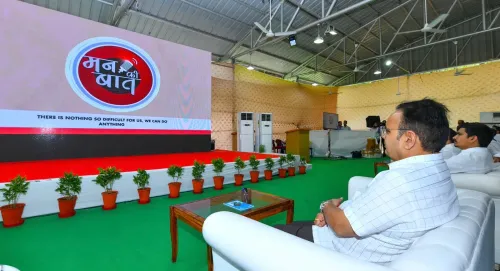
Prime Minister Narendra Modi on Sunday, 1 June 2025, used the 134th episode of his monthly radio programme Mann Ki Baat to celebrate the return of rare Chola-era copper plates from the Netherlands to India, calling it a 'moment of immense pride' for the nation. He also urged young Indians to explore astronomy and join science clubs during their holidays.
The Chola Copper Plates: What Was Returned
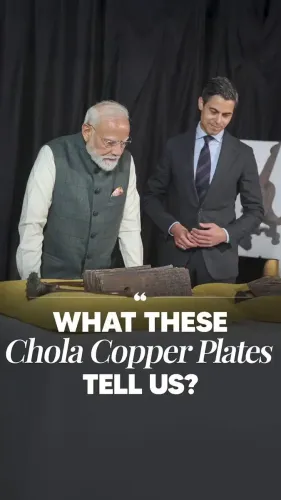
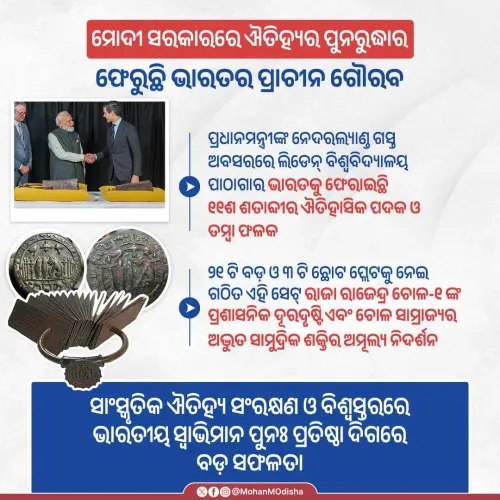
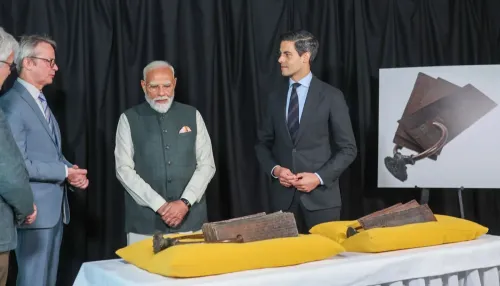
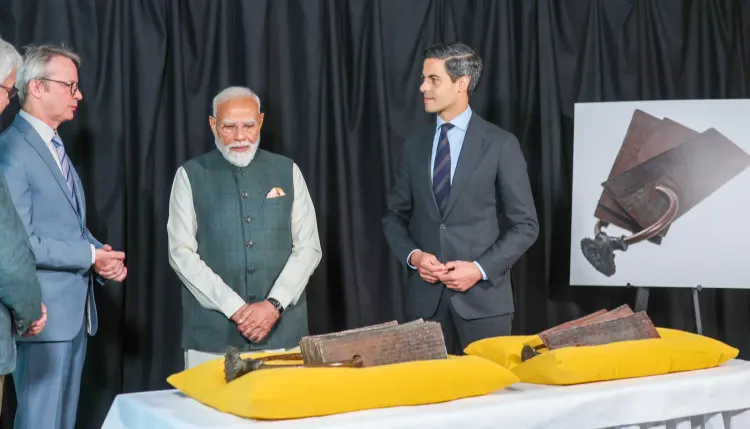
Modi recalled his recent visit to the Netherlands, where a formal ceremony marked the repatriation of the artefacts. 'In a special ceremony held in the Netherlands, ancient copper plates from the Chola period were returned to India. The Prime Minister of the Netherlands was also present at the event,' he said. The collection comprises 21 large and 3 small copper plates, primarily connected to King Rajendra Chola I, who fulfilled a vow made by his father, King Rajaraja Chola. The inscriptions record the donation of the village of Anaimangalam to a Buddhist monastery.
Modi noted that the return had generated widespread curiosity about the historical significance of the plates, with messages of pride pouring in from the Tamil community in India and abroad. 'The Tamil community around the world is also particularly enthusiastic about this,' he said. The inscriptions, he explained, illuminate the maritime power of the Chola Empire and its diplomatic engagements with Southeast Asian countries.
New Discovery in Chhattisgarh Under Gyan Bharatam Abhiyan
Separately, Modi highlighted a recent archaeological find closer to home: three rare copper plates unearthed in Malhar, Chhattisgarh, under the Gyan Bharatam Abhiyan. Experts believe the inscriptions belong to the period of Maharishi Balarjun of the Panduvanshi dynasty, dating to the sixth-seventh centuries — roughly 1,400 to 1,500 years old. 'These copper plates are written in ancient Brahmi script and the Pali language. They provide important information about the governance, religion and culture of that time,' he said. This find adds to a growing body of discoveries under the government's heritage-documentation drive.
Modi's Call for Astronomy Awareness Among Youth
Pivoting to science, Modi observed that India's fascination with the skies stretches back centuries. 'We Indians have always had a special fascination for astronomy. Centuries-old observatories still exist in our country. Amazing mathematical discoveries have been made here. Be it navigation, the almanack, or our festivals, all of these are related to the sky and the stars,' he said. He noted that astronomy clubs are proliferating across the country, from metropolitan cities to small towns and from schools to public parks.
Modi spotlighted several organisations advancing grassroots astronomy: the Bangalore Astronomical Society, which conducts regular observational sessions and has launched a mission to popularise astronomy in rural areas through a team called 'Khagol Mandal' offering a 30-hour introductory course; Astro Keralam, which organises night observation camps and workshops; the Big Bang Astronomy Club, which has held events from the Gir forests to the Rann of Kutch; Jyotirvidya Parisanstha, described as one of India's oldest astronomy institutions; and ISAAC, a nationwide student-led network linking astronomy and astrophysics clubs across the country.
What the Prime Minister Urged
Concluding his remarks, Modi said: 'It is very important to take out time for your hobby and constantly learn something new. I would urge the youth to join an astronomy club and visit a planetarium during these holidays.' The dual appeal — to cultural pride through heritage recovery and to scientific curiosity through astronomy — reflects a recurring theme in his Mann Ki Baat addresses, which blend nationalism with calls for grassroots learning. This comes amid the government's broader push to document and repatriate Indian artefacts held abroad, a campaign that has gained pace since 2022.
Point of View
But Modi's Mann Ki Baat framing does more than celebrate a repatriation — it anchors Tamil cultural identity to a central-government narrative at a time when Centre-state tensions over language and federal resource allocation remain live. The Chhattisgarh find, tucked into the same address, quietly signals the Gyan Bharatam Abhiyan's expanding footprint in heritage documentation, a programme that has received little independent scrutiny on methodology or funding. The astronomy segment, meanwhile, is a soft-power play: grassroots science clubs are real and growing, but the gap between club enthusiasm and institutional research infrastructure — underfunded universities, a shortage of dark-sky sites — goes unaddressed. Celebrating the periphery without fixing the core is a pattern worth watching.
NationPress
15 Oct 2026
Frequently Asked Questions
What are the Chola-era copper plates returned from the Netherlands?
They are a set of 21 large and 3 small copper plates from the Chola period, returned to India from the Netherlands in a ceremony attended by the Dutch Prime Minister. The inscriptions primarily relate to King Rajendra Chola I and record the donation of the village of Anaimangalam to a Buddhist monastery, fulfilling a vow made by his father, King Rajaraja Chola .
What did PM Modi say about the Chola copper plates in Mann Ki Baat?
Modi described the repatriation as a 'moment of immense pride' and said the plates reveal the maritime power of the Chola Empire and its relations with Southeast Asian countries. He noted that the Tamil community worldwide had responded with particular enthusiasm to the news.
What is the Chhattisgarh copper plate discovery mentioned by Modi?
Three copper plates were recently unearthed in Malhar, Chhattisgarh under the Gyan Bharatam Abhiyan . Experts believe they date to the sixth-seventh centuries and belong to the period of Maharishi Balarjun of the Panduvanshi dynasty , written in ancient Brahmi script and Pali language .
Which astronomy organisations did PM Modi highlight in Mann Ki Baat?
Modi mentioned five organisations: the Bangalore Astronomical Society (rural outreach via 'Khagol Mandal' and a 30-hour course), Astro Keralam (night observation camps), the Big Bang Astronomy Club (events from Gir to Rann of Kutch), Jyotirvidya Parisanstha (one of India's oldest astronomy institutions), and ISAAC (a nationwide student-led astronomy network).
What did PM Modi urge Indian youth to do regarding astronomy?
Modi urged young people to join astronomy clubs and visit planetariums during their holidays. He observed that astronomy clubs are growing across India — from big cities to small towns and from schools to parks — and called on youth to nurture the habit of learning something new consistently.