CM Himanta Reviews Revenue Circle Realignment in Assam
Synopsis
Chief Minister Himanta Biswa Sarma on July 14, 2026 directed all District Commissioners and Circle Officers to carry out a transparent, time-bound realignment of Assam's Revenue Circles with Legislative Assembly Constituencies, aiming to improve administrative efficiency and public service delivery.
Key Takeaways
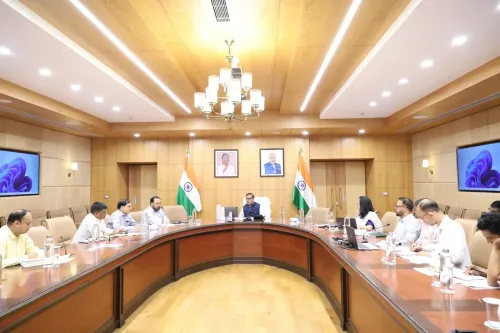
Himanta Biswa Sarma chaired a video conference on July 14, 2026 with all District Commissioners and Circle Officers across Assam.
The meeting reviewed the reorganisation of Revenue Circle boundaries to align them with Legislative Assembly Constituencies .
The Chief Minister directed the process to be 'transparent and time-bound.' The exercise is linked to the 2023 delimitation of Assam's 126 Assembly constituencies by the Delimitation Commission.
Cabinet minister Keshab Mahanta is involved in the coordination of the administrative reform.
The realignment aims to reduce jurisdictional mismatches and strengthen public service delivery at the district level.
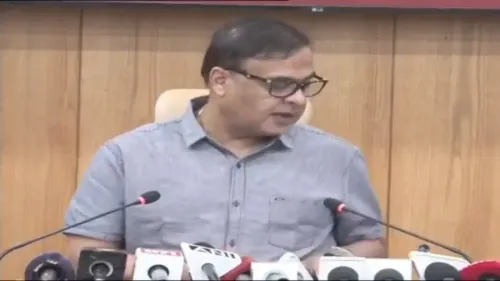
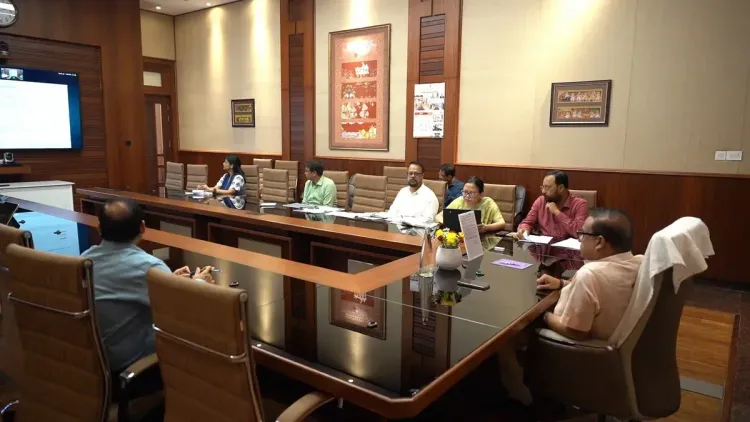
The Chief Minister's Office of Assam announced on Tuesday, July 14, 2026 that Chief Minister Dr. Himanta Biswa Sarma chaired a video conference with all District Commissioners and Circle Officers to review the reorganisation of Revenue Circle boundaries, with the meeting held at the Assam Legislative Assembly, Dispur.
Context
The Chief Minister directed a 'transparent and time-bound realignment' of Revenue Circles with Legislative Assembly Constituencies to enhance administrative efficiency and strengthen public service delivery. Cabinet minister Keshab Mahanta, who handles administrative coordination, was also tagged in the announcement, indicating cross-departmental involvement in the exercise.
The video conference brought together district-level officials from across Assam's administrative machinery, signalling that the realignment exercise is being treated as a state-wide priority rather than a localised administrative adjustment.
Policy Backdrop
The push for realignment follows the 2023 delimitation of Assam's 126 Legislative Assembly constituencies by the Delimitation Commission, which readjusted electoral boundaries across the state. That exercise created a structural mismatch between the redrawn electoral map and the existing Revenue Circle boundaries, which had remained largely unchanged.
Indian states have periodically undertaken such realignments to reduce jurisdictional overlaps between electoral and revenue administration units. In Assam, this initiative fits a broader pattern of administrative modernisation under the current state government, which has previously reorganised districts and sub-divisions to bring governance closer to citizens.
Stakeholders and Impact
District Commissioners and Circle Officers are the primary implementers of the proposed realignment and were directly addressed in the video conference. For these officials, clearer jurisdictional alignment with Assembly constituencies means reduced duplication of effort when coordinating with elected representatives on development works and welfare scheme delivery.
Local residents stand to benefit from improved coordination between revenue administration and constituency-level governance. When revenue units and electoral constituencies share boundaries, grievance redressal, land record management, and public scheme implementation tend to become more efficient and accountable.
What's Next
The Chief Minister's directive for a 'time-bound' process suggests that draft boundary proposals are expected to follow from the Revenue Department within a defined window. Public consultation periods and formal notification of new circle boundaries would be the next observable milestones in this exercise.
The Assam Legislative Assembly is also likely to see questions on the implementation timeline and the criteria used for realignment, as the exercise directly intersects with the interests of elected members whose constituencies form the reference units for the new boundaries.
Point of View
Chief Minister Sarma is signalling urgency and central oversight, rather than leaving implementation to departmental discretion. The emphasis on 'transparency' in the realignment process is notable, as boundary changes at the revenue level can affect land records, welfare scheme eligibility, and local political dynamics. This move fits a broader pattern of the Assam government using administrative restructuring as a visible governance deliverable ahead of future electoral cycles.
NationPress
12 Oct 2026
Frequently Asked Questions
What is the Revenue Circle realignment in Assam about?
The Assam government is realigning Revenue Circle boundaries to match the state's 126 Legislative Assembly Constituencies, following the 2023 delimitation exercise that redrew electoral boundaries but left revenue units unchanged.
Why did CM Himanta Biswa Sarma hold a video conference with District Commissioners?
CM Himanta Biswa Sarma convened the video conference on July 14, 2026 to review the reorganisation of Revenue Circle boundaries and direct officials to carry out the realignment in a transparent and time-bound manner.
How many Assembly constituencies does Assam have?
Assam has 126 Legislative Assembly constituencies , which are now being used as the reference units for realigning Revenue Circle boundaries.
What is the role of Keshab Mahanta in this exercise?
Cabinet minister Keshab Mahanta was tagged by the Chief Minister's Office in the announcement, indicating his involvement in the administrative coordination of the Revenue Circle realignment.
How will the Revenue Circle realignment benefit Assam residents?
When revenue units share boundaries with electoral constituencies, it reduces jurisdictional overlaps, making land record management, grievance redressal, and welfare scheme delivery more efficient for local residents.