CM Himanta Chairs Meeting to Strengthen GST in Assam
Synopsis
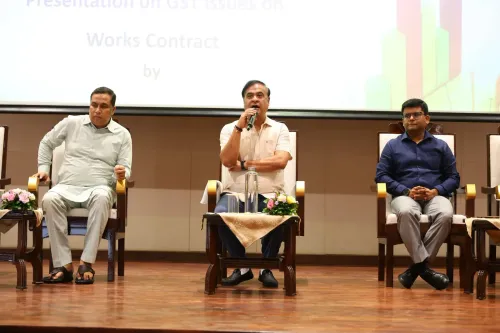
Chief Minister Himanta Biswa Sarma chaired an evening meeting on 11 July 2026 with officials and stakeholders to explore ways to strengthen Assam's GST architecture, signalling a focused push to improve tax compliance and revenue mobilisation in the northeastern state.
Key Takeaways
CM Dr Himanta Biswa Sarma chaired the meeting on the evening of 11 July 2026 .
The session brought together state officials and business stakeholders to explore strengthening Assam 's GST framework.
GST has been in force nationally since 1 July 2017 and constitutes a major share of Assam's own-tax revenue.
Dr Sarma previously served as Assam's Finance Minister and has direct experience with GST Council proceedings.
Northeastern states have focused on digital compliance infrastructure and widening the tax base under the GST regime.
Specific outcomes of the meeting have not been formally disclosed; follow-up policy notifications are awaited.
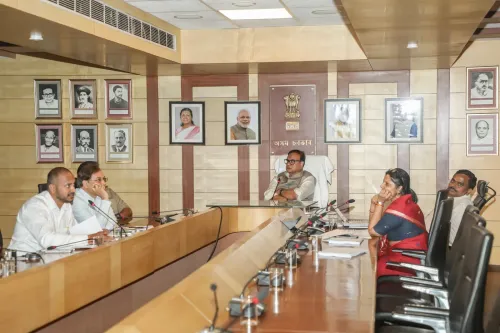
The Chief Minister's Office of Assam announced on Saturday, 11 July 2026 that Chief Minister Dr Himanta Biswa Sarma chaired an evening meeting with officials and stakeholders to explore ways to strengthen the Goods and Services Tax architecture in the state.
Context
The meeting, held on the evening of 11 July 2026, brought together state tax officials and business stakeholders to identify avenues for reinforcing Assam's GST framework. The Chief Minister's Office described the session as focused on 'exploring avenues to strengthen the GST architecture in Assam,' signalling a structured review rather than a routine administrative interaction.
Dr Himanta Biswa Sarma brings direct institutional experience to such discussions — before becoming Chief Minister in May 2021, he served as the state's Finance Minister and participated in GST Council deliberations at the national level, giving him familiarity with both the revenue mechanics and intergovernmental dynamics of the tax regime.
Policy Backdrop
GST was introduced across India on 1 July 2017 following the 101st Constitutional Amendment, subsuming a range of state and central levies including VAT, excise duty, and service tax. Assam constituted a state-level GST implementation committee in the same year and has since held periodic reviews with trade bodies on compliance and revenue augmentation.
The regime now forms a major pillar of Assam's own-tax revenue, making its efficient administration a fiscal priority. Indian states have repeatedly convened similar high-level meetings in recent years to address GST evasion, input-tax-credit fraud, and rate rationalisation — challenges that have been particularly pronounced in northeastern states seeking to widen a relatively narrow tax base.
Stakeholders and Impact
Traders, businesses, and state tax officials are the primary constituencies affected by any changes to Assam's GST enforcement or compliance infrastructure. Northeastern states, including Assam, have historically focused on improving digital compliance tools such as e-way bill enforcement and expanding the registered taxpayer base to capture informal economic activity.
Any policy outcomes from the meeting — whether related to sector-specific compliance drives, digital infrastructure upgrades, or representations to the GST Council — would directly affect the state's revenue receipts and the ease of doing business for local enterprises.
What's Next
The specific agenda, participants, and outcomes of the 11 July 2026 meeting have not been formally disclosed. Observers will watch for follow-up notifications from the Assam government on e-way bill enforcement, sector-specific compliance measures, or any formal proposals tabled at the next GST Council meeting at the national level.
Should the state translate the discussions into concrete policy action — such as targeted audits, rate-rationalisation proposals, or investments in digital tax infrastructure — it could serve as a model for other northeastern states grappling with similar revenue challenges under the GST framework.
Point of View
Particularly as post-compensation-period pressures mount. His prior tenure as Finance Minister and GST Council participant gives the exercise credibility beyond routine optics. The move fits a broader national pattern of state governments tightening GST compliance architecture ahead of anticipated rate rationalisation rounds at the Council level. For Assam, with its significant informal trade sector, even incremental gains in compliance could meaningfully shift the state's revenue trajectory.
NationPress
10 Oct 2026
Frequently Asked Questions
Why did CM Himanta Biswa Sarma hold a GST meeting in Assam?
CM Himanta Biswa Sarma chaired the meeting on 11 July 2026 to explore ways to strengthen Assam's GST architecture, focusing on improving tax compliance and revenue mobilisation in the state.
What is the GST architecture meeting in Assam about?
The meeting brought together state tax officials and business stakeholders to identify avenues for reinforcing Assam's Goods and Services Tax framework, including potential improvements to compliance and revenue collection.
When was GST introduced in India?
GST was introduced across India on 1 July 2017 following the 101st Constitutional Amendment, replacing multiple state and central levies such as VAT, excise duty, and service tax.
What is Himanta Biswa Sarma's background with GST?
Before becoming Chief Minister of Assam in May 2021, Himanta Biswa Sarma served as the state's Finance Minister and participated in GST Council meetings at the national level.
What challenges do northeastern states face under GST?
Northeastern states including Assam have focused on improving digital compliance infrastructure, curbing tax evasion, addressing input-tax-credit fraud, and widening the registered taxpayer base to strengthen revenues under the GST regime.