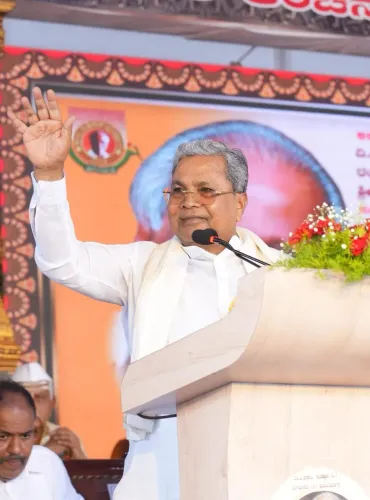
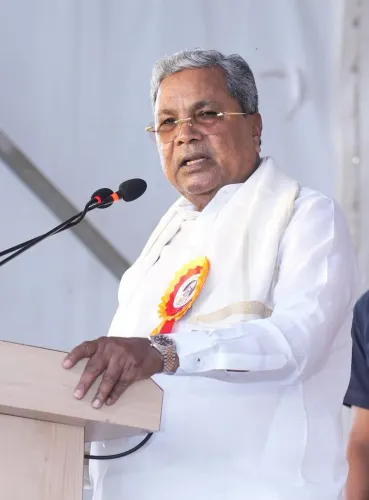
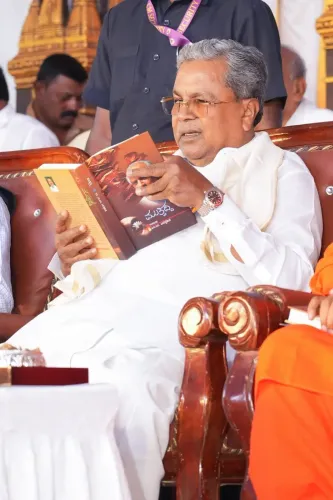
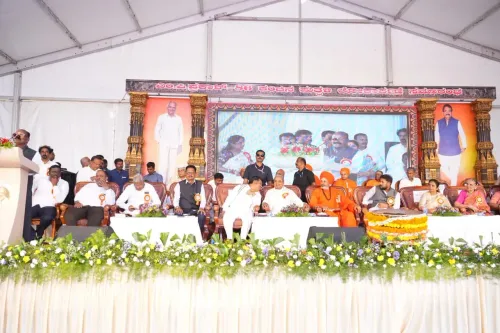
CM Siddaramaiah unveils M.P. Prakash statue at 86th birth anniversary
Synopsis
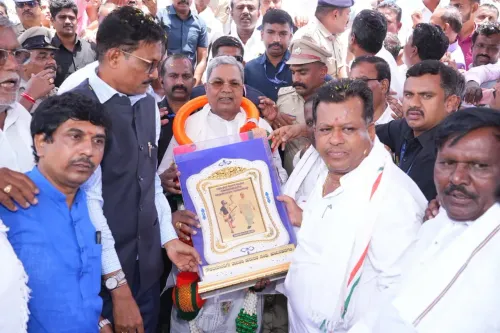
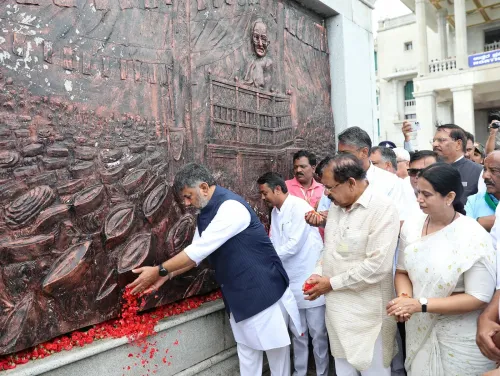
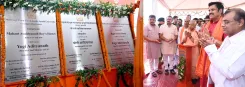
Karnataka CM Siddaramaiah unveiled a statue of former Deputy CM M.P. Prakash at Hoovina Hadagali on his 86th birth anniversary, honouring him as a secular intellectual, personal mentor, and principled politician who never compromised on integrity.
Key Takeaways
CM Siddaramaiah unveiled a statue of former Deputy CM M.P.
Prakash at Hoovina Hadagali, Vijayanagara district on 11 July 2026 .
The event marked Prakash's 86th birth anniversary .
Siddaramaiah described Prakash as his first point of contact for advice during his own ministerial years.
Both leaders served together in the H.D.
Deve Gowda -led Karnataka cabinet ( 1994–1996 ), with Siddaramaiah as Finance Minister and Prakash as Kannada and Culture Minister.
Siddaramaiah praised Prakash for never engaging in caste-based politics or exploiting religious leaders for electoral gain.
The Chief Minister said Karnataka had lost 'a good, noble and statesman-like politician' with Prakash's passing.
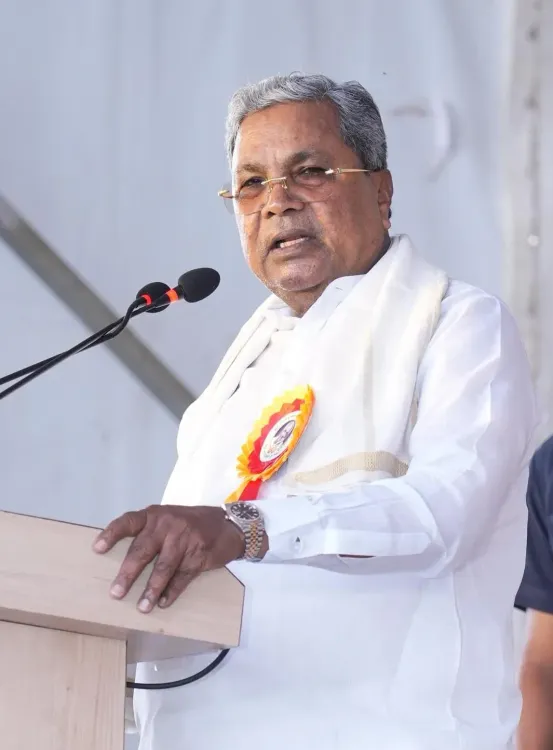
Karnataka Chief Minister Siddaramaiah on Saturday, 11 July 2026, unveiled a statue of former Deputy Chief Minister M.P. Prakash at Hoovina Hadagali in Vijayanagara district, delivering a warm tribute to the late leader at a ceremony marking what would have been Prakash's 86th birth anniversary. Siddaramaiah described Prakash as a rare intellectual in politics, a personal mentor, and a principled secular voice whose integrity made him stand apart in Karnataka's political landscape.
Context
Speaking at the birth anniversary event, Siddaramaiah recalled Prakash in Kannada as 'ಅಪಾರ ಜ್ಞಾನ ಹೊಂದಿದ್ದ ಬುದ್ಧಿವಂತ ರಾಜಕಾರಣಿ' — 'an intelligent politician of immense knowledge.' He noted that leaders with Prakash's depth of reading and scholarly temperament are rare in public life, and that Prakash had cultivated a lifelong habit of reading books whenever time permitted, which gave him a scientific and rational worldview.
Siddaramaiah said he was personally honoured to have unveiled the statue of 'such a noble politician,' adding that it brought him great joy to be able to commemorate Prakash in this manner.
A mentor in ministerial years
The Chief Minister shared that during his own years as a minister, M.P. Prakash was the first person he would approach whenever he faced a difficult problem. 'After discussing with him, I would find the right solution,' Siddaramaiah said. He described Prakash as not merely a friend but 'an intimate political colleague and guide.'
Siddaramaiah recalled visiting Hoovina Hadagali many times with Prakash and dining at his home on several occasions. Their conversations, he said, ranged from contemporary political developments to questions of social direction and the shape that government programmes ought to take.
A specific shared chapter the Chief Minister invoked was their time together in the H.D. Deve Gowda-led Karnataka cabinet (1994–1996), when Siddaramaiah served as Finance Minister and Prakash held the Kannada and Culture portfolio. He said Prakash's expressed wish that Leelavathi should succeed him as Kannada and Culture Minister remains fresh in his memory to this day.
Secular credentials and principled politics
Siddaramaiah paid particular tribute to Prakash's secular character, saying he never engaged in caste-based politics. 'Had he used caste for political gain, he could have risen to even higher positions in today's political environment,' the Chief Minister observed. He also noted that Prakash always kept his distance from the tendency to exploit religious leaders for electoral advantage.
The tribute carried an implicit commentary on contemporary political culture. Siddaramaiah remarked that it would be extremely difficult for a principled and honest politician like Prakash to survive in today's political system, because Prakash never compromised on integrity — and such conditions no longer prevail in politics.
Loss to Karnataka and what's next
Closing his remarks, Siddaramaiah said that with Prakash's passing, Karnataka had lost 'a good, noble and statesman-like politician.' The unveiling of the statue at Hoovina Hadagali is likely to prompt discussions among Congress and secular-democratic circles in the state about further memorials or institutional honours in Prakash's name.
As Karnataka approaches its next electoral cycle, such commemorative events serve to reinforce ideological lineages that emphasise secular governance and intellectual rigour — values senior Congress leaders are keen to associate with their own political identity.
Point of View
' the Chief Minister is signalling a critique of identity-driven mobilisation without naming adversaries. The commemoration fits a broader pattern in Karnataka where Congress seeks to claim the intellectual and secular inheritance of the Janata Parivar era, especially as it consolidates its position ahead of the next assembly cycle. Honouring mentors who combined administrative competence with principled secularism also helps Siddaramaiah reinforce his own political biography as rooted in substance over opportunism.
NationPress
11 Jul 2026
Frequently Asked Questions
Who was M.P. Prakash?
M.P. Prakash was a former Deputy Chief Minister of Karnataka, known for his intellectual depth, secular outlook, and avoidance of caste-based politics. He served as Kannada and Culture Minister in the H.D. Deve Gowda-led Karnataka cabinet from 1994 to 1996.
Why did Siddaramaiah unveil M.P. Prakash's statue?
CM Siddaramaiah unveiled the statue at Hoovina Hadagali in Vijayanagara district to mark M.P. Prakash's 86th birth anniversary and honour his legacy as a principled, secular politician and personal mentor.
Where is Hoovina Hadagali?
Hoovina Hadagali is a town in Vijayanagara district, Karnataka, and was M.P. Prakash's political base. The 86th birth anniversary event and statue unveiling were held there on 11 July 2026.
What was the relationship between Siddaramaiah and M.P. Prakash?
Siddaramaiah described M.P. Prakash as not just a friend but an intimate political colleague and guide. The two served together in the Deve Gowda cabinet in the 1990s, and Siddaramaiah said he would consult Prakash first whenever he faced a difficult problem as a minister.
What did Siddaramaiah say about M.P. Prakash and caste politics?
Siddaramaiah said Prakash never engaged in caste-based politics and always kept away from exploiting religious leaders for electoral advantage, adding that had Prakash used caste for political gain, he could have risen to even higher positions.